Inside Wickliffe’s Family Resource Center: Strengthening Communities

Inside Wickliffe's Family Resource Center: Strengthening Communities
The Wickliffe Family Resource Center, operated by the Wickliffe City School District, teamed up with ThenDesign Architecture to produce a series of informational videos showcasing the free services provided to community members and students, including primary care, behavioral health, and oral care. It is designed to be a model for resource centers across the country. In close partnership with Signature Health, the non-profit organization is connected to the new PreK-12 Campus in Wickliffe, Ohio.

Inside Wickliffe's Family Resource Center: Strengthening Communities

The Wickliffe Family Resource Center (WFRC) is operated by the Wickliffe City School District in partnership with Signature Health. It is a unique organization that brings together support services and educational resources to enhance the well-being of students, families, and community members.

A series of documentary videos was created to explain what the Wickliffe Family Resource Center is and how it can assist those in need. Offering physical resources such as food, clothing, and household supplies through the WicKloset program is in addition to Signature Health’s free primary care, behavioral health, and oral health services.

Part 1: Who Are We?

“The Wickliffe Family Resource Center is a one-stop shop for members of the community, students, and staff to get any of their needs met,” commented former superintendent Joe Spiccia on the WFRC.

The FRC has become a community hub, operating under the guiding principle: “We never say no.” Built from a careful examination of Wickliffe’s students and our families, the center’s vision, championed by Director of Strategic Innovation Julie Ramos, is to ensure student success by complementing the work of schools.

The FRC, which includes a secure on-campus clinic co-located within the PreK-12 school, provides critical food, clothing, medical, and mental health services. The initiative is designed to wrap around students and families, offering a safe location and the necessary supports so they can level up. Local leadership, including the mayor, emphasizes that the FRC is one way this tight-knit community provides for its neighbors and students who may be going through challenging times. The district’s student experience is impacted for the better because, as one community member noted, “If you needed any help, it was there.”

Part 2: Partnership with Signature Health

Many students have unmet mental or chronic health needs, and we know that those can negatively impact their attendance and their performance. Having a clinic at the WFRC allows us to address those needs and see success in students,” said Medical Director, Primary Care for Signature Health, Dr. Todd Wagner. They aim to provide students with key services that benefit their lives.

The success of the Wickliffe School District’s academic mission relies on students being “healthy, happy, and feeling good,” according to Superintendent Joe Spiccia. This led to the partnership with Signature Health, a community health center specializing in serving those at any socioeconomic scale.

Signature Health at the Family Resource Center (FRC) provides comprehensive, co-located healthcare, including primary care, behavioral health, and oral health. The service is unique in that it is open to anybody, regardless of zip code, status, or income.

This collaboration addresses significant barriers to academic performance—such as hunger, housing instability, or unmet mental health needs—that impede a student’s ability to learn. By offering vaccines and physicals on-site, students do not miss instructional time. Clinicians can work as a team with school staff to address chronic conditions like asthma or provide individual and family counseling for emotional needs. This proactive support system is critical for the student experience, allowing children who were once struggling to “thrive,” see their “grades improve,” and ultimately graduate. The goal is to expand the impact on the entire community.

Part 3: Making a Difference

The Wickliffe Family Resource Center (FRC) utilizes a unique “wraparound service” model to assist individuals in need. Director of Strategic Innovation for Wickliffe City Schools, Julie Ramos, stated, “By having a wraparound service, we aim to benefit each person outside of just an academic setting. If we don’t provide the service, we’re going to figure it out.” This approach sets Wickliffe apart by offering comprehensive resources in one location, ensuring that when a family or student presents a challenge, the FRC commits to providing a solution.

Core services include the WicKloset, which offers seasonal clothing, shoes, and dry storage food. Crucially, the FRC helps students by providing counseling services, an outlet that was unavailable to previous generations of struggling single-parent families. This support directly impacts the student experience, providing the necessary aid that allows young people to focus on their education.

The FRC is supported by the community, with citizens donating and volunteering to help out those in need. High school students are learning empathy and leadership by giving back, recognizing that helping others creates a positive “chain reaction” for the whole community. Grant support from the state and federal government recognizes the importance of this work, which provides significant downstream savings through early intervention.

Part 4: Measuring Success

Since opening in 2019, the Family Resource Center (FRC) has served over 10,000 people across 22 ZIP codes, demonstrating a significant community impact. Last year alone, the FRC served approximately 2,000 individuals through programs like the WicKloset, ensuring food and clothing for community members.

The FRC’s true measure of success is the tangible impact on family and student outcomes. By addressing non-academic barriers, the district has seen a 12% reduction in the chronic absenteeism rate and an improved graduation rate. There has also been an increase in participation in extracurricular activities, partially credited to the availability of free physicals at the center.

For struggling students, the center provides crucial primary care and behavioral health services, which have been proven to lead to better school attendance and performance. Success is measured in many ways—but the FRC’s data confirms that its “big mountain to climb” approach is making a direct, positive difference in the overall student experience and the community at large.

Part 5: Building the Campus

“We knew that if we served the whole community, we were then serving the students,” commented former superintendent Joe Spiccia on the construction of the new PreK-12 school.

The Wickliffe community is a close-knit entity. The schools, which are a central part of that community, launched meetings in 2017 to address their aging facilities. The result was a consensus to build a new Preschool through 12th-grade campus, consolidating all students into one secure location.

The design of the new campus and the attached Family Resource Center (FRC) was strategically executed with ThenDesign Architecture (TDA). The FRC, which was designed as a part of the new school, was created as a secure, safe location with its own outside entrance and connection to the school. This physical design ensures safety while maximizing accessibility.

The FRC’s success stems from extensive collaboration; the district met with every social service agency in Lake County, securing Signature Health as its primary partner. State government officials also provided crucial support to secure funding. The center operates on the premise that serving the whole community inherently serves the students, creating a supportive environment where students know, “We’ve got you. Even if you trip, you have somewhere to go.” This thoughtfully designed space ensures every student can get back up and continue moving forward.

Part 6: Setting the Example

“This is the future of education. It is really, truly addressing the entire human and by using our partnerships and working collaboratively to bring in those nonprofits, we benefit families and students,” states Director of Strategic Innovation for Wickliffe City Schools, Julie Ramos.

The Wickliffe Family Resource Center (FRC) is positioned as a successful model that needs to be replicated in communities nationwide. Stakeholders assert the FRC represents the future of education, stressing that its value goes “way beyond any return on investment” by creating happier, healthier communities.

The center’s mission is to support the whole child, whole family, and whole community. By addressing the entire human through strong partnerships with nonprofits, businesses, and foundations, the FRC ensures students receive comprehensive support. This holistic approach significantly improves the student experience by removing non-academic barriers.

Wickliffe leaders are inviting other school districts seeking to build similar programs to “call us.” They pledge to be an “open book,” sharing every step of their journey to demonstrate how any community—whether in Lake County or five states away—can benefit from this center and utilize its services. The existence of the FRC is a major asset that offers support to many families in need.

Learn more about the Wickliffe Family Resource Center by visiting their website: https://www.wickliffeschools.org/wickliffe-frc

TDA’s Claire Bank Receives ALEP Designation

TDA's Claire Bank Receives ALEP Designation

TDA's Claire Bank Receives ALEP Designation

ThenDesign Architecture is a learning and teaching firm. Even our most seasoned professionals see the value of furthering their educational experience to enhance their personal development and the expertise they offer to our clients. We are pleased to announce that Claire Bank, AIA, NCARB, has received the Accredited Learning Environments Planner (ALEP) designation from the Association for Learning Environments (A4LE). This notable mark of excellence was developed to reflect the knowledge, skills, and abilities of a competent educational facility planner.

The ALEP credential was designed to elevate professional standards, enhance individual performance, and identify those in the educational environment industry who demonstrate the knowledge essential to the practice of educational facility planning. All recipients meet rigorous eligibility requirements. Claire completed the A4LE Academy Advanced Certificate Program by participating in Cohort 11.

“A4LE is a neat organization because it pulls together a lot of different people who work in the educational sector,” Claire said. “It’s comprised of educators, facility directors, vendors, interior designers, and architects that pool a variety of perspectives to build a comprehensive view of project needs in the school environment.”

Blending career backgrounds from the educator and school district perspectives helped Claire gain valuable insights. Throughout five of the six modules, she worked closely with four teammates, completing assignments with them and meeting with them at least twice a week. One member of her project team had experience providing professional development guidance from the world-class Finnish education system. Another teammate was the head of renovations for a large school district in Texas. The other two were architects who head architectural practices in New Hampshire and Louisiana.

Listening to her teammates, Claire better understood the communication gap that all projects can experience when translating design concepts to school district members. The group discovered they had similar challenges and opportunities with their projects, even though they worked all over the world.

“It was really fun to have honest dialogues and discuss ideas that weren’t rooted in a specific project, but were reflections on our past challenges and what we’ve all learned over the years as we discussed course materials,” Claire said. “I really appreciated the coursework. We reviewed a lot of reports and studies on all sorts of elements in design features and environmental factors that affect student learning. Some of the most valuable information was how to positively impact students and enhance their ability to learn, while also examining how the staff uses the classroom spaces to teach.”

Design is not just about creating a cool space, but seriously considering how students and instructors will experience the learning environment. Stopping to ask if the spaces are meeting the basic needs appropriate for what is being taught may seem simple, but it challenges the designer to consider not letting the space itself be the focus. Instead, factors like temperature, acoustics, and natural light should be closely considered so that students and teachers can experience greater effectiveness and productivity.

An aesthetically pleasing design opportunity in a classroom may not always be the best choice for student and instructor comfort. Claire said, “We shouldn’t get people distracted by falling in love with ‘a thing’ in the project without totally understanding how it’s going to function. We’ve been giving students a variety of spaces and experiences to thrive in, but it works hand-in-hand with the classroom experience. We should hone in on the educational aspects of a project and understand the vision, then support with architecture.”

“This program has shown me there is more that we can do in the classroom,” Claire added.

One of Claire’s biggest takeaways is making sure the basic needs of students are being met as much as possible through building design. “Keeping the students and staff comfortable and giving them the resources they need to be successful should be the focus. This allows them to do what they need to do without being distracted by discomfort. It’s vital we keep people feeling safe, not only from a security standpoint, but from an emotional well-being standpoint, in addition to being comfortable,” she said.

Her completion of the A4LE Academy Advanced Certificate Program has given Claire a fresh perspective on the design process by exposing her to frank insights from school districts and educators, and access to relevant data. Claire concluded, “I’m grateful to A4LE for facilitating this great program where people from different sides of the table could have enriching dialogues. We quickly realized we were all striving towards the same goal: Providing great learning environments for students.”

To learn more about A4LE and ALEP, visit www.A4LE.org.

"Keeping the students and staff comfortable and giving them the resources they need to be successful should be the focus."
Claire Bank, AIA, NCARB
ThenDesign Architecture

You can find out what our interns say about us here

For more information on our open positions or internship programs, visit our Careers page.

Marc Cebrian

Marc Cebrian

Communications

Get our newsletter with insights, events and tips.

Recent Posts:

TDA’s Summer Student Shadow Day

TDA's Summer Student Shadow Day
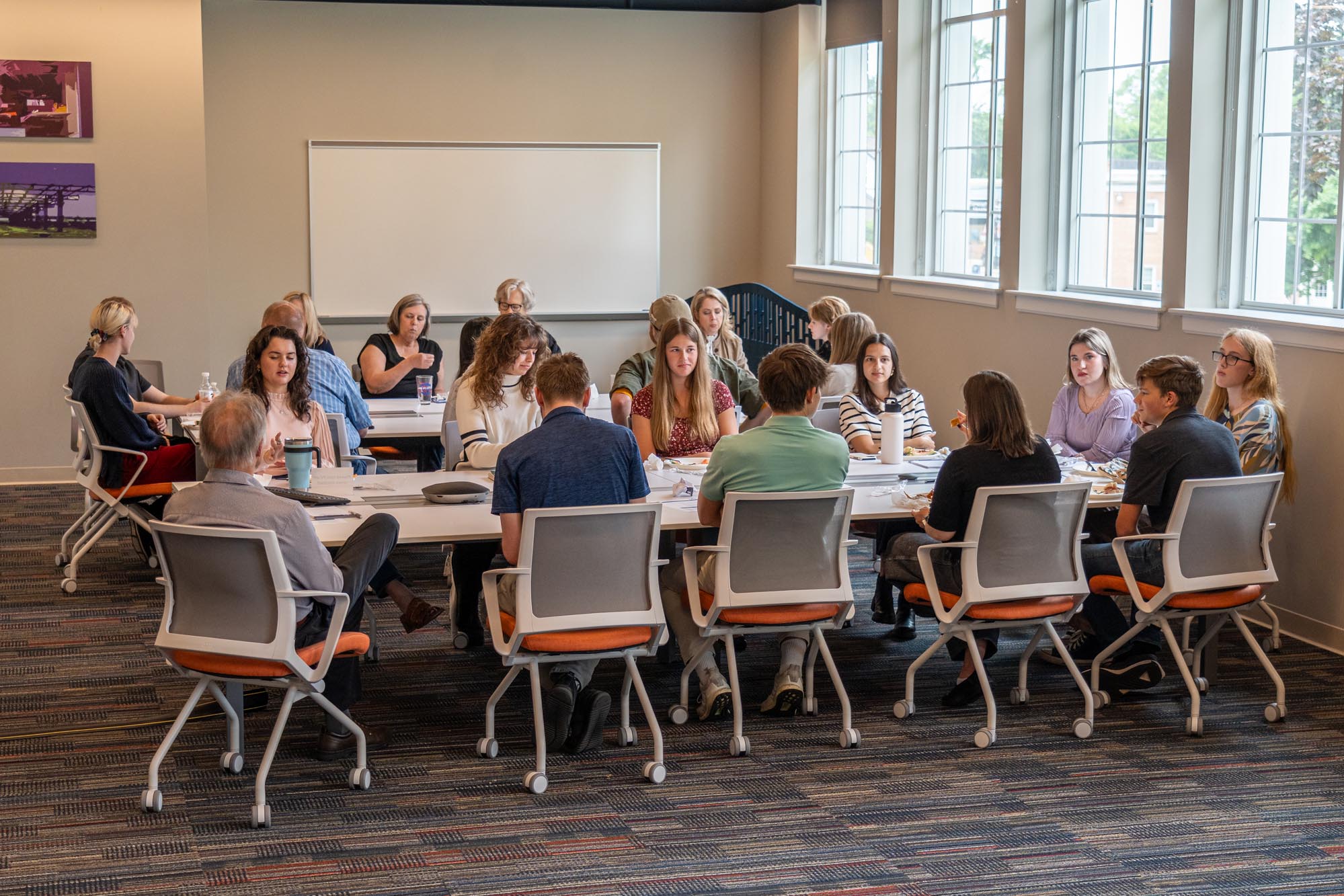
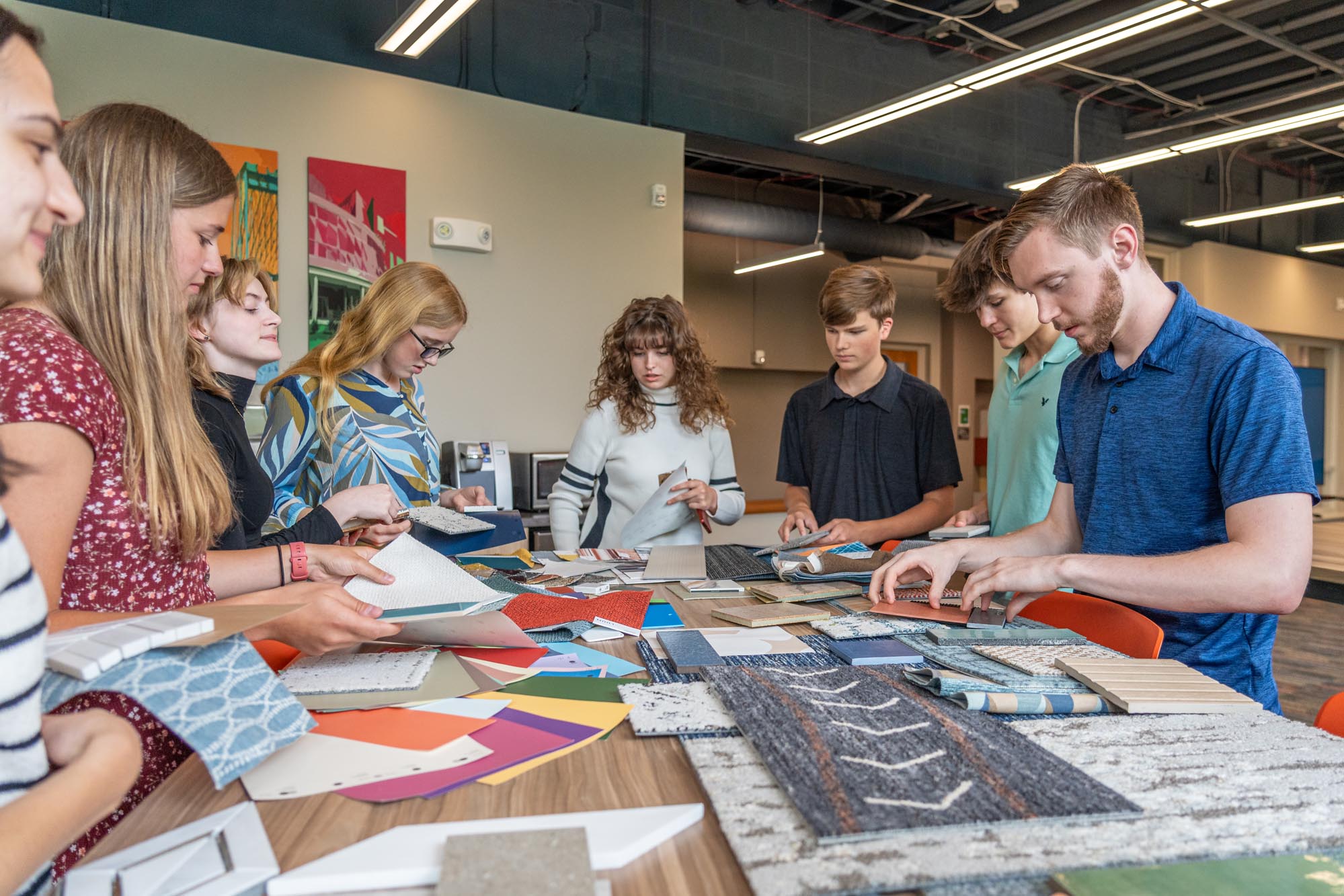
ThenDesign Architecture hosted an annual Summer Shadow Day, providing unique learning sessions, hands-on activities, and team-building opportunities for high school and college students interested in the architectural design or construction fields.

TDA's Summer Student Shadow Day

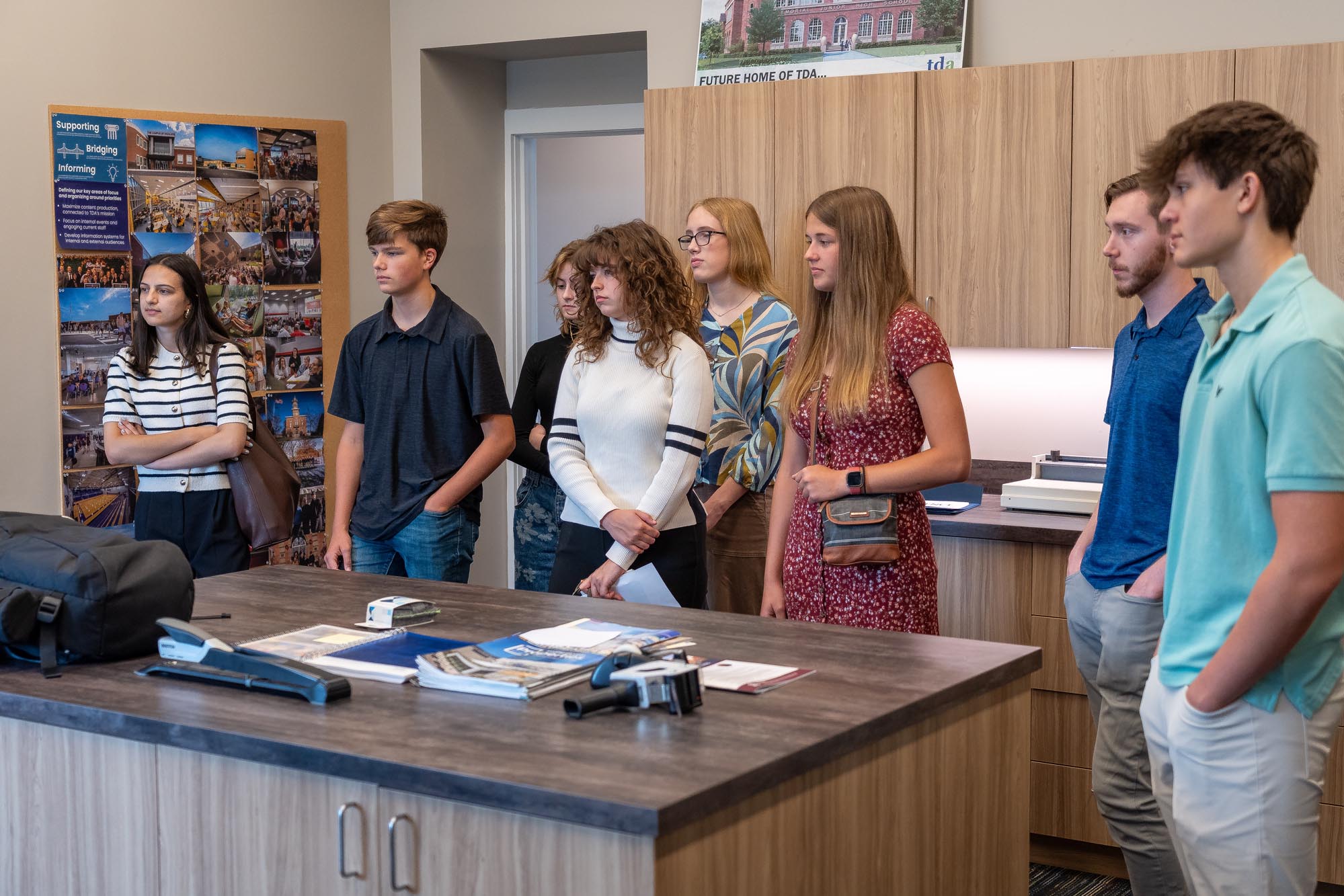
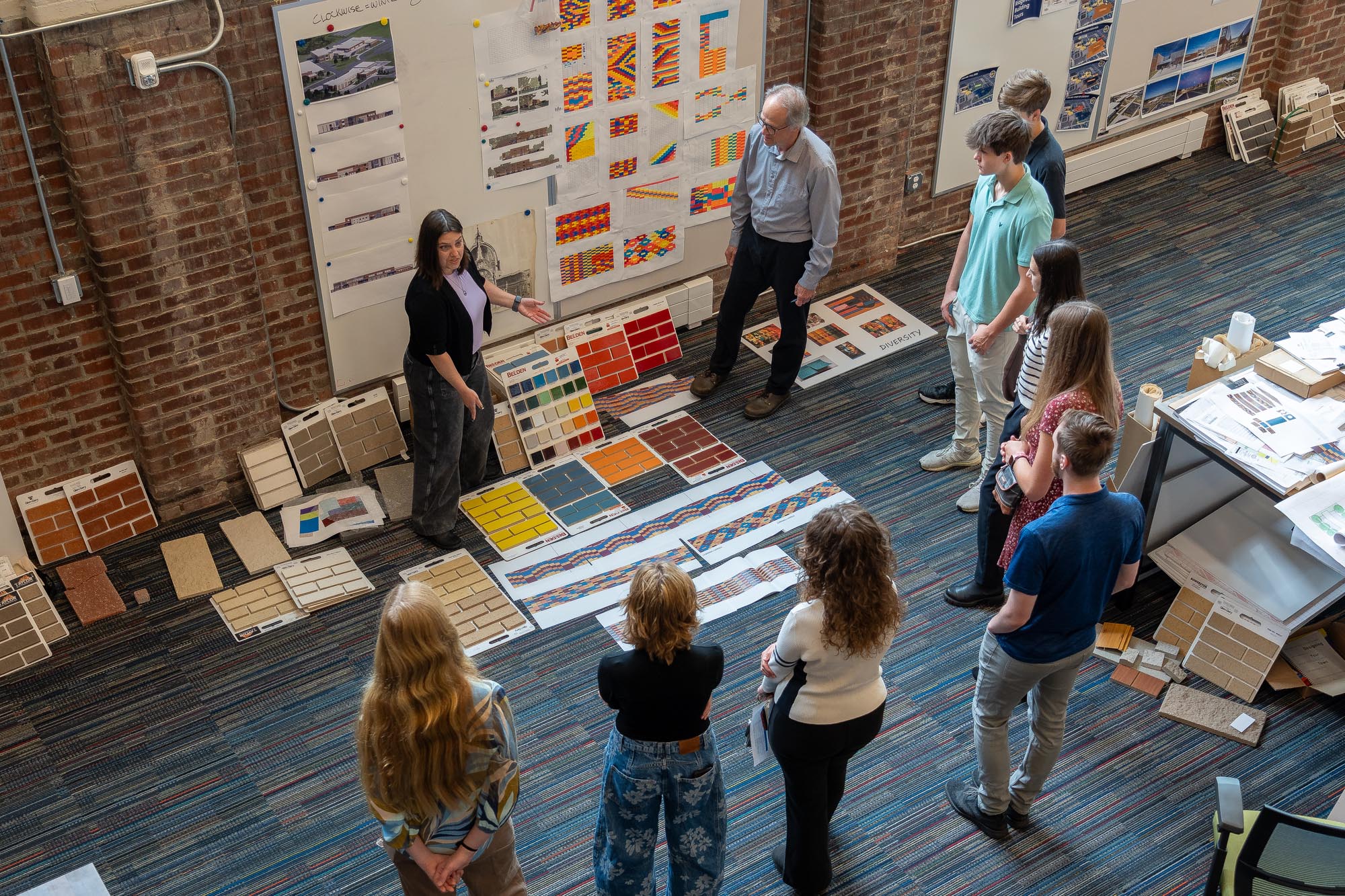
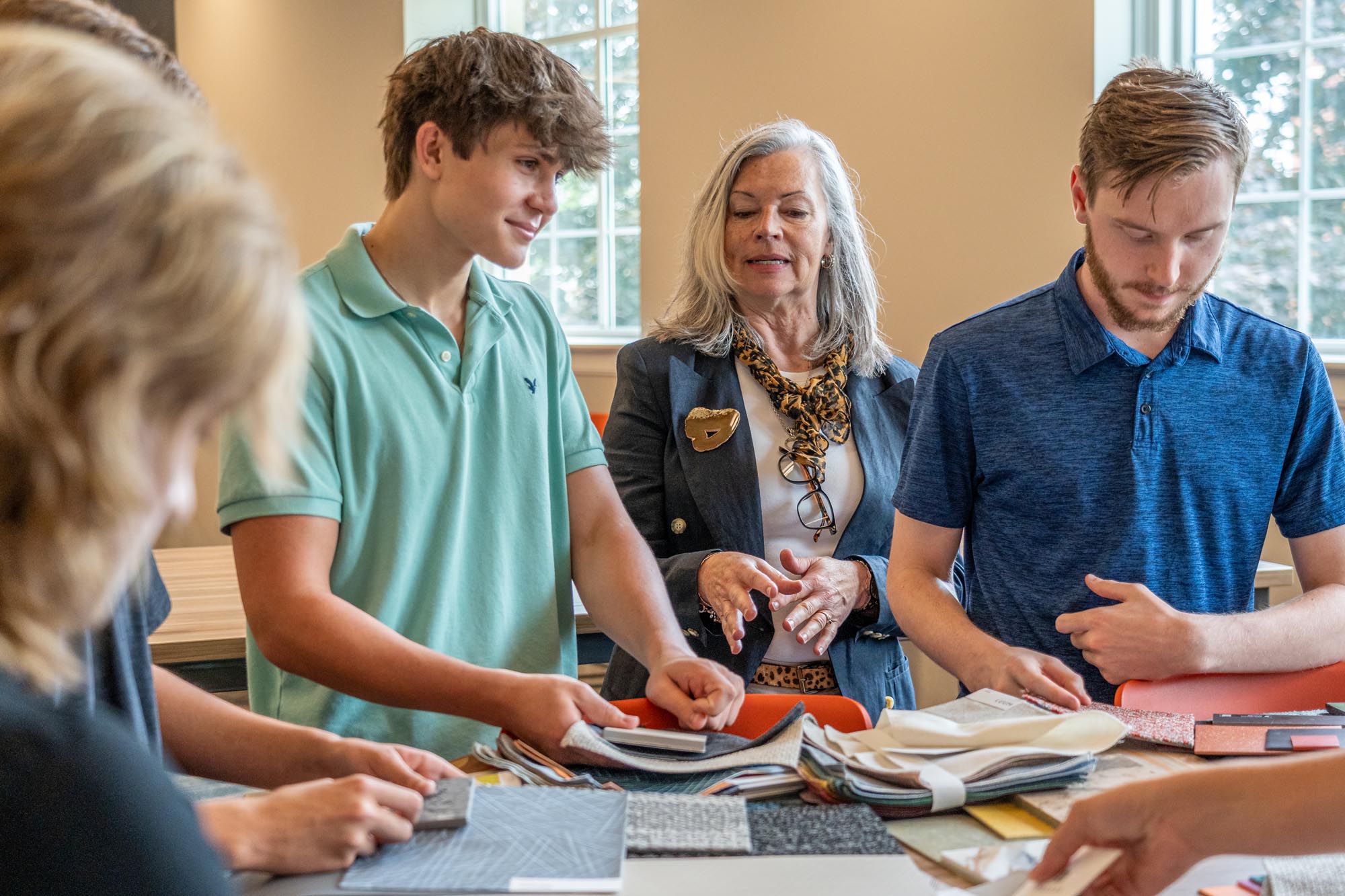
ThenDesign Architecture is a community-oriented learning and teaching firm, so hosting an annual Summer Shadow Day for current and recent students is a natural fit. Inviting future professionals who are curious about the architecture, interior design, and construction fields, the staff shared their love for the industry through a series of learning engagements at the TDA office in Downtown Willoughby at the reimagined Memorial Junior High School.

The Summer Shadow Day is aligned with our mission to serve communities through the work we do. TDA President Chris Smith, Ph.D., AIA, NCARB, LEED AP BD+C, expressed the importance of such outreach for young people: “When I was that young, there weren’t the same opportunities available, which makes it even more rewarding for us at TDA to host this kind of program that supports students while reflecting our core values.”

The goal of the day was to give students a practical view of the industry beyond their academic education. Christina Moran, Ph.D., is the leader of People Operations at TDA and came up with the vision and design for the event. “Sharing the experiences of our team, first-hand, is an excellent way to get students excited about the profession while also learning about who we are,” she said. “If we can inspire future designers and architects by assisting them in deciding if this is the right path for them, we are honored to have helped them along the way.”

TDA's Summer Student Shadow Day

First a Student, Then an Employee

Emerging Professional Logan Nelson was a guest at the Summer Shadow Day in 2024 and is now a full-time employee at TDA. “I first came into contact with TDA at the Career Fair at Kent State University. They were really welcoming and friendly, and that was the type of firm I was looking for.”

Logan said the experience at TDA’s Summer Shadow Day opened his eyes to how different companies can be, and it solidified his desire to be on staff. “The shadow day helped me sort out my professional focus. TDA has a very collaborative environment, and I was impressed by how kind and eager to help people were. I think the studio layout also got me excited about joining the team.”

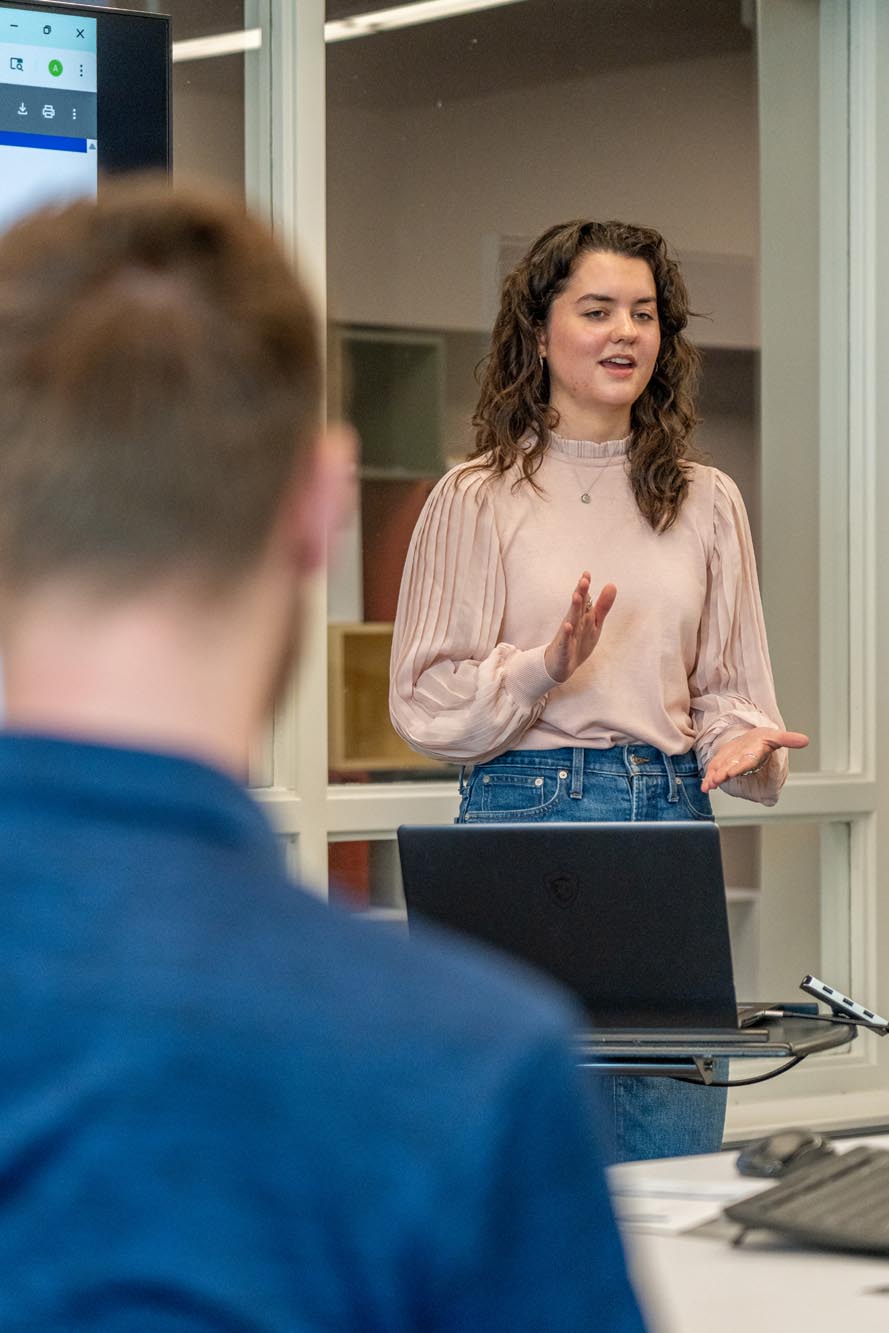
“Education can be kind of abstract,” Christina said. “How people function as students doesn’t always equate to the professional workplace. The priorities emphasized in the process of developing academic rigor may not be as important in a practical setting. We want to help students see that translation to better enable them with a realistic perspective. During the shadow day, they came up with concepts, explained them to others, and then presented them in front of a group. That was more hands-on than some expected.”

“I hope the students use this experience to further refine their career and educational paths,” Chris said. “I urge all interested students to seek out exploration opportunities because they’re out there, whereas they weren’t 30 years ago. Take advantage of what’s available.”

The Summer Shadow Day provided unique learning sessions, hands-on activities, and team-building opportunities for interested high school and college students; the ThenDesign Architecture professionals developed content tailored for this audience. Sharing their technical expertise and enjoyment for teamwork, the TDA staff demonstrated that a humble professional never stops being a student and should always strive to continue learning.

"It's rewarding to give students opportunities I did not have at their age."
Chris Smith
President

TDA Staff Sharing Their Expertise

You can find out what our interns say about us here

For more information on our open positions or internship programs, visit our Careers page.

Marc Cebrian

Marc Cebrian

Communications

Get our newsletter with insights, events and tips.

Recent Posts:

The Tiny House Challenge

The Tiny House Challenge
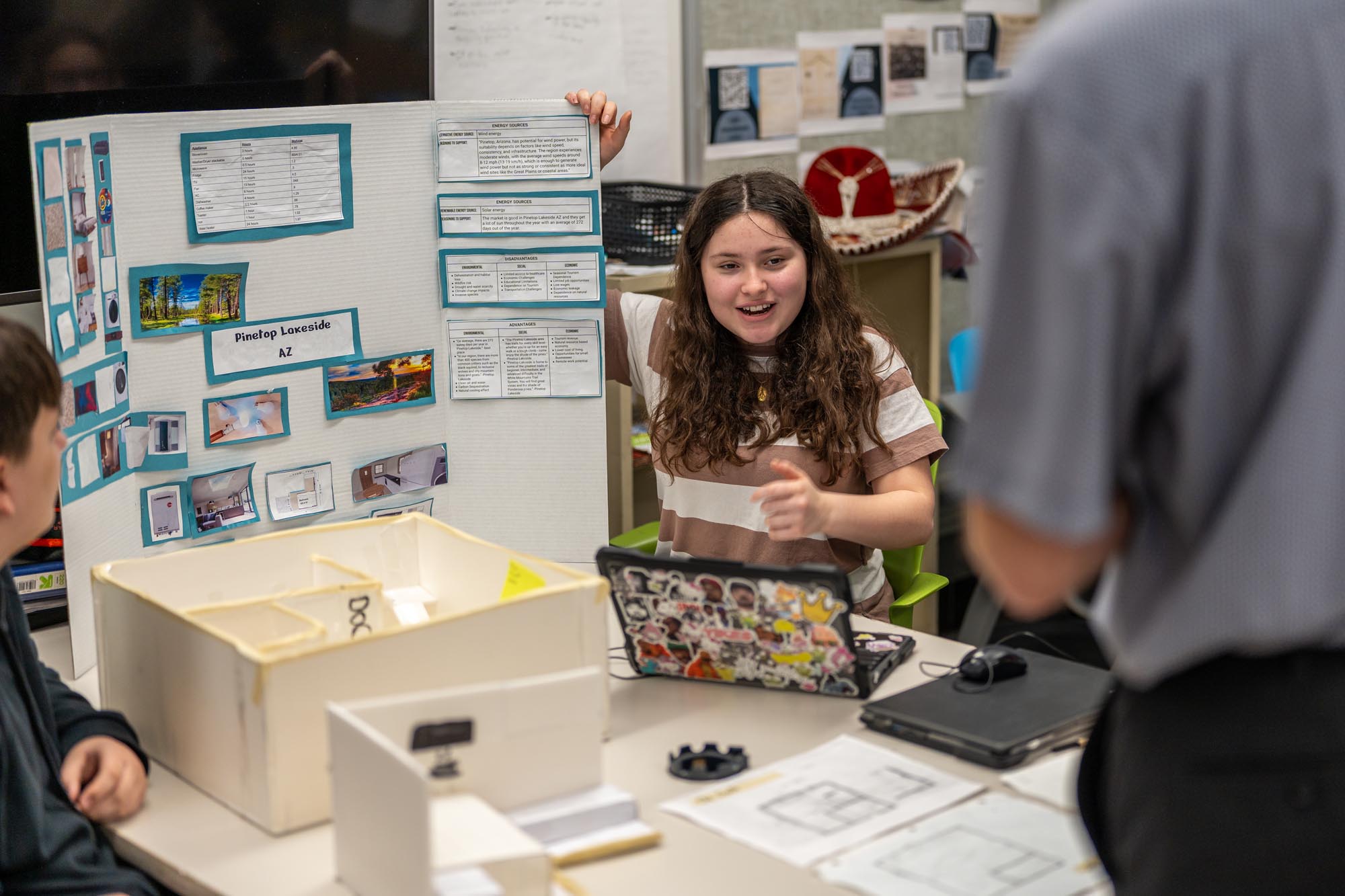
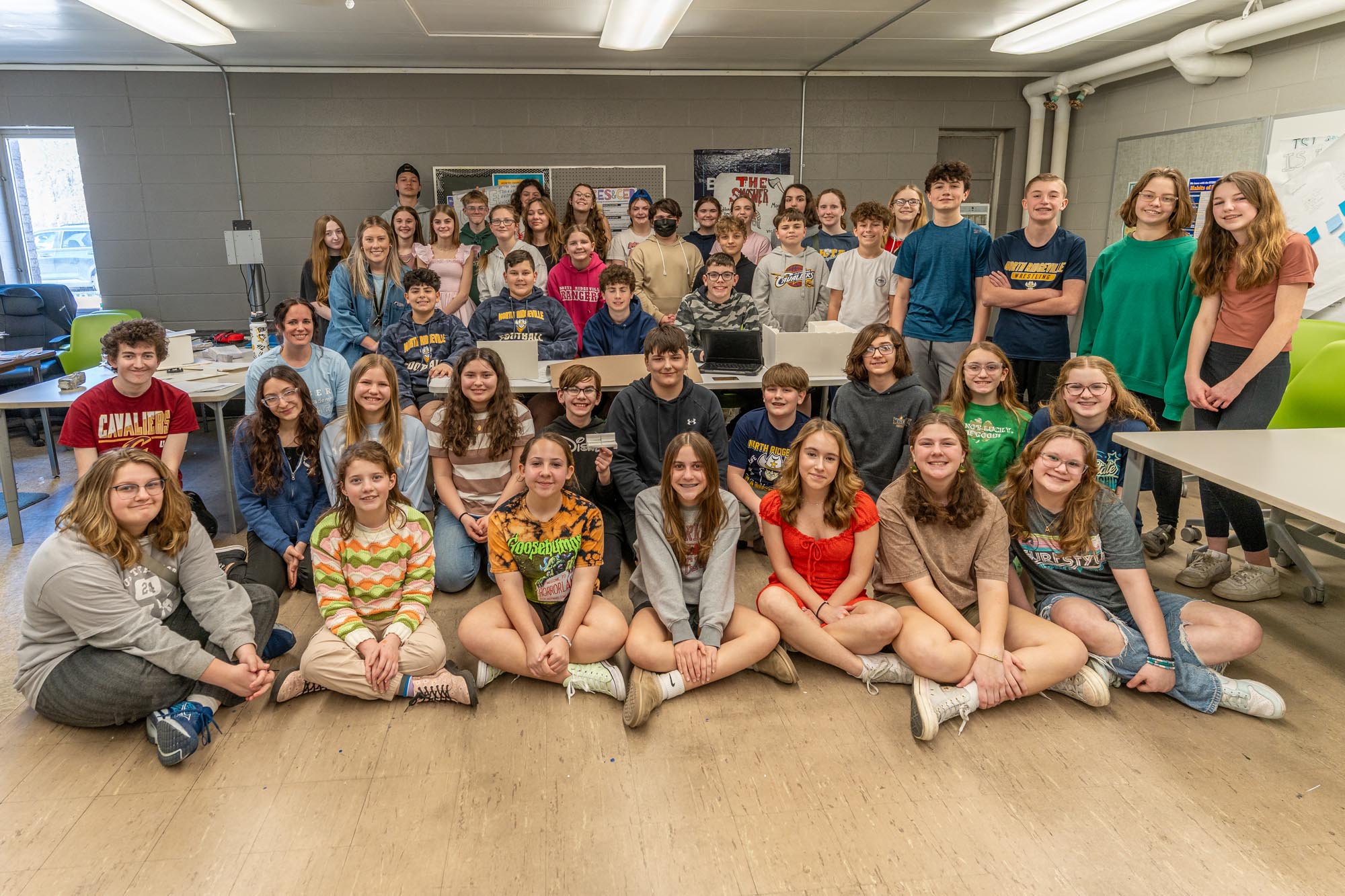
The Tiny House Challenge at North Ridgeville City Schools' Ranger High Tech Academy pushed students to design the smallest house that could still comfortably meet the occupants' needs. With a comprehensive set of parameters, students spent months crafting spaces using the same tools as modern architects and designers.

The Tiny House Challenge

During the intricate process of designing new educational facilities, there are invaluable moments to offer insight and feedback on student work. At TDA, our commitment extends beyond architectural plans, and as a firm deeply rooted in the philosophy of teaching and learning, we consistently seek opportunities to engage with the next generation of innovators.

This brought us to North Ridgeville City Schools’ Ranger High Tech Academy, where we participated in a compelling Project-Based Learning (PBL) initiative: the “Tiny Houses” project.

The “Tiny Houses” PBL tasked Ranger High Tech Academy students with a significant challenge: to design the smallest possible house that could still comfortably accommodate a client’s needs. They were given a comprehensive set of parameters, including family size, environmental considerations, and necessary daily activities. Their mission was to craft a “tiny home” that was both functional and innovative.

The Tiny House Challenge First Planning Session

Tiny Homes, Big Lessons

Megan Wood, seventh and eighth-grade science teacher at Ranger High Tech Academy, led the project. “Learners worked in teams to create sustainable and affordable tiny homes. They had to practice an understanding of blueprinting and scaling. They worked in teams to revise and prototype. Through that design and engineering process, they explored different energy sources, whether renewable or non-renewable, and they learned a little bit about electricity and how it works within a home.”

Over several months, these students embarked on an intensive design process. They moved from initial concepts to refined plans, having built physical scaled models, 3D prints, and drafting software. Professional architects and designers use similar tools. This immersive process allowed them to visualize and iterate on their ideas, culminating in comprehensive final presentations.

To ensure the students received real-world feedback and guidance, TDA was invited early in the process alongside other community members to review their prototypes and judge their final projects. This direct engagement allowed our team to offer professional critiques, highlight strengths, and suggest areas for further development, bridging the gap between academic learning and professional practice.

Megan added, “This project was very helpful because of all the career connections and future career opportunities that the kids discovered. Whether an architect, a project manager, or an interior designer, it was great for them to see how the different jobs are interconnected. They have never been exposed to this before.”

The Tiny House Challenge Final Judging Session

Real-World Skills, Future Careers

The impact on each student’s project was demonstrable. Participants walked away with an understanding of critical design principles. They learned how to effectively lay out interior spaces and merge furniture design with architectural constraints, environmental considerations, and manufacturing feasibility.

Project-based learning initiatives like this one are increasingly vital in preparing students for future careers by fostering critical thinking and problem-solving skills.

“I was surprised to see how each of the students prototyped their homes in different ways,” Megan said. “Each of them came up with different design solutions to a challenging problem. They had to ask, ‘How do you make a spiral staircase? How am I going to show this loft? How am I going to build this furniture?’ It was fascinating to see their perspectives on how they approached those projects.”

This collaboration with North Ridgeville City Schools exemplifies how educational institutions and industry professionals can partner to create richer, more relevant learning experiences for students. By providing direct exposure to real-world design challenges and expert feedback, TDA helps to cultivate not just future architects and engineers but also innovative thinkers prepared to tackle complex problems in any field.

Highlighting Excellence in School Communication

Highlighting Excellence in School Communication: Recognizing Efforts in a Challenging Landscape
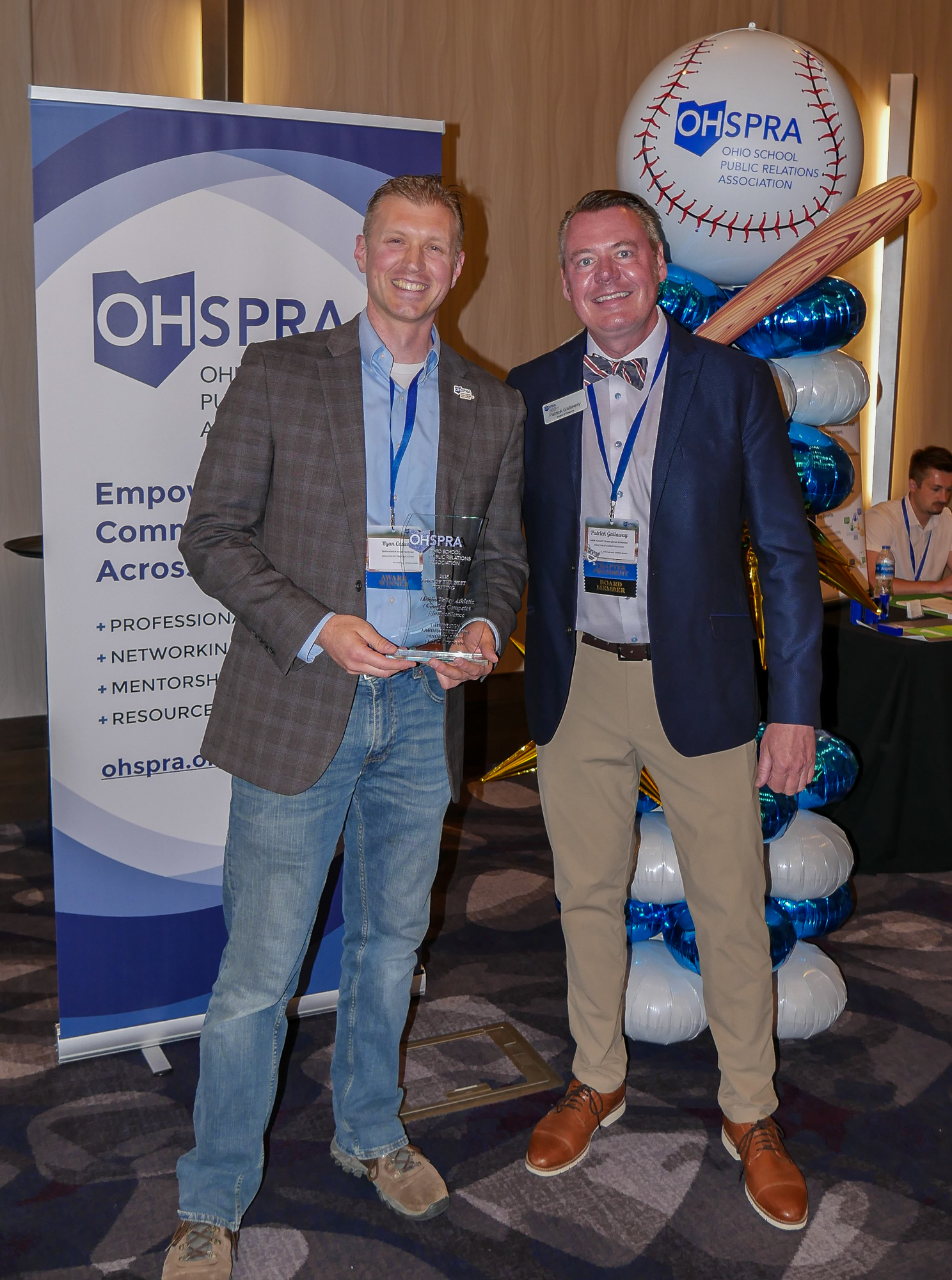
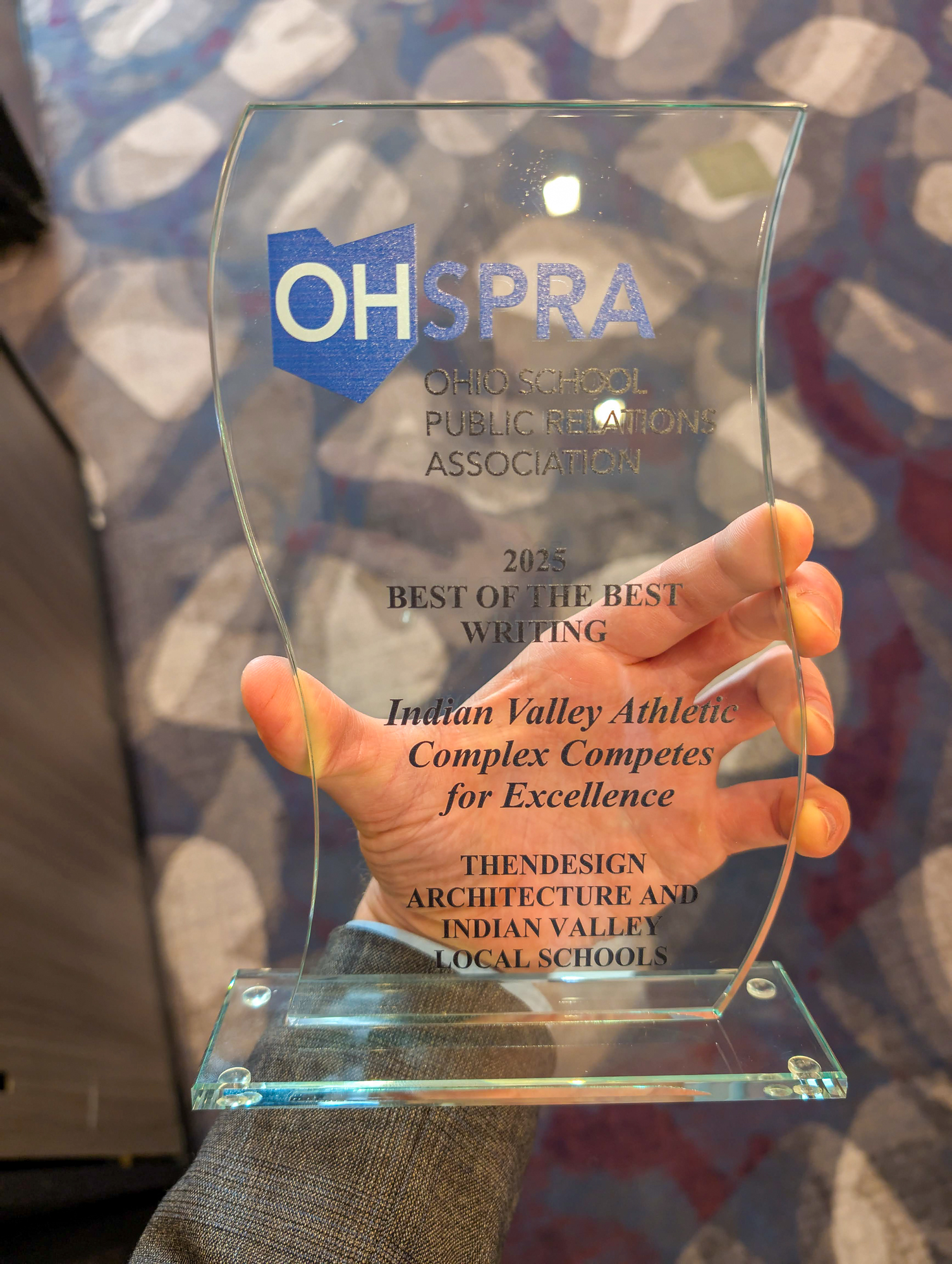
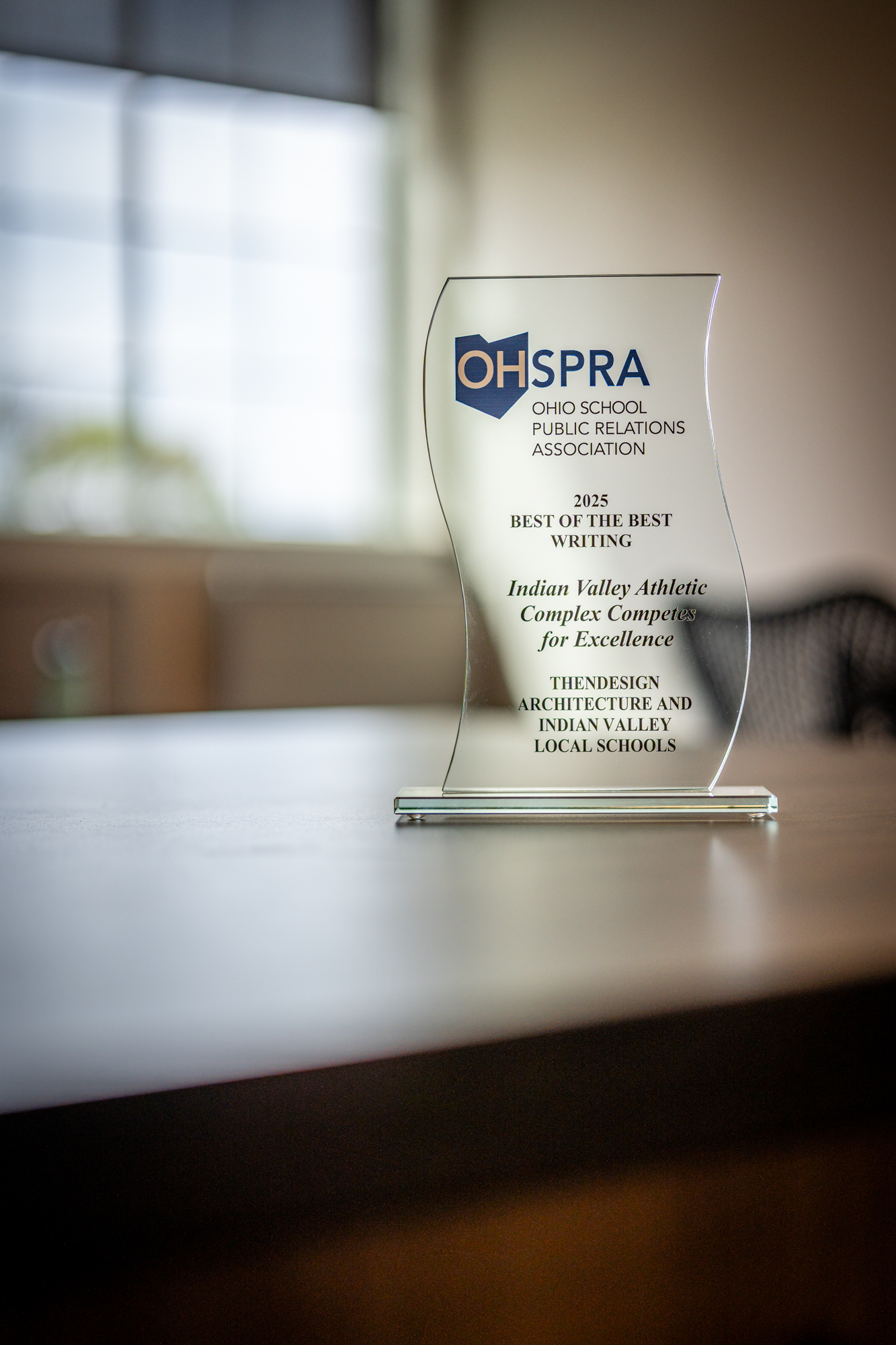
The Ohio Public School Relations Association (OHSPRA) recently honored TDA Communications with four awards for their work in highlighting the impact of public education, including the prestigious "Best of the Best" for an article on Indian Valley Local Schools' new stadium. This recognition underscores the vital role of skilled communication and public relations in sharing compelling narratives about student experiences and fostering community support for schools.

Highlighting Excellence in School Communication

Schools across Ohio are dynamic centers of learning, continually innovating to connect with students and equip them for a complex and ever-evolving world. However, achieving that mission is often challenged by busy schedules, the rapid pace of technological change, and tight fiscal constraints. Especially for public schools, the need for clear, consistent messaging delivered through modern communication channels is more important than ever to effectively tell stories about the impact of public education and build vital support and pride in each community.

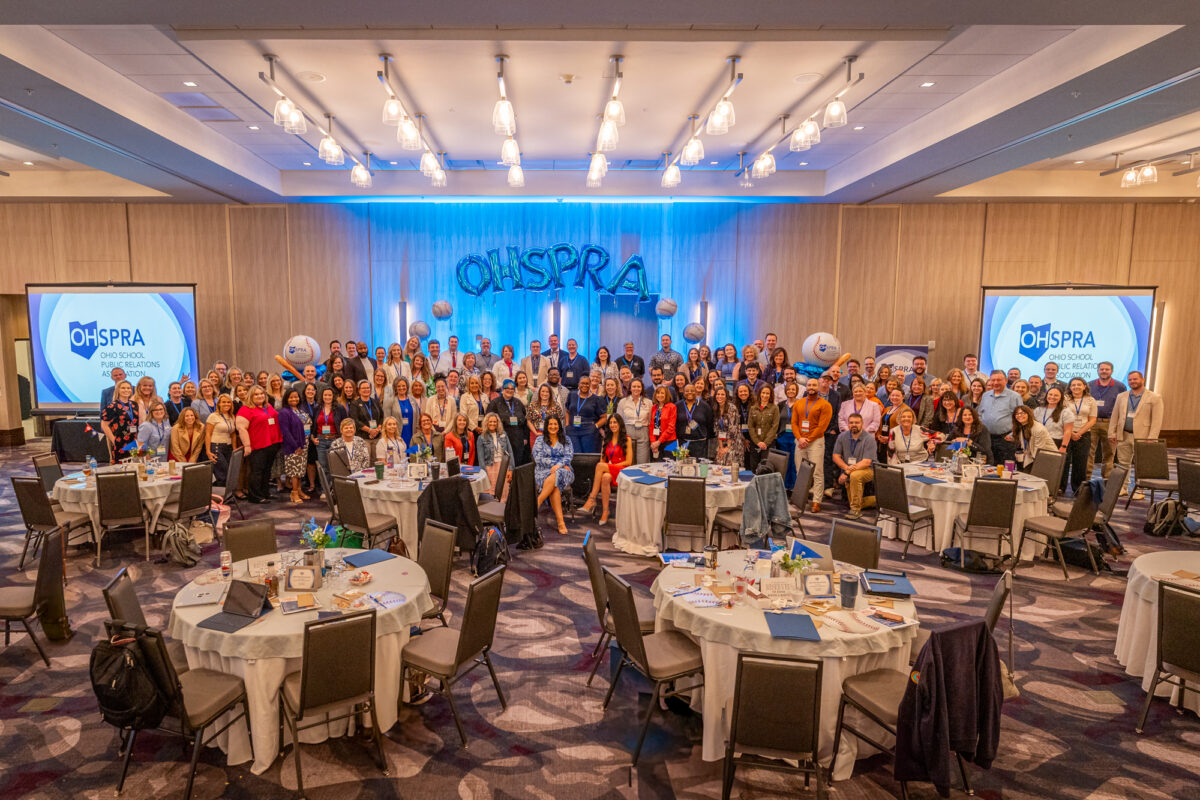
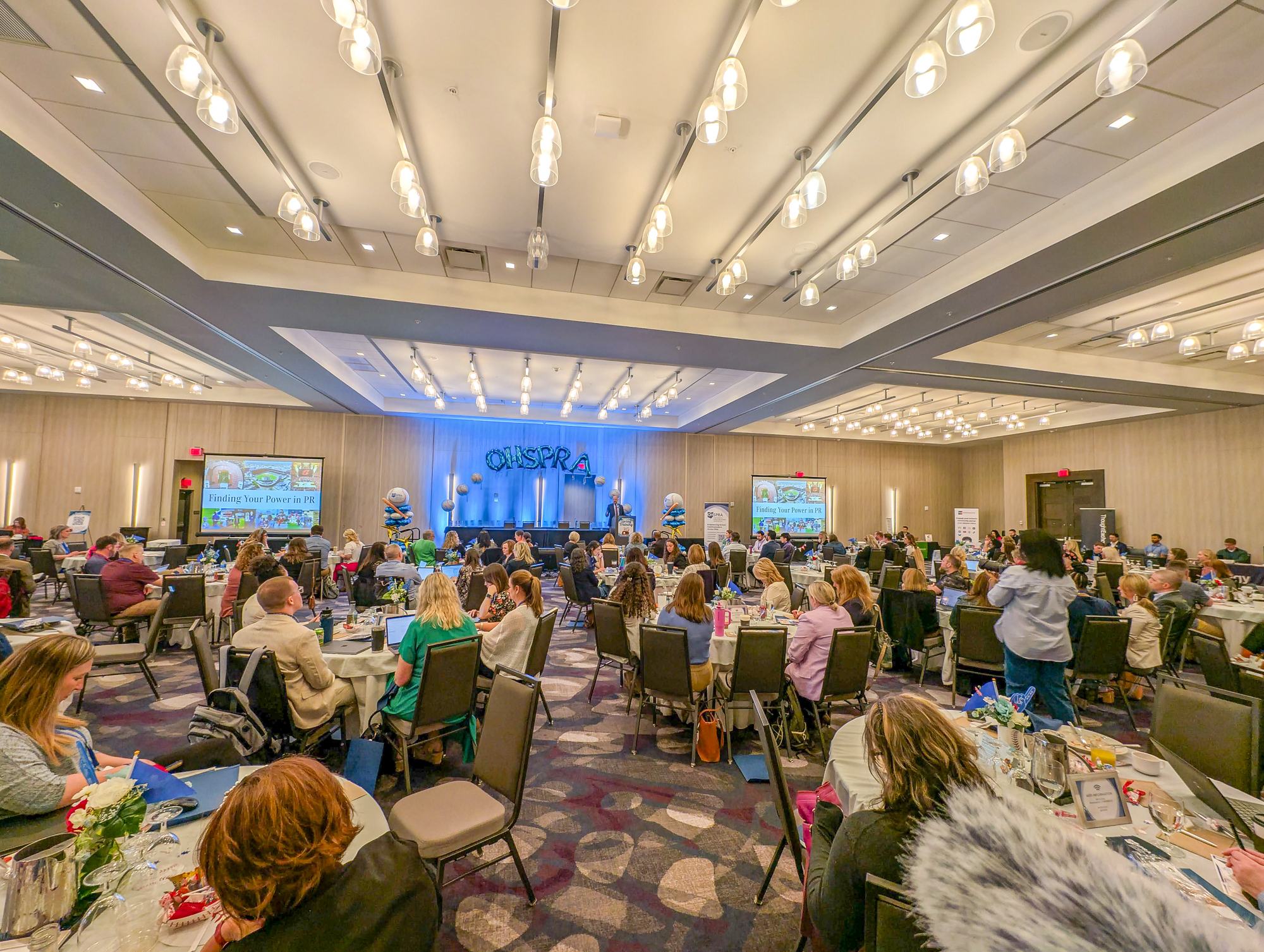
The Ohio School Public Relations Association Conference 2025

The Ohio Public School Relations Association

Supporting those on the front lines of this effort is the Ohio School Public Relations Association (OHSPRA). This organization is dedicated to the training and professional development of school communication professionals. OHSPRA’s core mission is to facilitate support for and trust in education through comprehensive communications and public relations efforts. They provide valuable resources and training to help members listen to and communicate responsibly with their many internal and external audiences while working to enhance the image and role of their districts.

Educators do amazing things each day, and they deserve to have their stories told.

TDA Communications

In this challenging and crucial landscape, the Communications Team at TDA is dedicated to supporting school communication professionals. As a production agency operating within an architecture firm, we focus on spotlighting the individuals and initiatives that make a significant difference in schools. Sharing the most impactful stories through documentary-style video narratives, photography, and written materials is our passion. This work is driven by the belief that creative vision, in the hands of talented artists, can transform raw information into compelling narratives that inspire and connect with audiences. With a diverse skillset, our award-winning team leverages decades of combined experience to bring these stories to life.

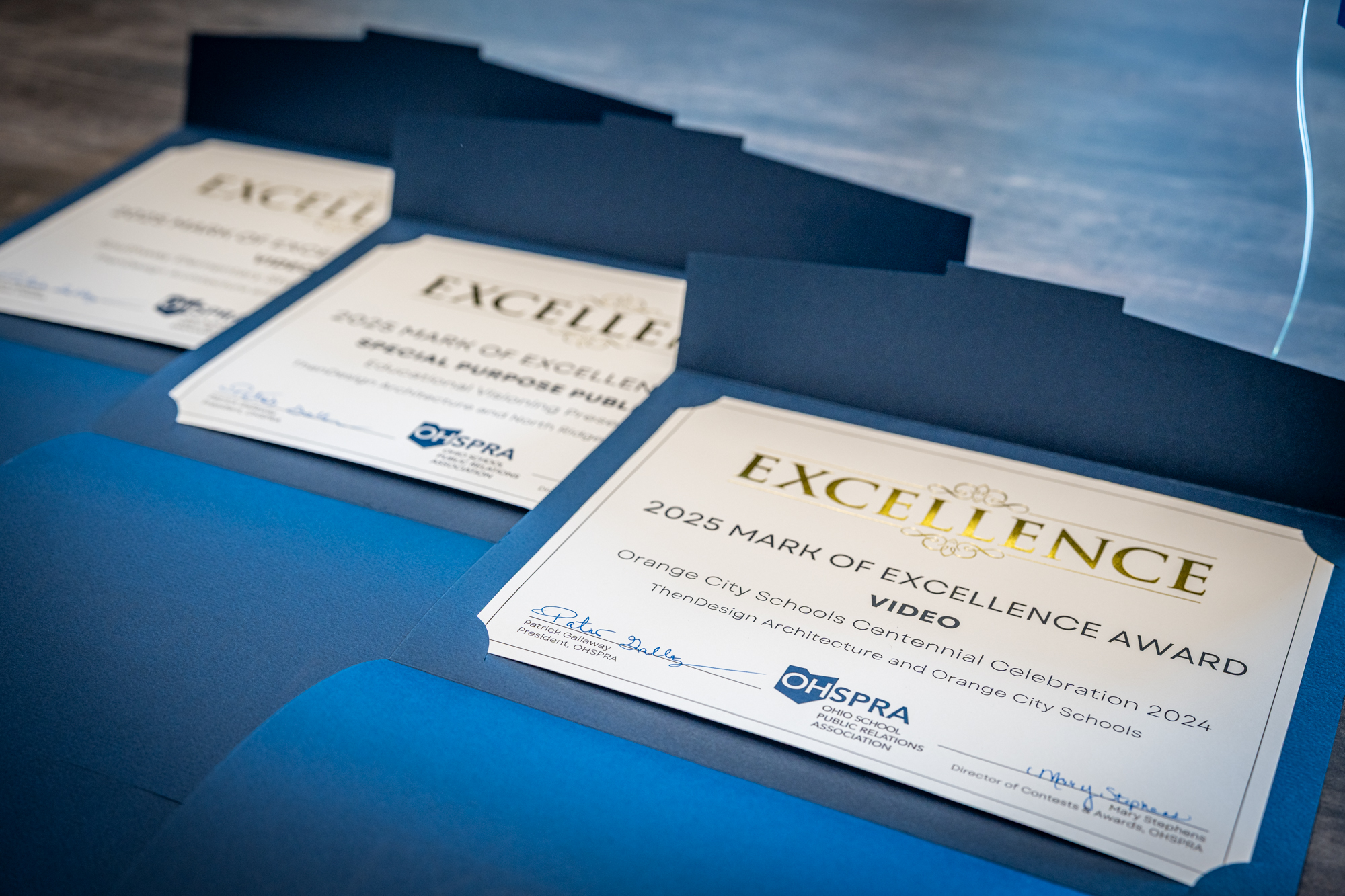
The team was honored to be recently recognized by OHSPRA for our efforts in helping tell these stories, receiving four communication awards in partnership with school districts. Three communication pieces were awarded a “Mark of Excellence” for their video and presentation work, with another receiving the prestigious “Best of the Best” for written materials.

The Ohio School Public Relations Association Media Awards

Best of the Best Award

This “Best of the Best” award was presented for an article developed in conjunction with Indian Valley Superintendent Dr. Ira Wentworth, whose compelling recounting of how his personal experience as a track athlete influenced the design of the district’s new stadium complex. This facility was designed by TDA in collaboration with Indian Valley Local Schools. The sports complex now hosts state championship athletic competitions that were not previously possible. By incorporating direct quotes from the interview and showcasing photography of the completed facility, the article effectively shared a story that can now resonate beyond just the community.

The most fascinating narratives are ultimately about people—how a building, event, or educational program inspires individuals to learn, succeed, and connect.

Highlighting achievements like this through skilled public relations storytelling is vital. It celebrates success and demonstrates the tangible ways in which educational initiatives and thoughtful facilities directly enhance the student experience, benefiting the wider community and fostering greater understanding and support for public education.

If you would like to know more about TDA Communications, reach out to rcaswell@thendesign.com.

Ryan Caswell

Ryan Caswell

Ryan is a communications specialist who is passionate about using digital media to further the goals of organizations and communities in Northeast Ohio. With a background in construction and a degree in architecture, he spent over a decade in corporate video production and brings this mindset to videography, editing, photography and content marketing. He is passionate about supporting the arts, and can be found hiking in the parks system.

Mentor’s CARES House: Autistic Education Comes Home

Mentor’s CARES House: Autistic Education Comes Home
The Cardinal Autism Resource and Education School (CARES) is an educational program that develops independence skills for autistic students. The CARES House is a unique residential home custom-built to empower autistic students by teaching them real-life skills in an authentic home environment. The CARES House is a school that looks like a house and was the vision of Christy LaPaglia of Mentor Public Schools in Northeast Ohio. Christy designed the program and the house to be replicated in other school districts nationwide.

Mentor's CARES House: Autistic Education Comes Home

The Cardinal Autism Resource and Education School (CARES) was created fourteen years ago with the support of Mentor Public Schools in Northeast Ohio to further develop independence skills for autistic students aged 5 to 22. Autism is a neurodevelopmental condition related to brain growth that impacts how a person perceives and associates with others, causing difficulties in social interactions and communication. CARES is a public educational, training, and resource facility for children and young adults with autism, their families, and professionals entrusted with their care.

CARES began with two classrooms serving six students. By the end of the first school year, enrollment doubled to twelve students. The program was the inspiration of Christy LaPaglia when she was a teacher. She is now the Director of CARES and CARES Independent Living and Learning Environment. Christy reflected on the early years, “In our second year, we opened a lab to support students in learning Activities of Daily Living (ADLs). The space had a small kitchen, bedroom area, and a washer and dryer to expose students to a real-life experience.”

Families sometimes struggle to find an adequate educational system that supports students with autism. “My initial experiences with autistic students revealed the limitations of traditional teaching methods,” Christy recalled. “It wasn’t until I received targeted training and support from Mentor Public Schools that I understood the importance of ‘out-of-the-box’ thinking. This shift, adapting my approach to match their individual learning styles, made all the difference.”

To download the 16-page brochure, click HERE.

Mentor's CARES House: Autistic Education Comes Home

The CARES website explains that the program is a partnership with parents and the community, which provides a nurturing environment to develop the full potential of differently-abled students on the autistic spectrum using a multidisciplinary approach that addresses individual needs. It evolved by consolidating successful elements from other programs to create a unique curriculum.

The CARES Philosophy
CARES’s overriding goal is to provide a nurturing educational environment where students with autism can build on their strengths. To achieve its far-reaching mission, the school takes a comprehensive developmental approach, encompassing every aspect of a student’s life: social, emotional, academic, and behavioral. We believe that if students are given the right set of challenges and supportive strategies to overcome them, they will grow and achieve success.

The original vision for CARES was to serve the greater autism community by developing students’ strengths with the intent of later spreading the format to other school districts to help families and communities. Continued results and experimentation led to the conclusion that realistic environments better promote student achievement. The emerging successes in Mentor created the opportunity to open attendance to other school districts. CARES currently hosts students from sixteen school districts in Northeast Ohio.

"Along with academic skills, we wanted to teach kids how to live independently."
Christy LaPaglia
CARES Director

Mentor CARES Program in Mentor

The Big "House" Idea

The CARES program continued to be refined with increased demand. “As we grew and saw the successes that kids were having, our vision became larger,” Christy recalled, “And I kept thinking: We need a house.” A house would embody an authentic learning environment to best produce lasting results. Mentor Public Schools’ incorporation of an additional autistic school lab increased the student population while providing specialized advancement in teaching personalized skills.

Christy explained that the CARES House did not come about by the vision of one person. It was a collaboration of many passionate people who care deeply about educating students with autism. After Mentor Public Schools shared their support for the CARES expansion, Christy pursued input from parent panels to create a cutting-edge program focused on teaching life skills with the goal of student independence after graduation. Parents were asked about the issues they experienced with their children and provided invaluable feedback about the ideal components the new house should have.

A property across the street from CARES was up for sale, and Christy approached the school district about using the location to build the CARES House. It was seen as a necessary piece of the educational process to better advance children with autism, and the project was approved. The property was purchased in June 2022.

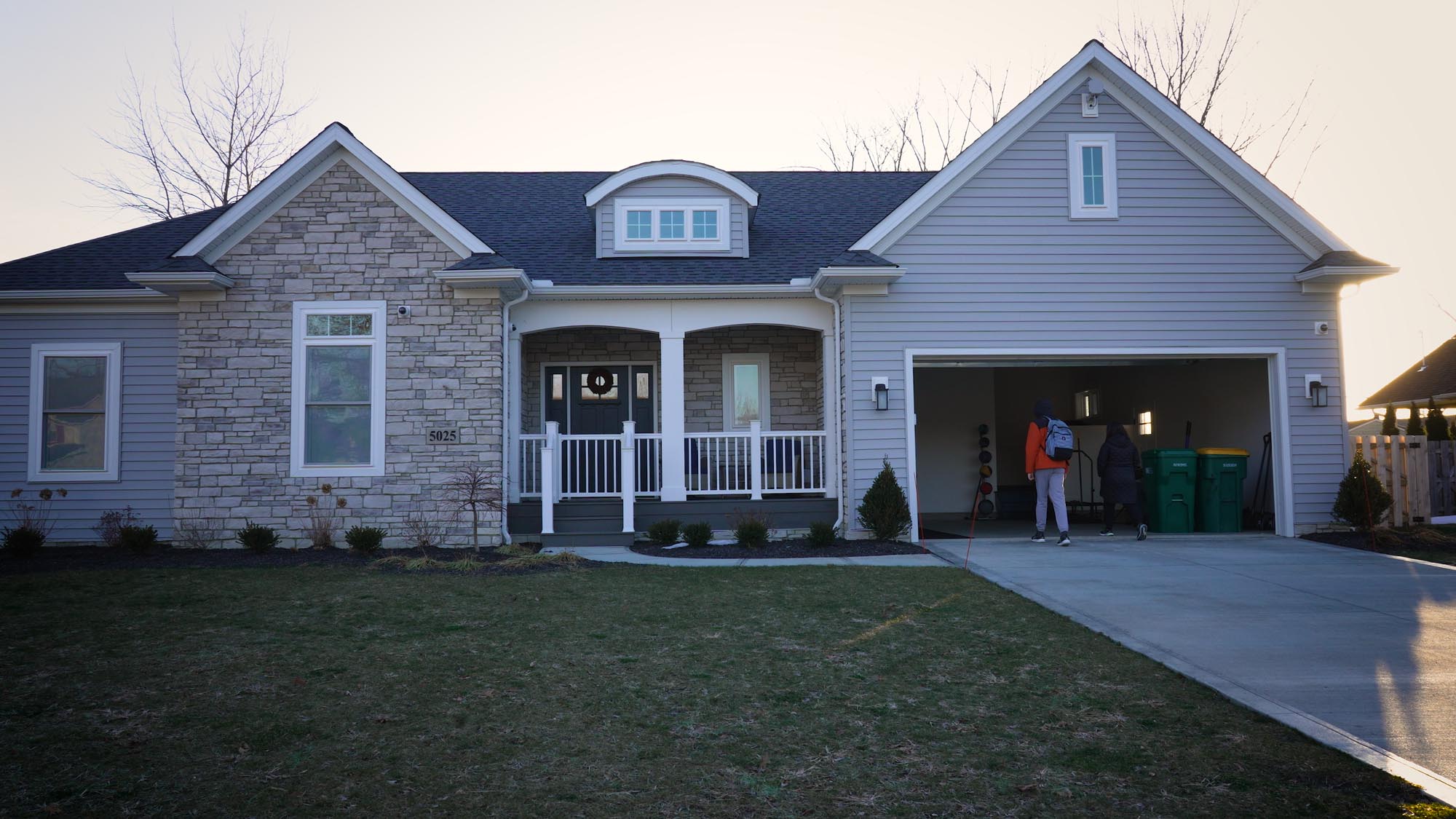
The City of Mentor stipulated that the new house had to maintain the character of the existing neighborhood and be a beneficial, saleable property should the program cease. It would be a school that looked and functioned like a residential home that also had several amenities not offered in a typical house.

The CARES House was a shared vision designed to be a model home that could offer students a more realistic experience for learning life skills that could be seamlessly utilized in their own homes. The house would implement customized technologies with practical functionality to better serve a family with autistic children.

ThenDesign Architecture has had a strong relationship with Mentor Public Schools spanning decades. In 2011, the renovation of a wing in an elementary school converted the space into the CARES autism school and resource center. The school has grade-level specific rooms with specialized equipment to teach students general curriculum, life, and social skills. Since then, TDA has partnered with the district on numerous projects.

“Even before TDA did our high school renovation, I established a great working relationship with their architect, Ryan Schmit,” Christy said. “When I was ready to start this innovative independent learning house, I pitched Ryan my crazy ideas. He understood how my mind worked and suggested things I never even thought about.”

ThenDesign Architecture President Chris Smith, AIA, NCARB, LEED AP BD+C, was enthusiastic about the pro bono project and understood the importance of the CARES House for the autistic community. “TDA enjoys a long history of giving. The concept for the CARES House has the potential to impact lives and make a significant contribution to the autism community. When the opportunity to participate in this incredibly noteworthy project arose, we didn’t hesitate to donate our services.”

“It was exciting to be a part of the CARES project,” said TDA Project Manager Ryan Schmit, RA. “The program does amazing work and has positively affected hundreds of children and families since the facility opened. It has been so successful that families have moved to Mentor just to be closer to it.”

“Our history with Mentor Public Schools is a great example of how we create powerful relationships with our clients and become more than consultants but trusted advisors,” said ThenDesign Architecture Founding Partner and Executive Chair Robert Fiala, AIA, NCARB, APA. “We value the privilege of providing expertise to our clients and adding value to their communities.”

"The CARES House provides a nurturing environment for an overlooked population."
Robert Fiala, AIA
Founding Partner, ThenDesign Architecture

From the Ground Up

Having a school look and function as a residential home created design and construction challenges. The team had to find creative solutions to practical problems to attain a dual permit. After deciding that TDA would be the designer of choice, the next hurdle was finding an experienced residential construction company with the skills to accomplish unique goals while respecting the tight budget.

Christy sought assistance from various vendors in the area. “Many builders were intrigued by the project but not interested. ProBuilt Homes was the first to express genuine curiosity,” Christy recalled. “We sat down, and I explained the project and what we wanted. They agreed to collaborate, and it proved to be a wonderful partnership.”

The house was planned to be a comfortable, warm, and inviting space that served as a school in a suburban neighborhood. The blend of commercial and residential materials, technology, amenities, and design features made the project a unique opportunity for ProBuilt Homes and ThenDesign Architecture.

“It was exciting to take on such an unusual project,” said ProBuilt Homes Director of Operations Bob Myers. “Working closely with TDA, we helped Christy realize her dream. We typically work on homes that have seven or eight pages of blueprints. Ryan designed the house with a hundred. It was quite challenging, but the end result is where we shined. It fits well into the neighborhood, and nobody driving by would know that this house is actually a school.”

The key to success in constructing the CARES House was gathering enthused, dedicated partners. Horner Networks worked closely with the Mentor Public Schools’ IT Department to overcome the unusual challenges of the house’s customized technology needs. Other vendors included Ohio Desk and Kruger International (KI).

ThenDesign Architecture Architect Ryan Schmit gained support from the managing partners because the project aligned perfectly with the company’s core values of serving the community and improving students’ lives. Due to the healthy relationship established during past projects with Mentor Public Schools, the driving forces behind the decision to support CARES by donating time and resources was based upon the chance for the firm to help empower autistic students.

“The innovative depths of the CARES House run parallel with our firm’s mission,” said Robert Fiala. “The project combined our core values, social conscience, and expertise in educational design to create something for a broader audience. Our core values are more than creating relationships with clients and running a successful architecture firm. It has to do with investing in the communities we serve. We are proud to support the CARES program that empowers autistic students.”

The CARES House officially opened for the 2024-2025 school year.

"Working directly with families inspired what the house became."
Christy LaPaglia
CARES Director

Mentor's CARES House Construction

Technical Features Support Autistic Students

Safety was at the forefront of all design considerations. The 2,540 SF single-story CARES House is a natural learning space that provides a one-of-a-kind experience with specialized amenities that offer a comfortable and safety-centric environment.

TDA, ProBuilt Homes, and other vendors worked closely with Christy to implement unique technologies to support autistic families. Based on parent feedback and wish list items, the features evolved far beyond standard doors and bathtubs.

CARES House Features Include:

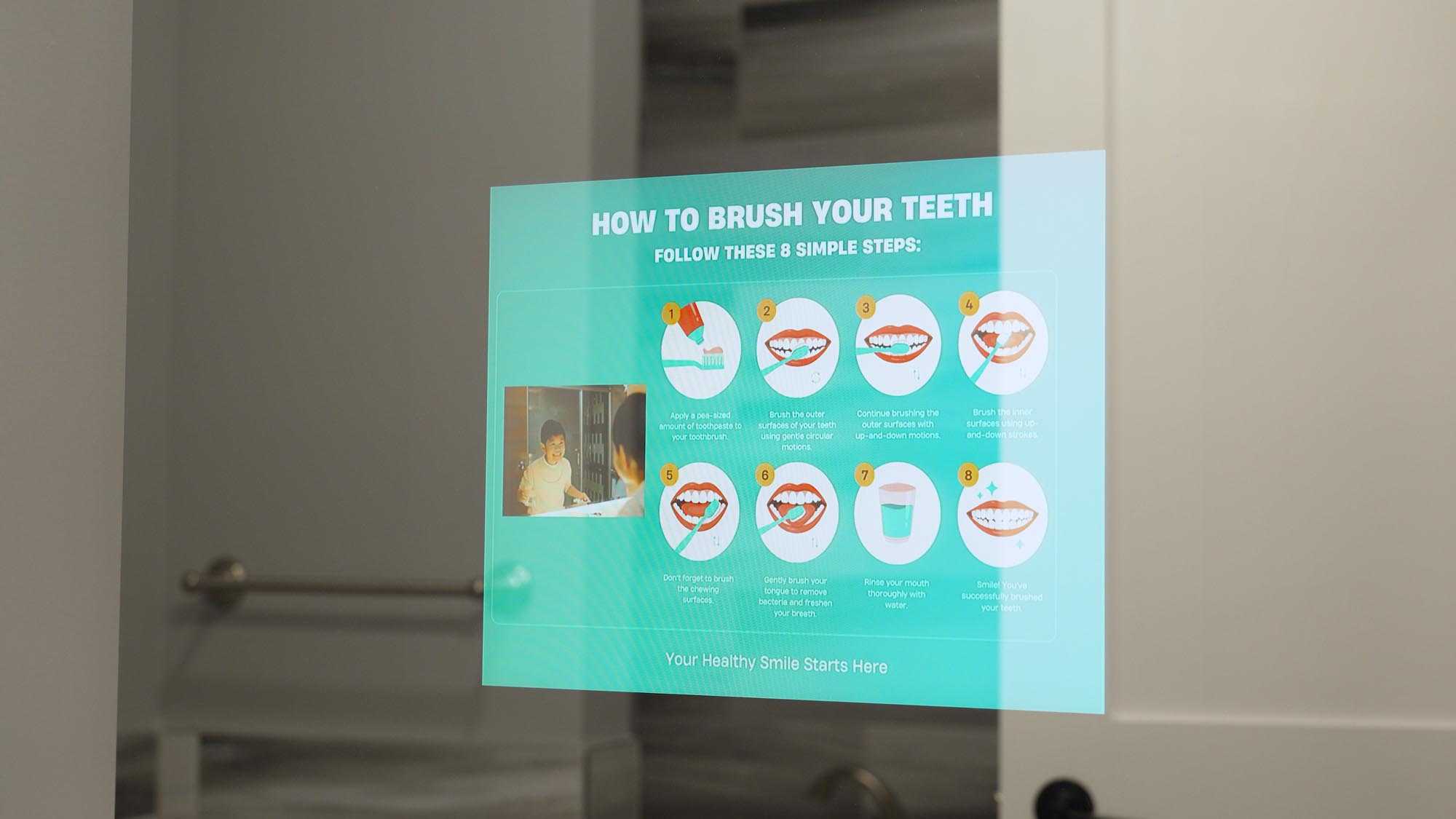
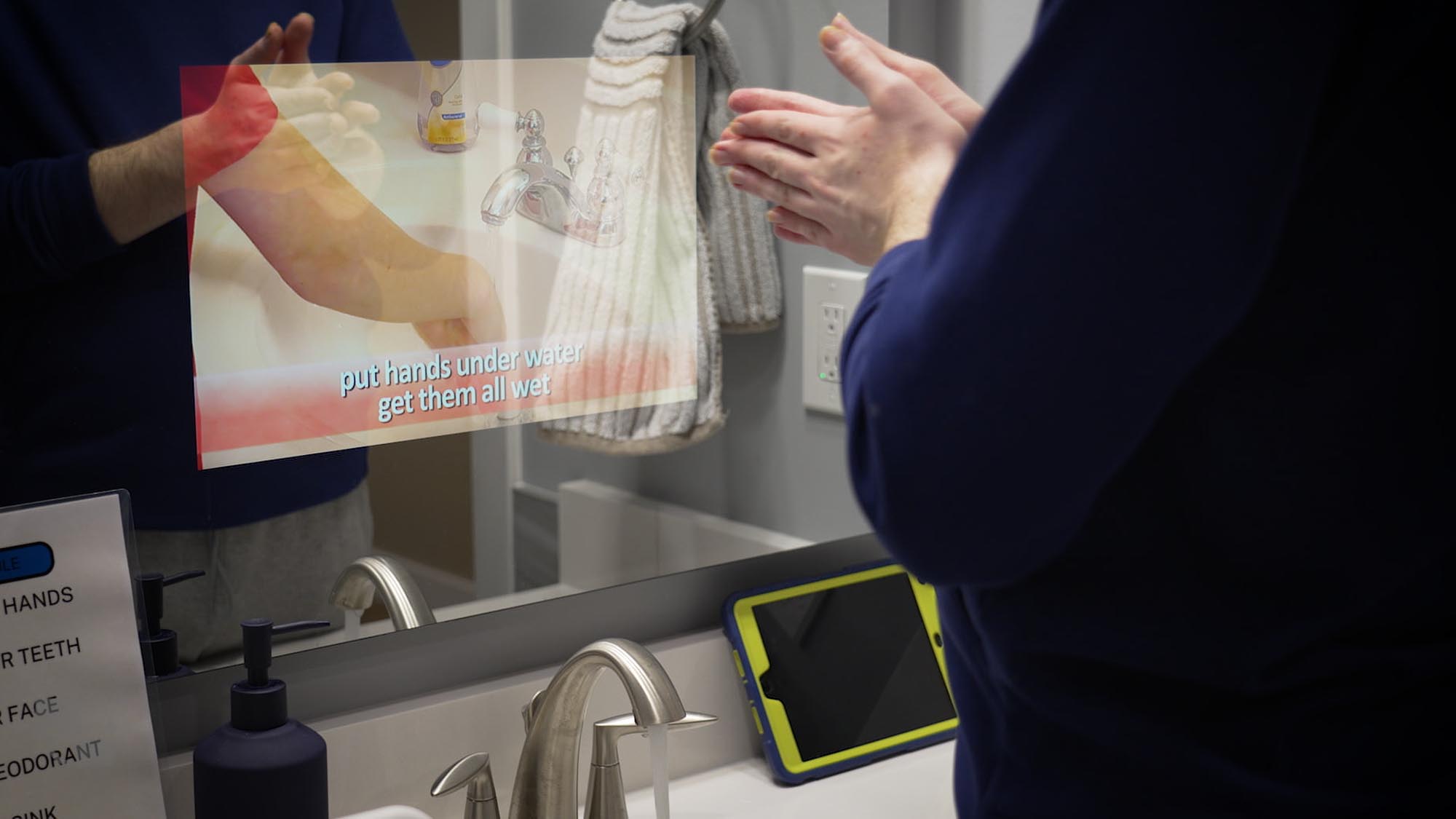
      • A video display built into the bathroom mirror steps through various hygiene instructions.
      • The wet restroom features a sensory bathtub that utilizes bubbles and lights.
      • The simple button toilets use concealed water tanks.
      • A house-wide sound system plays verbal cues to assist with the transition between activities.
      • Non-verbal students can communicate ideas by pushing designated buttons on the walls.
      • Specialized lighting adjusts colors to indicate bedtime, wake-up time, or conclusion of an activity.
      • Monitors instruct students by displaying tasks and chores.
      • Parents can observe activities from a monitor or phone through an in-house camera system.
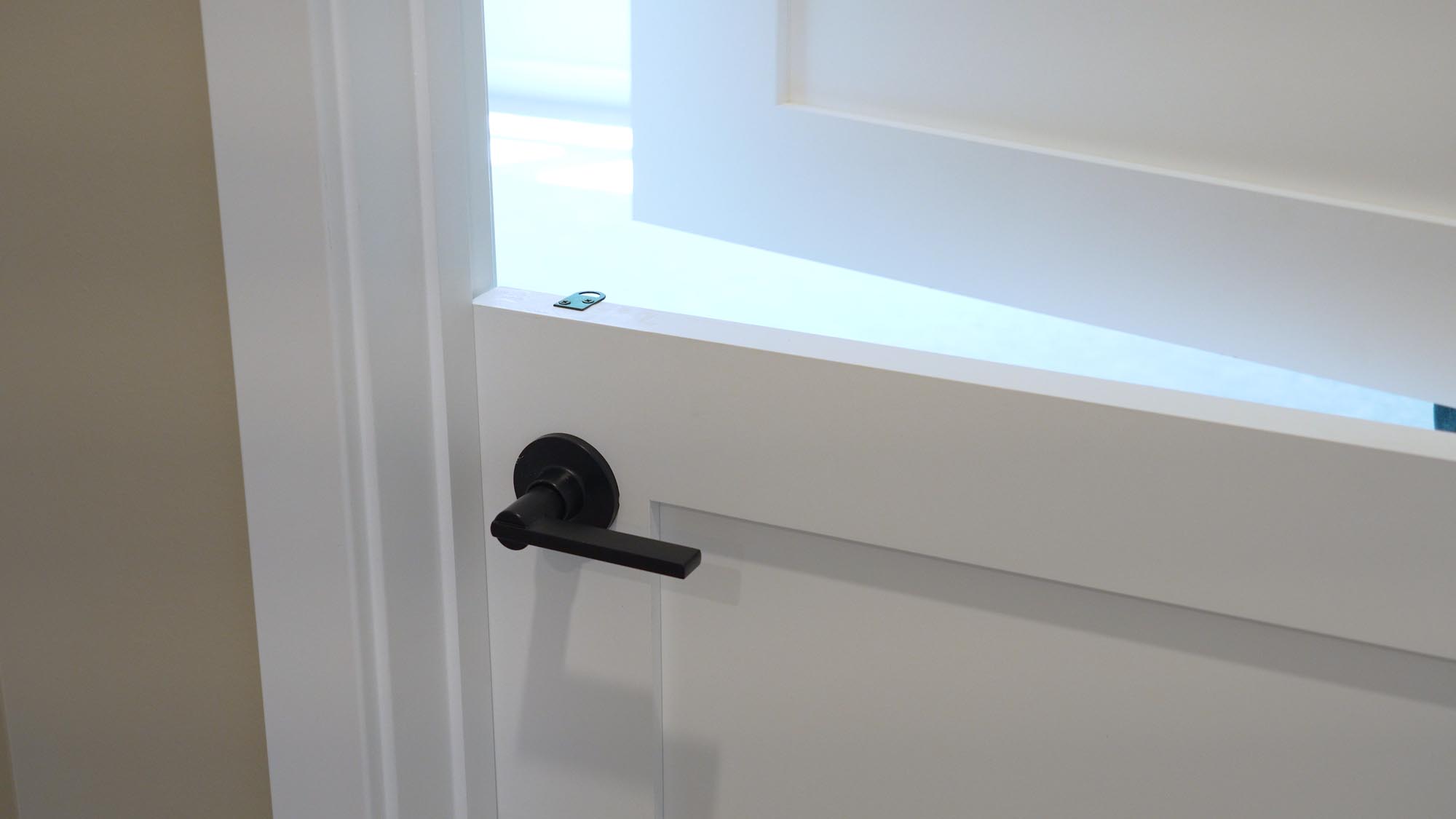
      • Dutch doors can be half-closed, allowing parents to supervise activities while providing a sense of privacy.
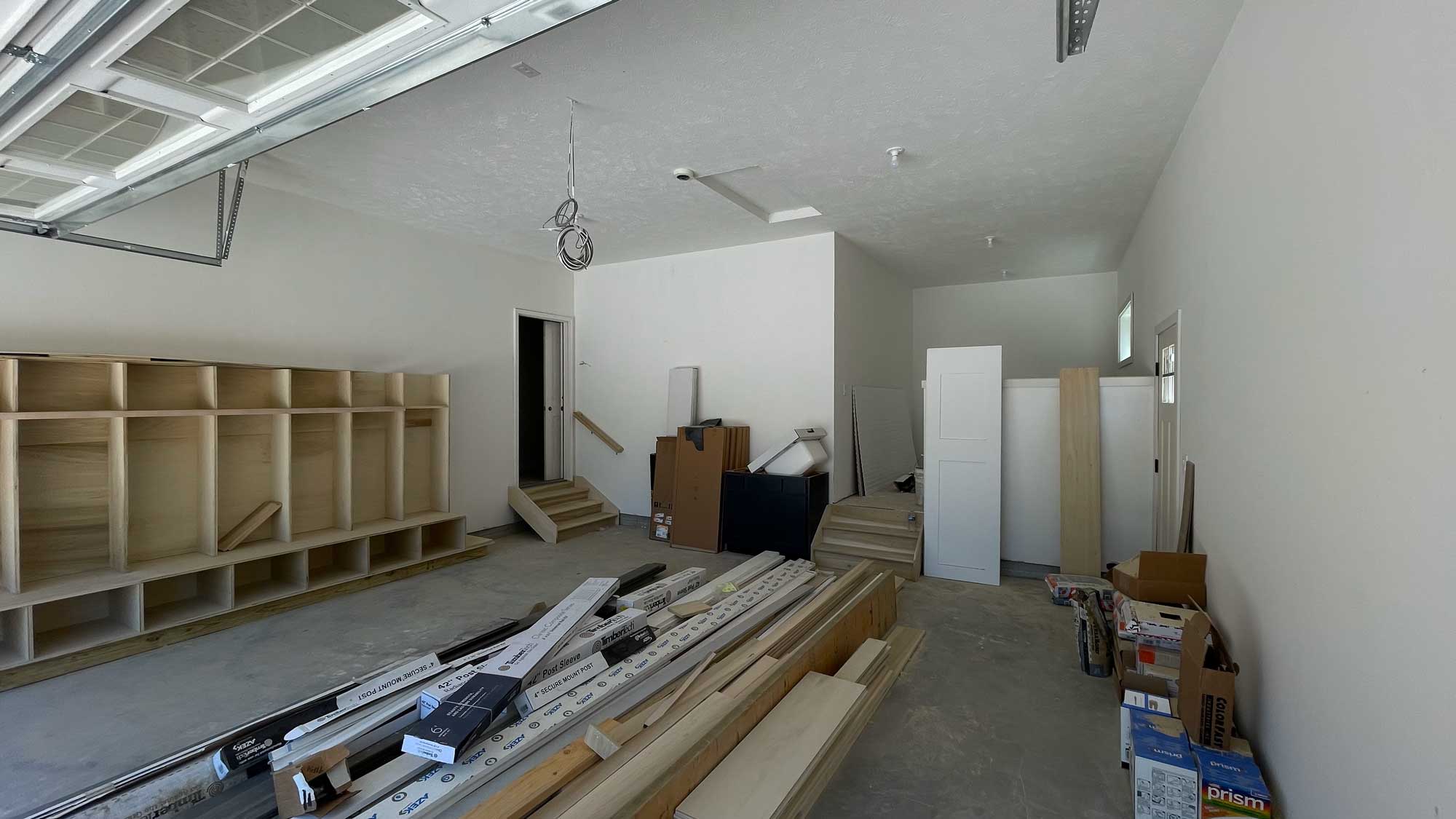
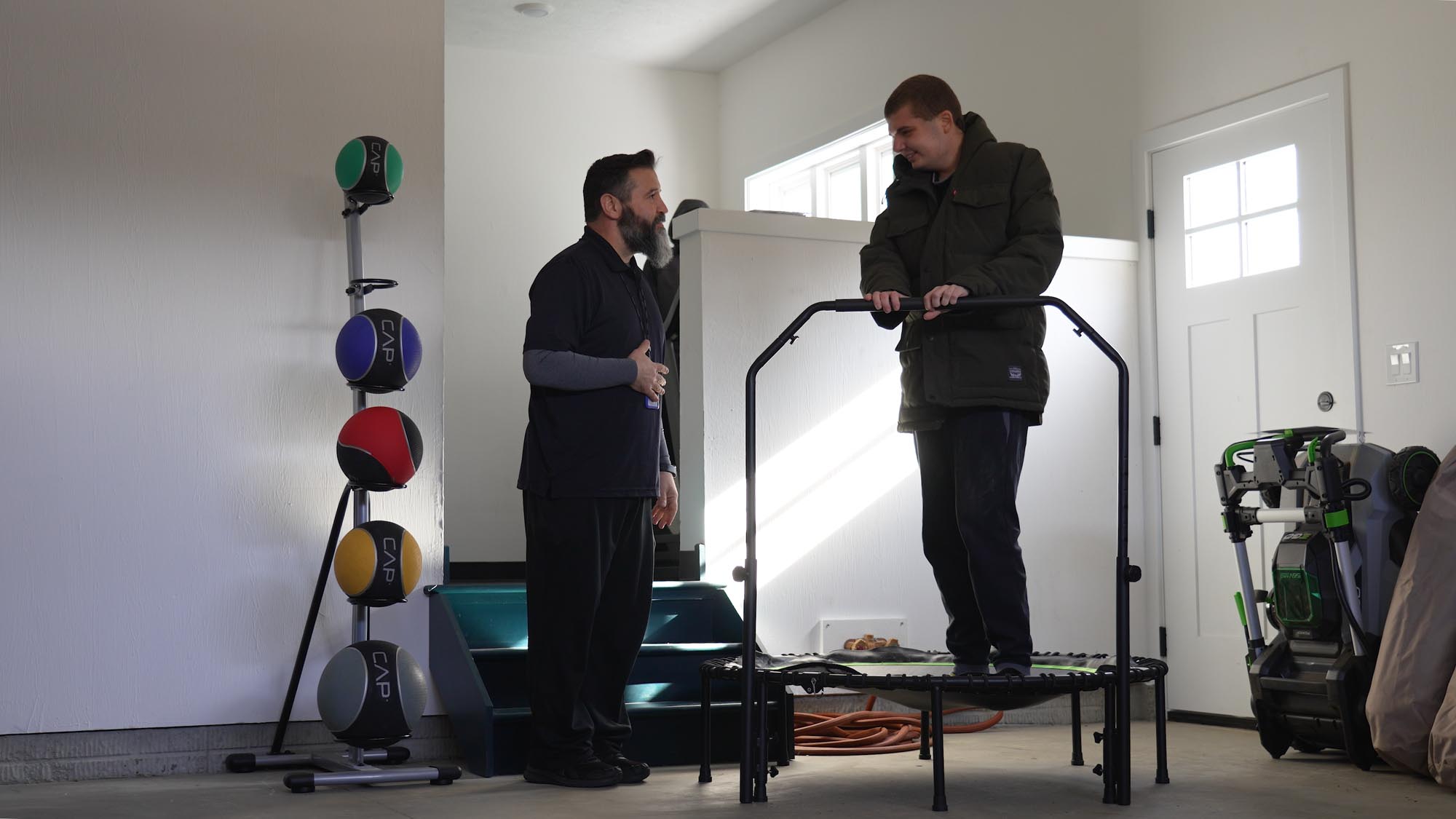
      • The garage has changing station lockers and a sensory area.
      • The exercise space in the garage has a treadmill, weights, and trampoline.
      • Patio railings and a gated porch allow younger children to be outside in a more controlled environment.
      • Exterior doors beep when they open to indicate that someone is entering or exiting.
      • The kitchen range is a cool touch inductive stove for advanced safety.
      • The lockable refrigerator is inside the butler pantry behind lockable doors to prevent unsupervised access.
      • Adjustable window blinds are encased inside the glass.
      • TVs are built into the bedroom walls to prevent damage.
      • The living room fireplace is a no-heat video display.

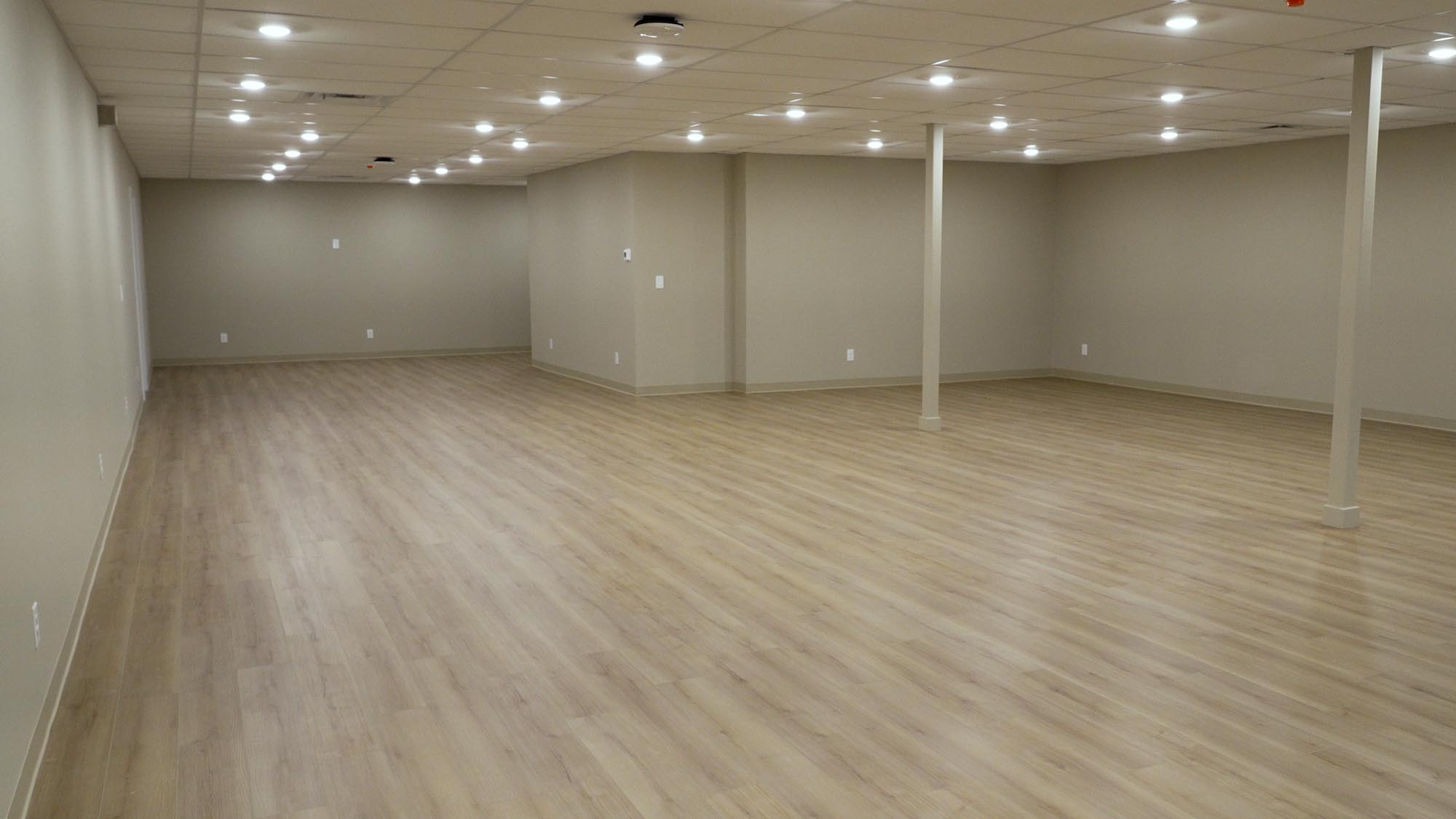
The basement is the staff and parent training center, but it is also used for student movement exercises and playing games. When parents are invited to the house, they can participate in interactive lectures and group discussions. Every part of the house serves to better assist autistic students and their families.

“It was nice to collaborate with others who shared the vision of the CARES House,” remarked CARES Assistant Director Brittni Mejac. “They found clever solutions to the features we wanted to have. Now, the sky’s the limit.”

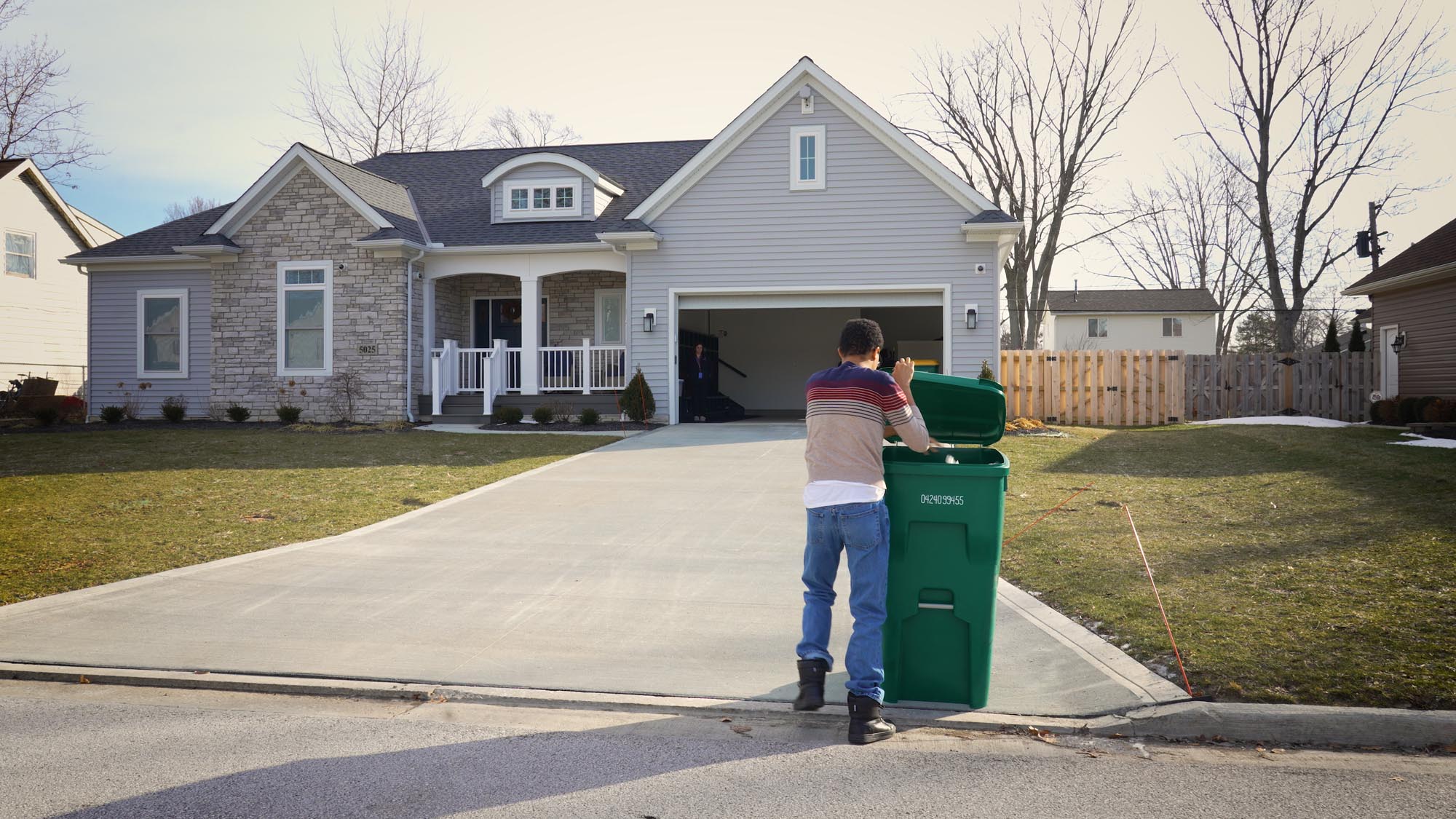
“We wanted to expand the skills we could provide, like cooking, maintaining a house, taking out the garbage, landscaping, and washing windows,” Christy said. “They will also learn how to live with others.” The goal of the house is to have students become an independent, productive part of the job force and community.

"The students thrive, and the students have so much success."
Dawn Budziak
Parent

Mentor's CARES House Details

A Very Active House

“At the heart of our success is the ‘CARES Way,’” Christy said. “It’s a commitment to continuous learning, embracing change, and fostering a culture of kindness. Our team, who face demanding challenges daily, embody these principles. Their dedication is unparalleled, and I’m incredibly fortunate to work alongside such exceptional individuals.”

The experienced, highly-trained staff provides specialized instruction for each student with different needs. Students on the autism spectrum can range from verbal to non-verbal, requiring different approaches to suit their cognitive circumstances. Due to this, students and staff adapt activities and instructions on an individual basis.

CARES in Mentor has three occupational therapists, three speech therapists, three behavioral specialists, and one transition coordinator. Intervention Specialist Lindsey Hesson noted the progress in the first year of the CARES House, “The things that we’ve been working on for three years are being mastered here because it’s real life. It’s what they do at home. I’m blown away by how much they’ve grown.”

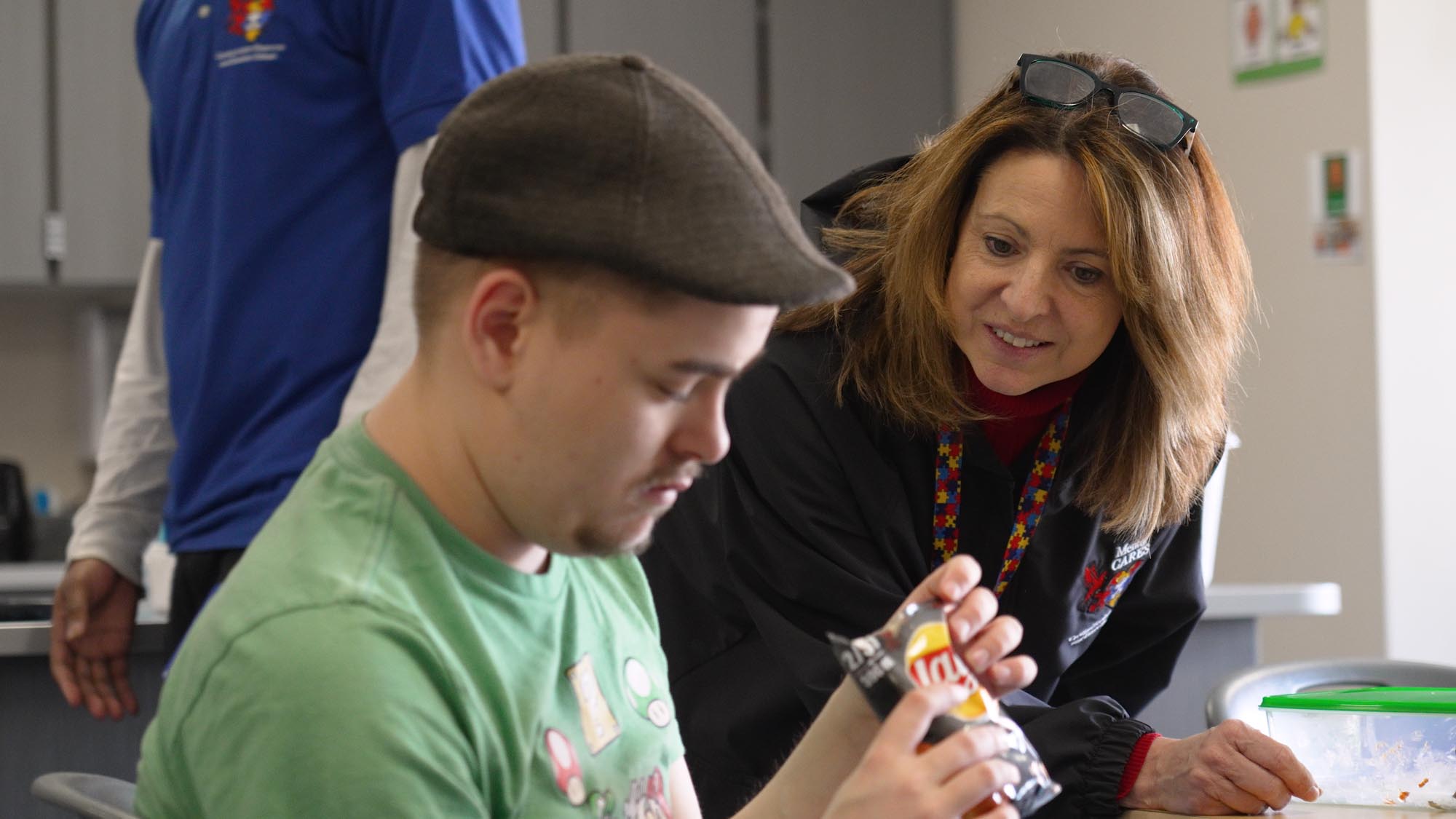
Autistic students can struggle to learn through traditional academics but have found success in retaining information by experiencing functional skills like reading and math in real-life situations. Checking a grocery list, organizing chores, measuring meal ingredients, and managing money using a credit card provide practical circumstances supporting independence.

The CARES House program is customized for maximum impact and success. Employing thoughtful routines, the students gain skills from repetition and personalized instruction. Lindsey described an outline for a day in the life of a CARES House student.

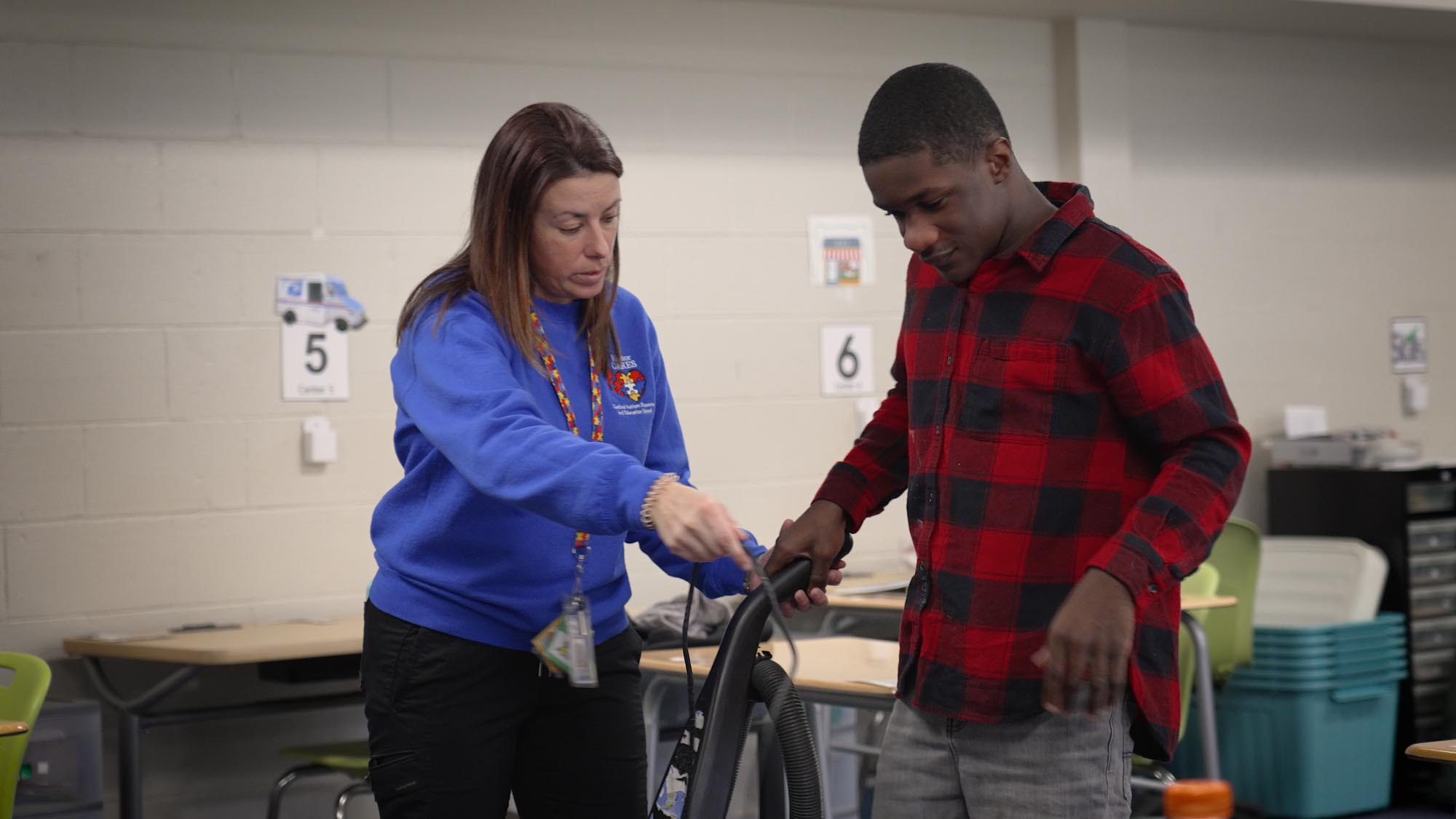
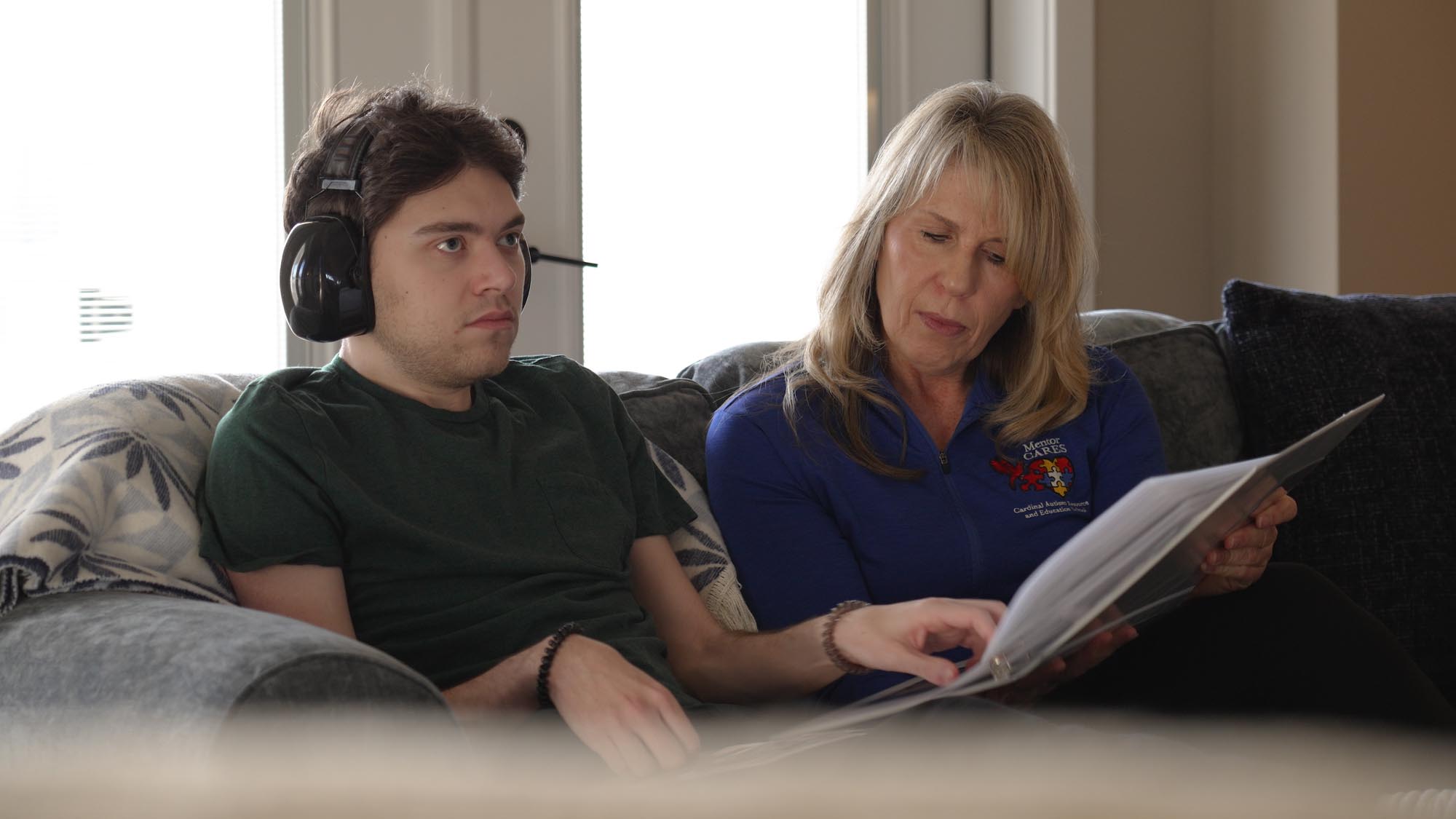
After the students arrive and enter through the garage, they use their designated lockers to put away coats and switch into their indoor shoes. They enter the house and check the daily schedule. Each student chooses which order to complete their morning routine of breakfast, hygiene, or sensory activity. Some enjoy bouncing on a ball in a quiet room, while others walk around the neighborhood. All staff and students meet in the living room to discuss the forthcoming day. Binders supply rotating chores and leisure activities to choose from and assign.

Some activities are weather-dependent, requiring creativity to maintain. This may include walking a designated path in the large basement rather than outside.

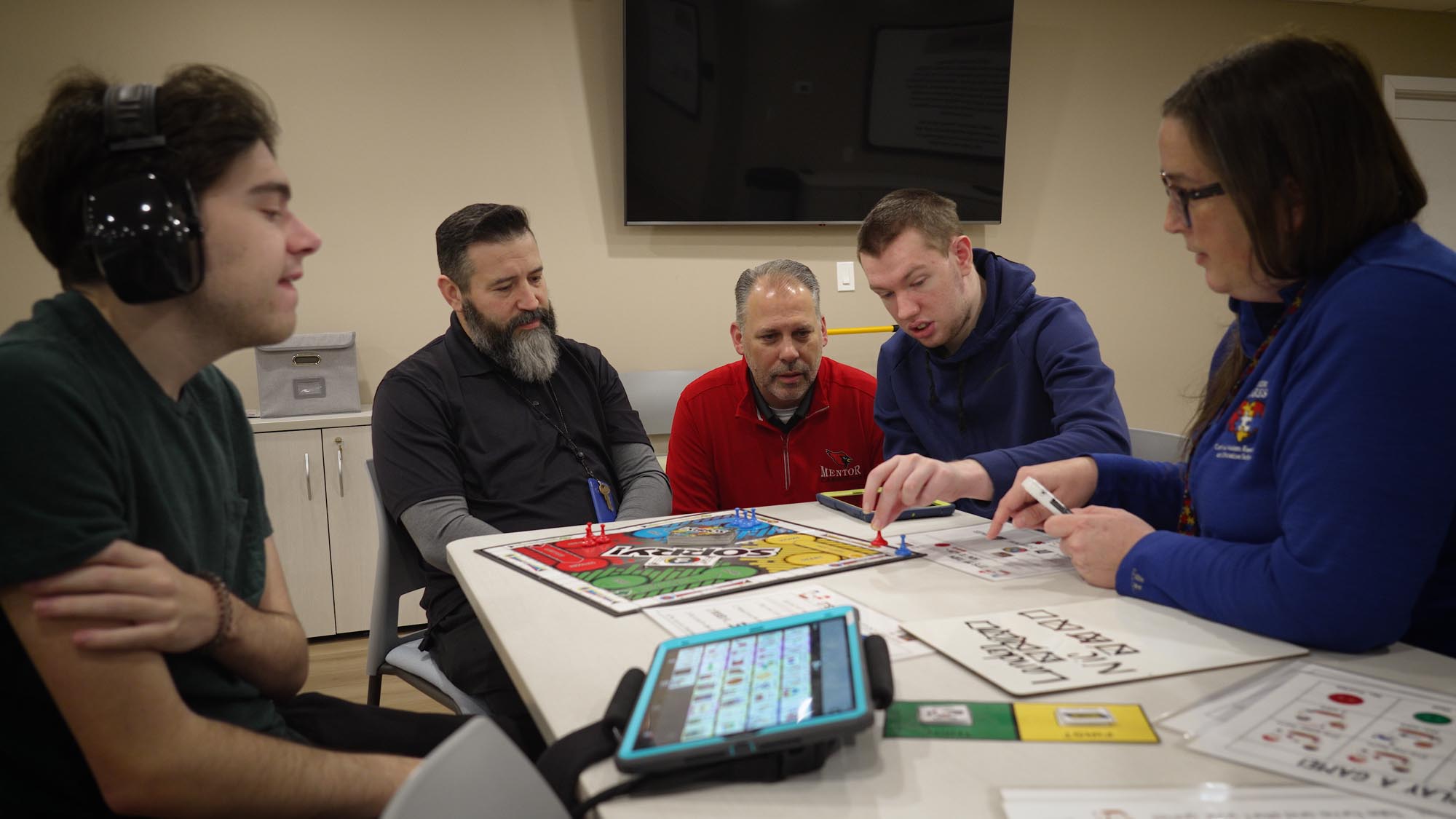
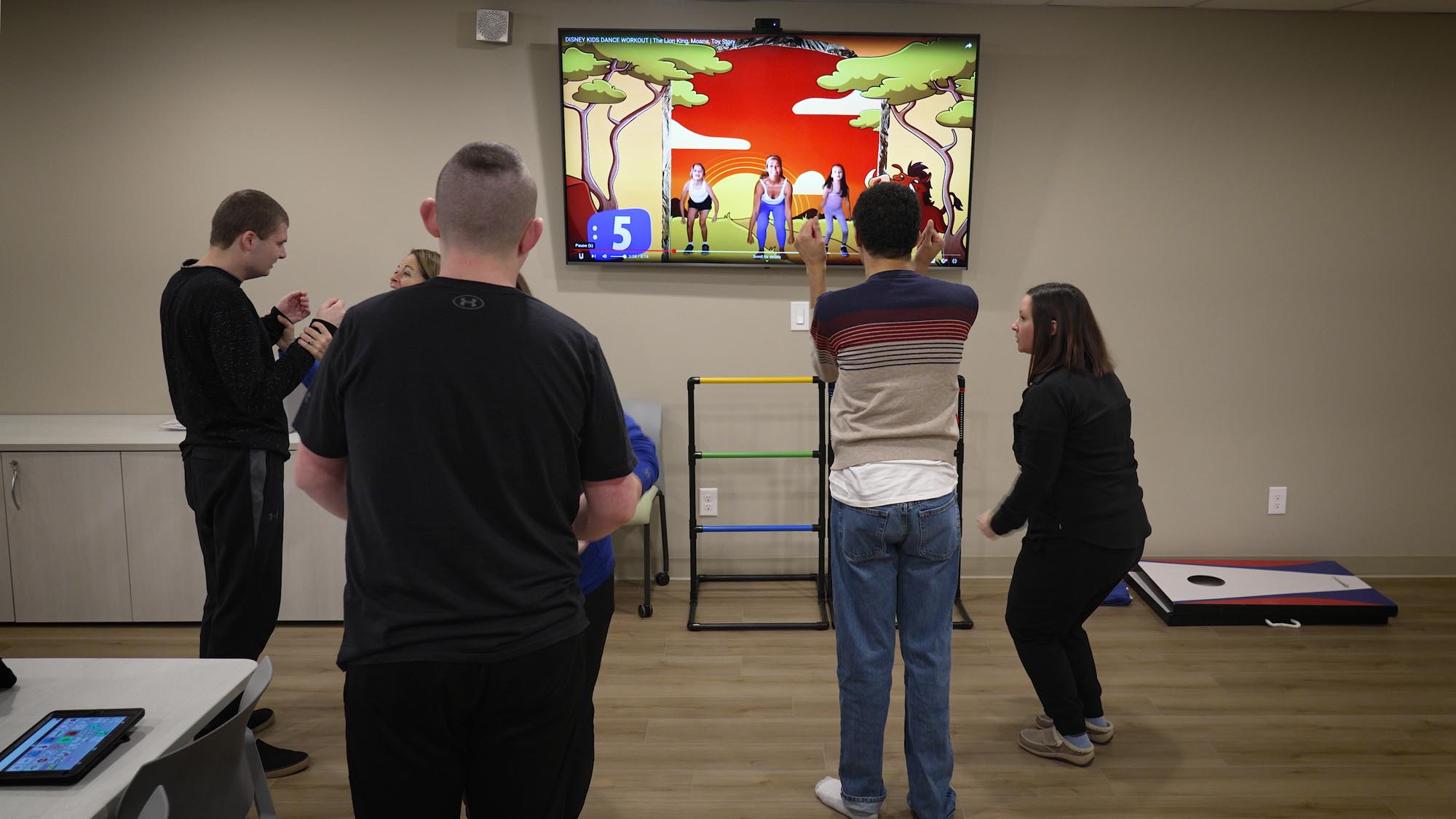
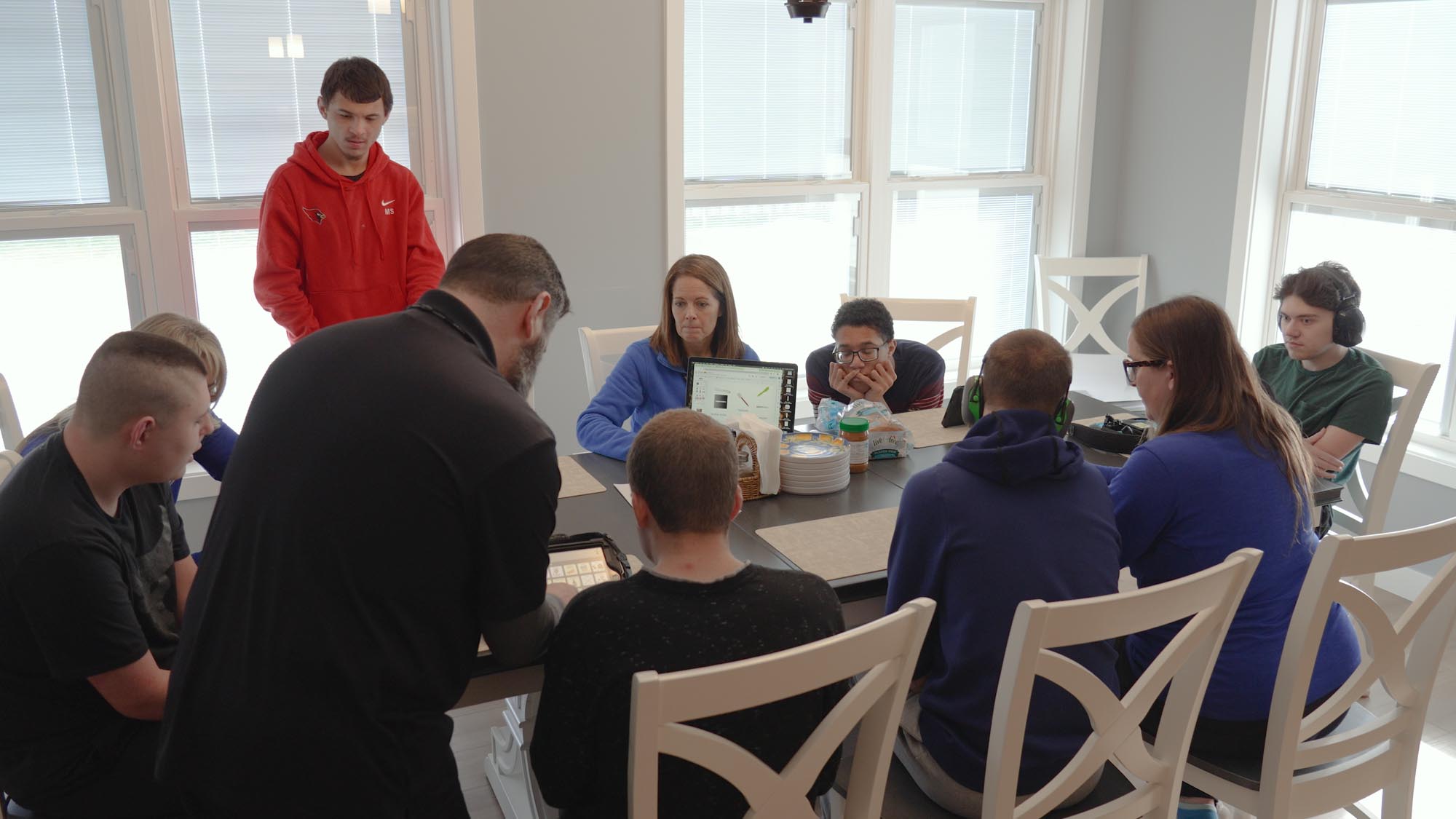
Students enjoy group activities like cooking, following an exercise video, or playing board games. Individual instruction to work on speech and set personal goals is implemented. They will also engage in service projects like preparing meals for teachers across the street to acclimate them to public interactions and serve the community.

“We make our lunches and sit down together,” Lindsey said, “This is one of my favorite parts of the day.”

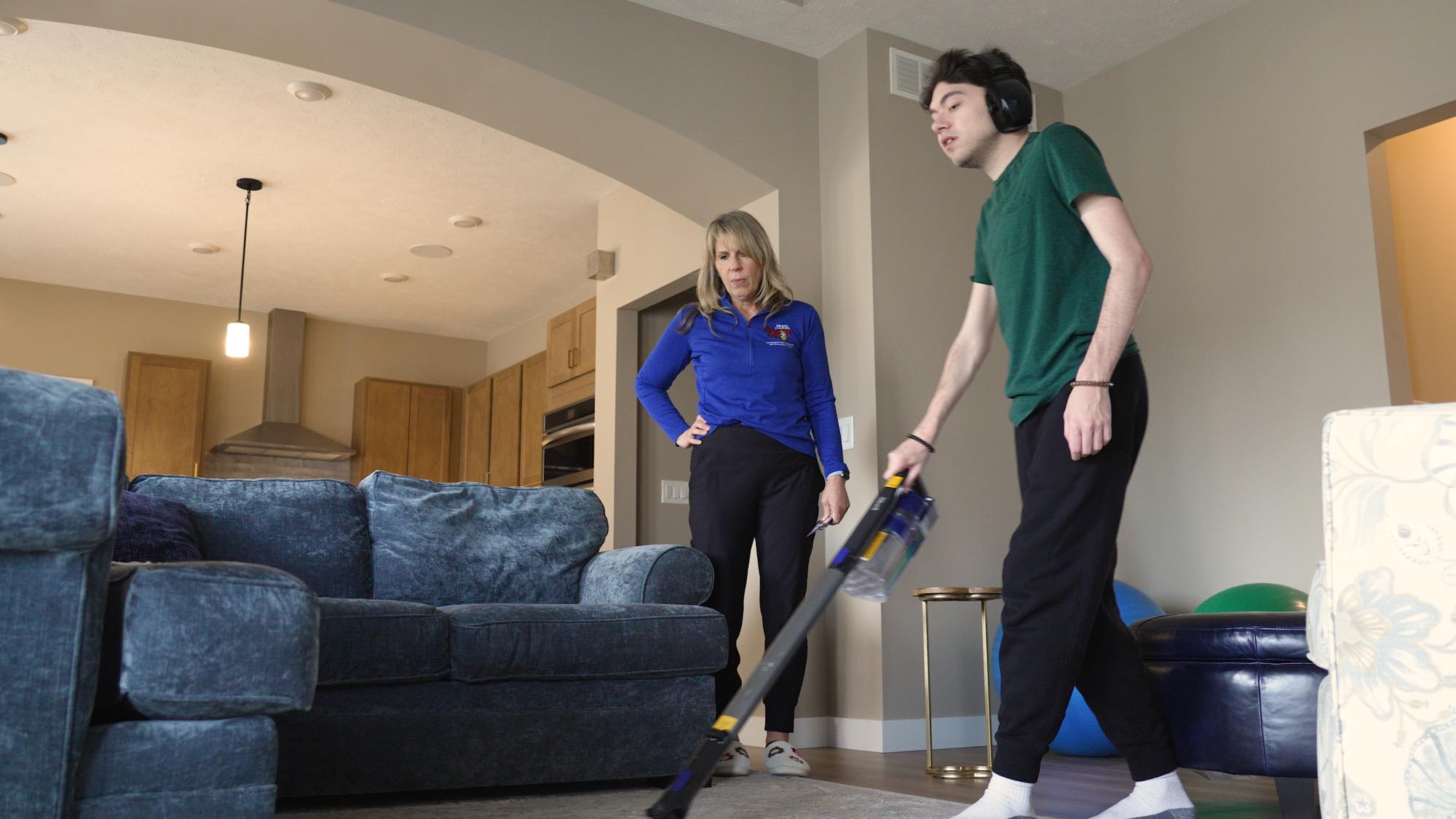
After the meal, the students do their afternoon chores, such as cleaning the bathroom, vacuuming, or doing laundry. These household tasks teach personal responsibility while instilling a healthy work ethic to promote independence. Most afternoons end with leisure or movement activities or a group walk.

Community outings to the mall or grocery store help them feel more comfortable in a public space, exposing them to personal shopping and financial management. Bowling has become a cherished group activity at the CARES House.

There is a strong belief that CARES students can be successful in helping their community. “Training students to be independent allows them to engage in public activities, but also to just be a good neighbor,” Brittni said.

"This house is the ultimate puzzle piece we were missing."
Tara Krall
Occupational Therapist

A Joyful House

Director of CARES Christy LaPaglia said, “Building the project was easy. Convincing people of its value was something else. It took just the right people to believe in the program and make it happen.” The early struggles of the program have paid off as momentum continues to build.

“Doing the unusual has made the program incredibly successful,” Christy noted, “Once parents came in to see what we have and I explained the program, they were fully on board. The CARES House provides an opportunity for parents to experience the features we have so they can implement them in their own homes.”

The CARES House helps parents see what their children are capable of. When a dedicated and passionate staff invests in the success and well-being of their students, the program can make a profound impact, delivering meaningful rewards for instructors, students, and their families.

Dawn Budziak has a son in the CARES program. “CARES has done a fantastic job planning and constructing this house. Every aspect of this home is tailored for students with autism. This year, there has been a 100% improvement in all aspects of Ben’s life.”

Another parent with a son in the CARES program is Clinical Psychologist Dr. Sherri McClurg, “We’ve just loved what they’ve done with the program. It has been phenomenal for Nic. We are blessed to be here in the house for the first year. We love what CARES has created both at the school and now at the house.” Sherri added, “We have been very, very happy.”

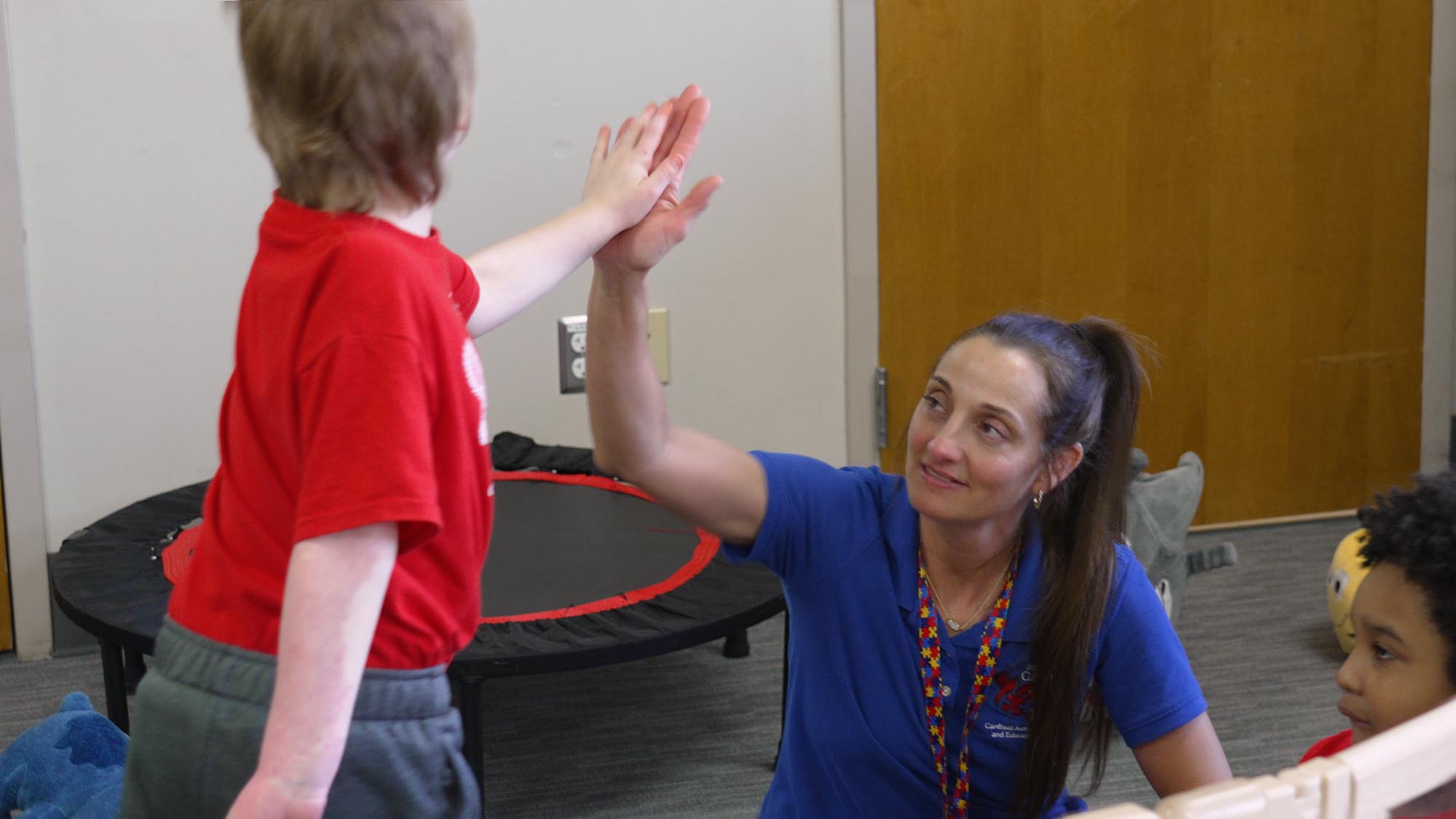
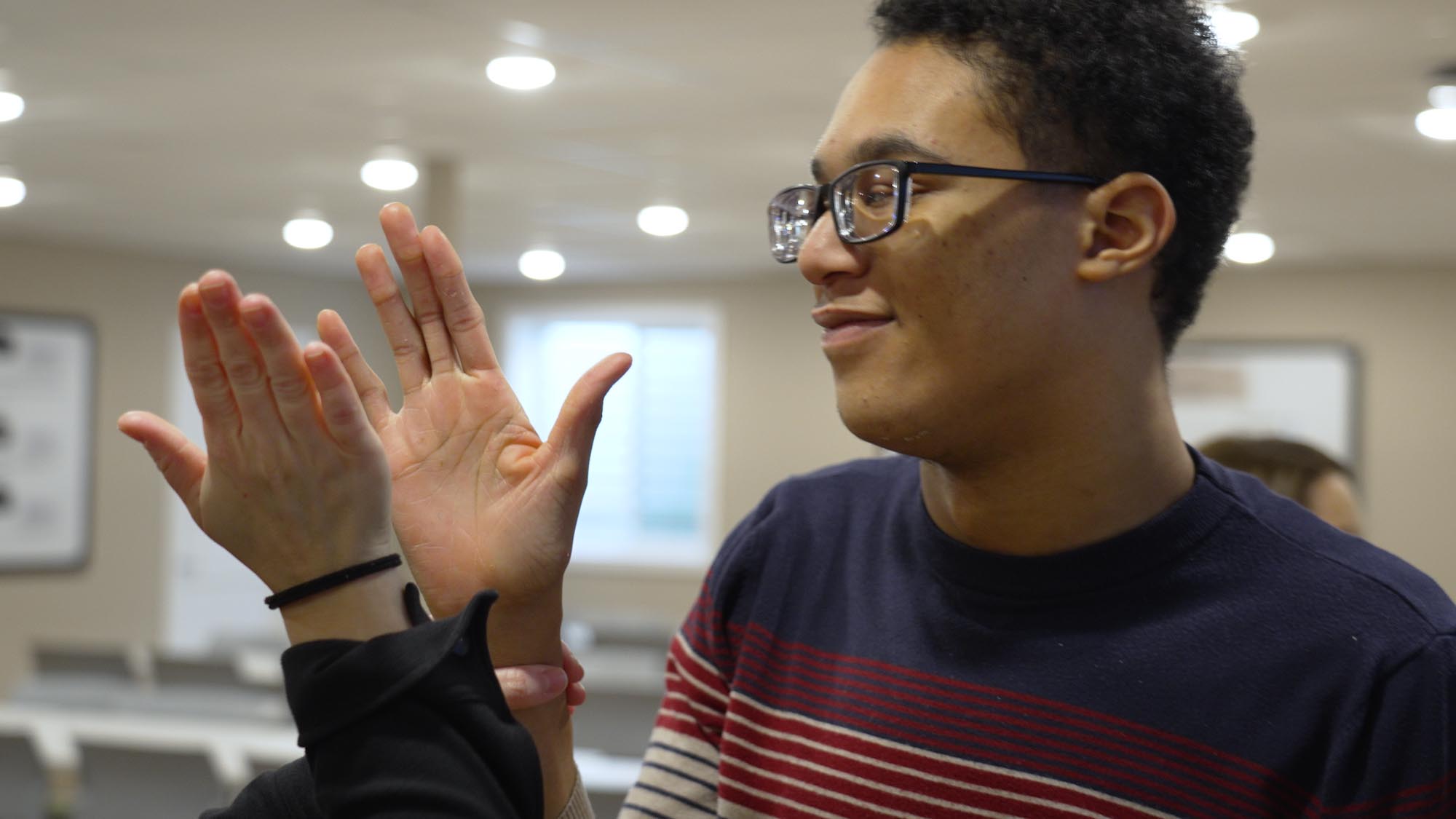
“I’ve noticed a lot of positives in my students,” said CARES Occupational Therapist Tara Krall. “I’ve seen them grow in their sense of pride. I’m getting a lot more smiles and high-fives now. It’s really exciting.”

“The kids love coming to school every day,” said CARES Intervention Specialist Lindsey Hesson. “They’re happy to be here, and that brings me a lot of joy.”

CARES Assistant Director Brittni Mejac echoed the sentiments of her fellow staff members, “The staff believes in this unique program because it provides endless opportunities. CARES is where my heart lies.”

Mentor School Board President Maggie Cook toured the CARES House and was impressed by the features it provides. “I’m so proud to support this innovative program. The students are being pushed to their highest potential, and we hear success stories.”

Mentor Public Schools Superintendent Craig Heath has been a staunch supporter of the CARES program from the beginning. He said, “Every single student has a gift. As educators, we help our students identify and nurture those gifts so they can grow academically, socially, and emotionally. This house provides unique tools for our students to develop the skills they need to share their gifts with the community.”

"I know what we've got here. This is gold."
Dr. Sherri McClurg
Parent

Mentor's CARES House Improves Lives

Graduating Into Independence

As students approach graduation from the CARES program at age 22, they work with Transition Coordinator Justin Bednarz to further develop their social and employment readiness skills. “We begin transitioning students from school-age services to the adult world so they can get a job or move into a group home,” Justin said. The CARES House utilizes natural settings to help students thrive.

Since the needs of each student are different, it is vital that the parents are involved because they have a significant role in student development. Justin works with parents, teachers, the Lake County board, and the Chamber of Commerce to spread community awareness and seek additional resources.

Justin explained, “The more comfortable the community and local businesses are, the more successful our students will be. They can spread their wings, but that is only possible with community support. A beautiful transition is when a student can move into a group home and get a job. It is never easy, but the skills they learn will increase their opportunities for success.”

"The CARES House provides unique student development tools to nurture their gifts."
Craig Heath
Superintendent, Mentor Public Schools

Mentor's CARES House in Action

Mentor CARES House: A Hopeful Future

The CARES program was designed to be adaptable so it can be replicated nationally and give autistic students a greater chance of a successful adulthood. Justin expressed his hopes for further prosperity, “I’m excited to see our growth. It would be great for this to be a model house where people can come and see what we do here.”

Christy said, “I’m so grateful to the Mentor administration and the Mentor Board of Education for supporting this project from the very beginning.” She continued, “I would love to see this program duplicated in other public school districts across the country.”

The CARES program in Mentor reaches its capacity every school year. “We’re full here, and it kills me that we can’t take on more students. I get calls every day,” Christy said.

Parent Dawn Budziak was grateful for the CARES House and its notable impact on her family. “I didn’t really understand how important something like this was until it was here. Every kid needs an opportunity to try something like this.”

TDA Project Manager Ryan Schmit, RA, expressed optimism for the potential of the CARES House as a prototype for other programs, “I’m excited because the house is very impressive. But I’m more excited to see how it evolves and grows into other areas.”

With the help of a supportive school board, other districts can build a similar program based on the CARES and CARES House framework. According to Christy, those willing to invest in the program will reap the rewards. “I hope more families tour the house to see the technologies and features so they can adapt them into their own homes.”

“This isn’t the first time TDA has partnered with our clients to create a new educational model,” said Chris Smith. “It’s always inspirational for our designers to actively participate in unique and inventive projects. We are truly proud of our longstanding partnership with Mentor Public Schools and the innovative CARES House.”

Christy shared her vision for opening the program to communities and families. “I want them to come to witness what we have done and see our successes. Then, they can take the bits and pieces that work for them and build their own.”

The Mentor Public Schools’ CARES program currently services sixteen additional school districts in the area. When programs open in other states, it would be possible to provide more autistic students with the same life-changing opportunities.

If you would like a PDF version of this article, click the link HERE.

"I would love to see the CARES program duplicated across the country."
Christy LaPaglia
CARES Director
Marc Cebrian

Marc Cebrian

Marc has over thirty years of media production experience with a wide variety of storytelling projects that include commercials, documentaries, and live events. He began his career in the feature film and television industry in Los Angeles, California. Naturally driven by a passion for the creative and analytical, he believes that people should be kind to one another, and strives to live by example.

Capital Improvement Plans Work

Capital Improvement Plans Work
The Orange City School District learned that Capital Improvement Plans work. They faced a familiar challenge when the Board of Education decided against pursuing a bond issue for a new school. They realized there were various financial options available to them so they could update their aging facilities. By creating a long-term Capital Improvement Plan, they found a logical pathway for necessary maintenance projects, discovered creative solutions to implement modernizing renovations, and increased community trust by promoting transparency.

Capital Improvement Plans Work

A Capital Improvement Plan (CIP) is a comprehensive, multi-year “living document” that assists school districts in anticipating significant expenses while highlighting needed enhancements. Developed by a collaborative team of administrators, educational planners, and professional consultants, a CIP ensures that facilities can adapt to unexpected changes.

Amidst an uncertain political and economic climate, Orange Schools faced the familiar challenge when the Board of Education decided against pursuing a bond issue for school facilities. They determined that various financial options were still available to update their aging facilities. By creating a long-term Capital Improvement Plan, they found a logical pathway for necessary maintenance projects, discovered creative solutions to implement modernizing renovations, and increased community trust by promoting transparency and accountability.

"A Capital Improvement Plan is where budgeting meets action."
Dr. Lynn Campbell
Superintendent

Capital Improvement Plans Work: Investing in Success

Renovations Keep the Students Engaged

Superintendent Dr. Lynn Campbell led the presentation of their case study in partnership with ThenDesign Architecture during a 2024 Ohio School Boards Association Capital Conference session. “The renovation story at Orange began with us working with architecture and administrative teams to create a plan to bring our educational environment and facilities into a modern status,” he said.

“Bond issues are wonderful for constructing new buildings, but they don’t always pass,” Dr. Campbell said. “This presentation illustrates how you can provide top-notch, updated learning spaces without a bond issue or new build. You can achieve amazing things when your administration works with a supportive board of education and wonderful partners like TDA.”

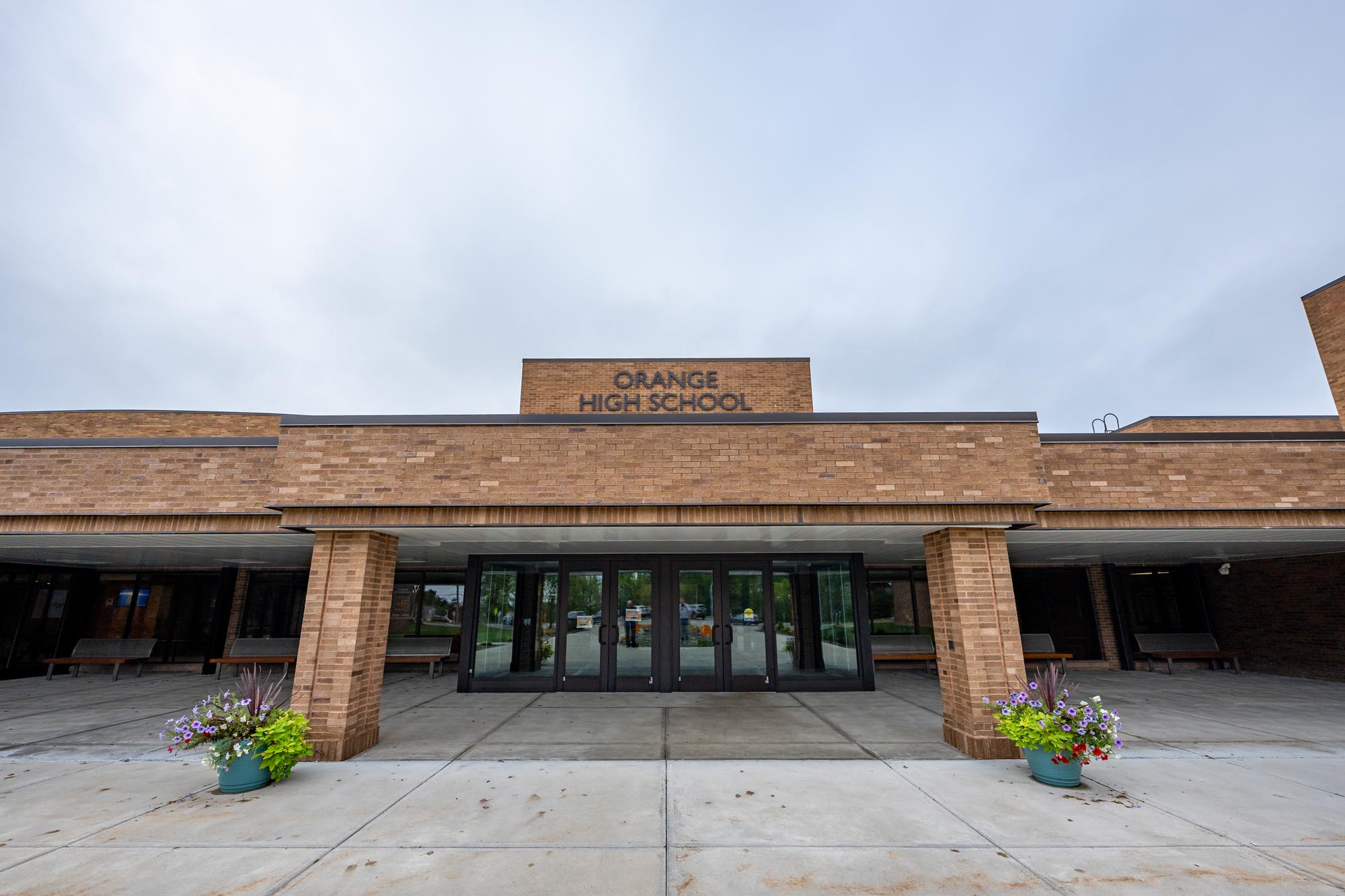
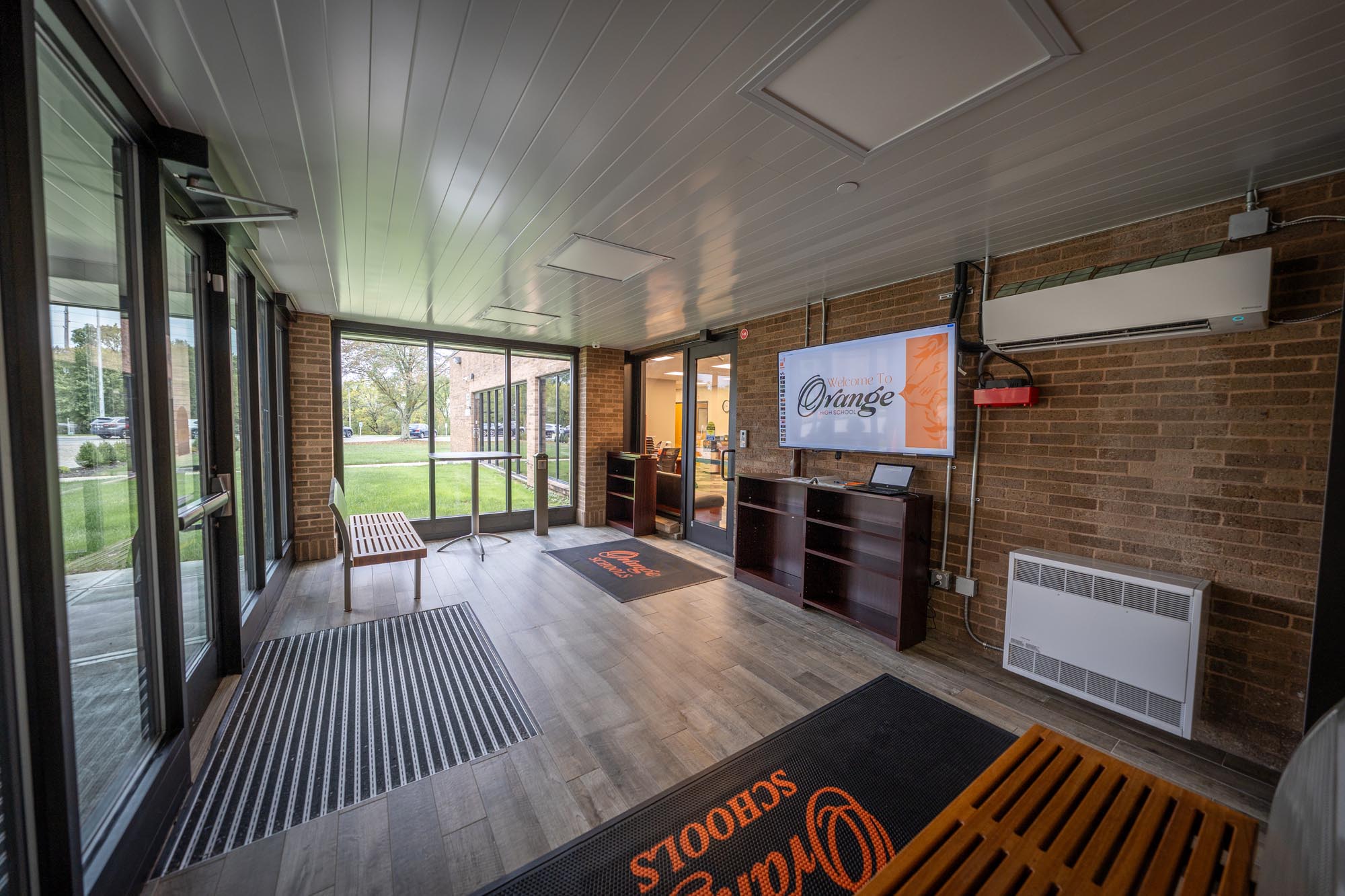
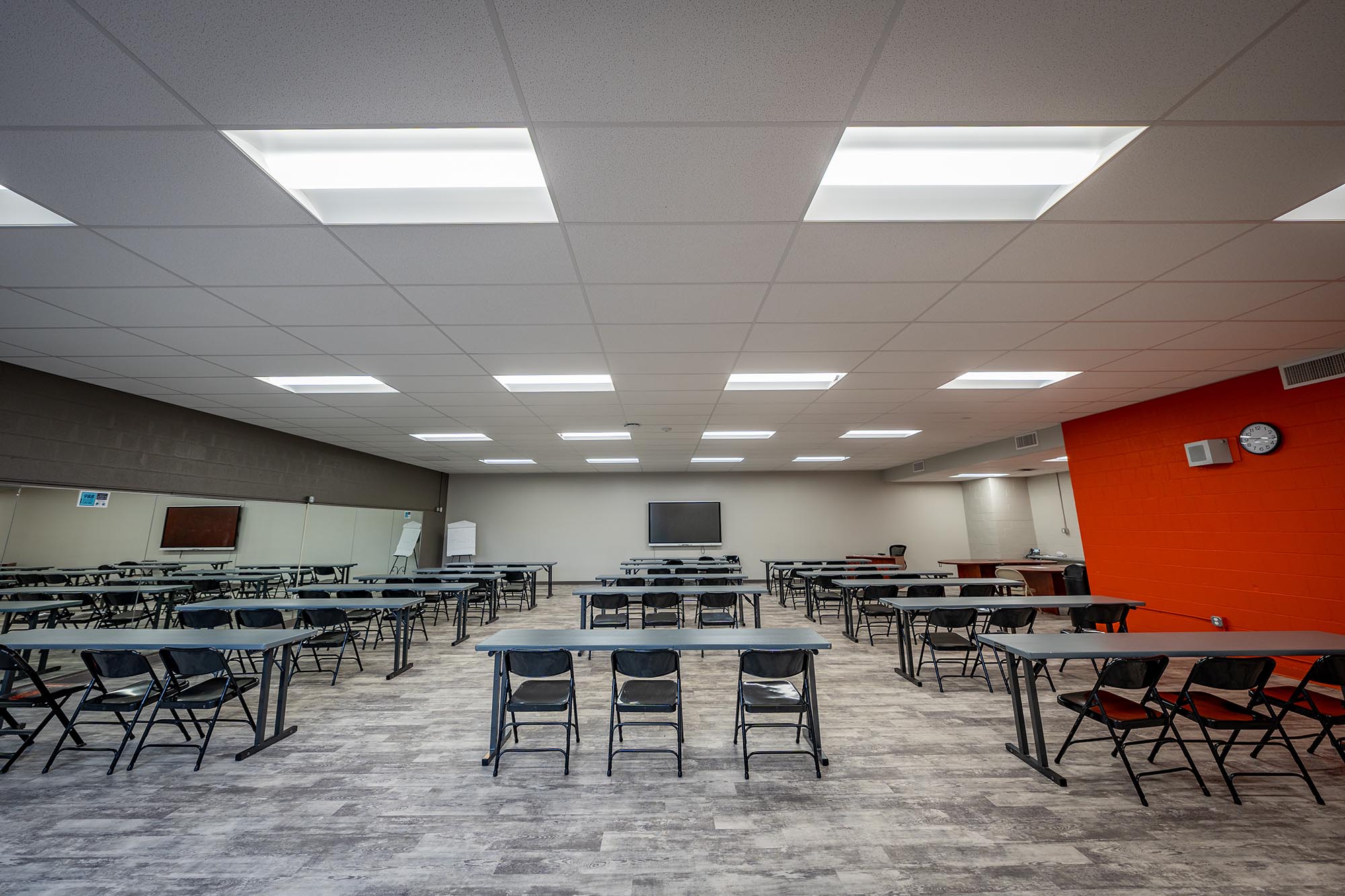
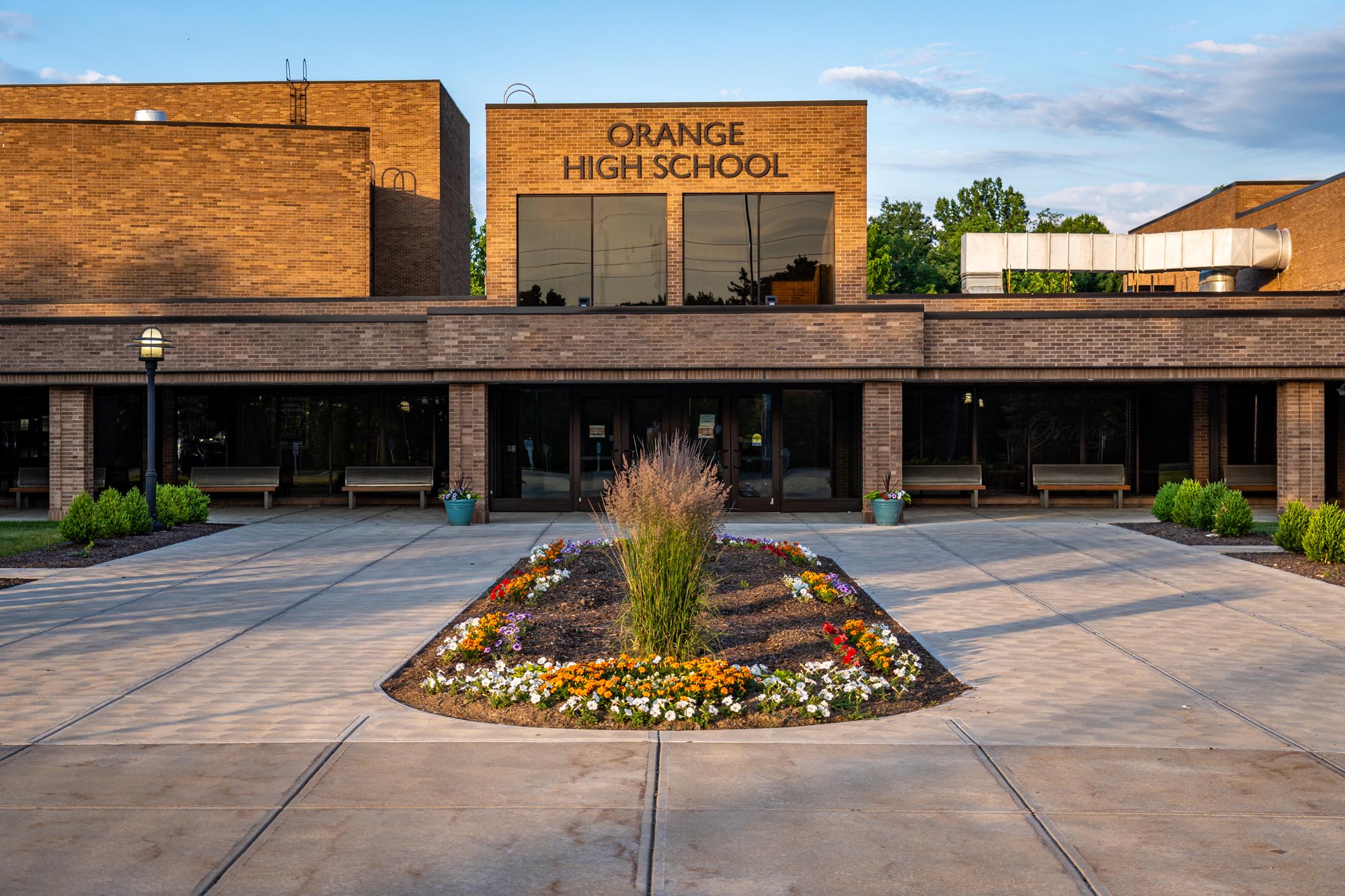
To improve the student environment and positively impact their academic success, Orange Schools embraced creative renovation ideas like converting the old gymnasium into two stories of classrooms, a staff lounge, and a music and arts wing. Simple upgrades like adding new ceiling tiles and introducing wayfinding elements with a mood-elevating color palette in the hallways and floors give the impression of a new space without the expense of a new building.

“We wanted to enhance our programming to have the best academic outcome and to keep our kids engaged,” Dr. Campbell added. “Busy kids are successful kids. When you have that desire, you must have spaces to match it.”

"Our Capital Improvement Plan helped us be more fiscally responsible."
Ted Roseberry
Director of Operations

OSBA Capital Improvement Plan Presentation with Orange Schools & TDA

View the presentation slides by following this link.

Many Funding Options Available

Orange Schools Director of Operations Ted Roseberry and Treasurer/CFO Todd Puster presented alongside ThenDesign Architecture Senior Educational Planner Cheryl Fisher and Interior Designer Nicole Monaco.

Todd spoke about the financial options Orange Schools leveraged and addressed the funding challenges that all school districts face. “Bond issues are very tough to pass in the current political environment, but there are other options that require detailed financial analysis,” he said.

Available funding options in Ohio include:

  • Permanent improvement levy
  • Migrating general funds into the PI fund
  • Targeted federal and/or state grants
  • House Bill 264
  • The Infrastructure Reduction Act
  • Community partnerships
  • Lease purchasing
  • Energy conservation

Director of Operations Ted Roseberry said, “A CIP is a blueprint to navigate paying for capital improvements answering the ‘what’ and ‘when’ questions. It’s an asset management tool that helps coordinate strategic planning, financial capacity, and physical development.”

Ted encouraged every district to use a Capital Improvement Plan, “It will motivate you to work with purpose by making you proactive instead of reactive. It’s essential for any school system so you’re not putting Band-Aids on your problems and fixing the same issues multiple times.” He added, “That does not work.”
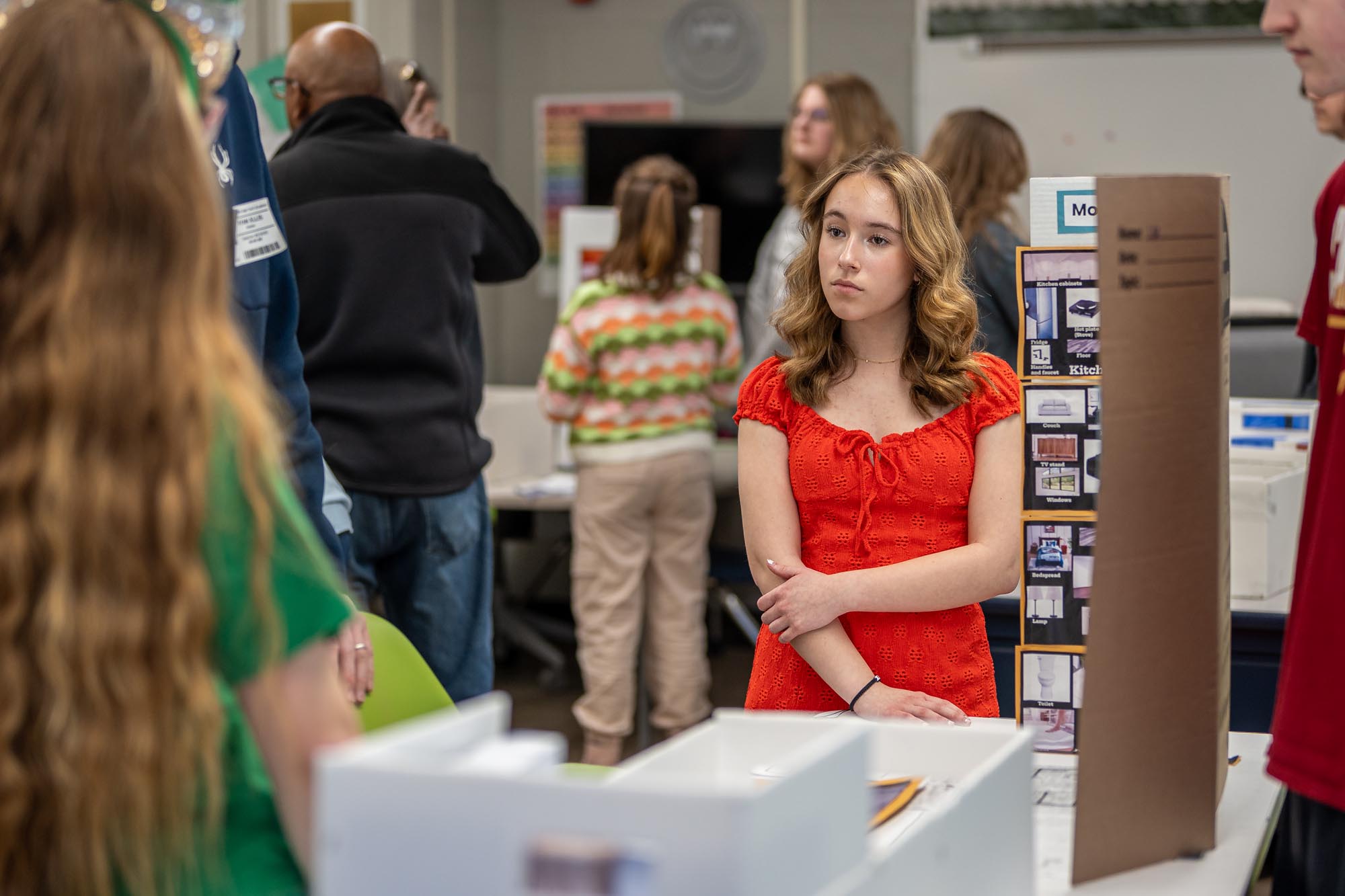
One of the keys to a successful CIP is the communication between departments and curriculum teams. Utilizing due diligence across the organization and recruiting professional advisors will provide a practical roadmap. The plan will change, but maintaining it can allow for flexibility.

"These financial options need to be considered with great care because they affect the financial sustainability of your district."
Todd Puster
Treasurer & CFO

Capital Improvement Plans Work: Orange High School Renovations Breathe New Life into Existing Spaces

Facilities Assessments Tell the Tale

Facilities assessments are integral to laying the foundation for an effective Capital Improvement Plan. TDA Senior Educational Planner Cheryl Fisher explained the process and outlined details about partnering with the Ohio Facilities Construction Commission (OFCC). “We examine the building and systems conditions by age, code compliance, lifecycle analysis, and the Ohio School Design Manual guidelines,” she said. “We figure out how to transform the spaces to serve the current educational programs that bring life and energy so students and staff can thrive in them.”

A multi-tiered report identifies the priorities for the deficiencies. The facilities are examined through the lens of educational adequacy to determine how they respond to modern academic programming. For example, buildings constructed in the 1940s were not designed for contemporary teaching methods.

The OFCC evaluates buildings based on their physical condition and applies a “two-thirds rule.” If the renovation cost is more than 66.6% of the cost of replacing it, they recommend constructing new facilities.

Cheryl continued, “Last year, we were excited to discover that even though some of the buildings were constructed in the 1950s, they were assessed as under the two-thirds rule. That is a testament to the district’s robust maintenance program. Their due diligence over the decades made it possible to update their buildings with renovations rather than new construction.”

"Orange Schools met the challenge of addressing safety and accessibility, but also created multipurpose spaces that encouraged excitement and collaboration."
Cheryl Fisher
Senior Educational Planner

Renovations are Transformations at Orange High School

The Creative Thinking of Interior Design

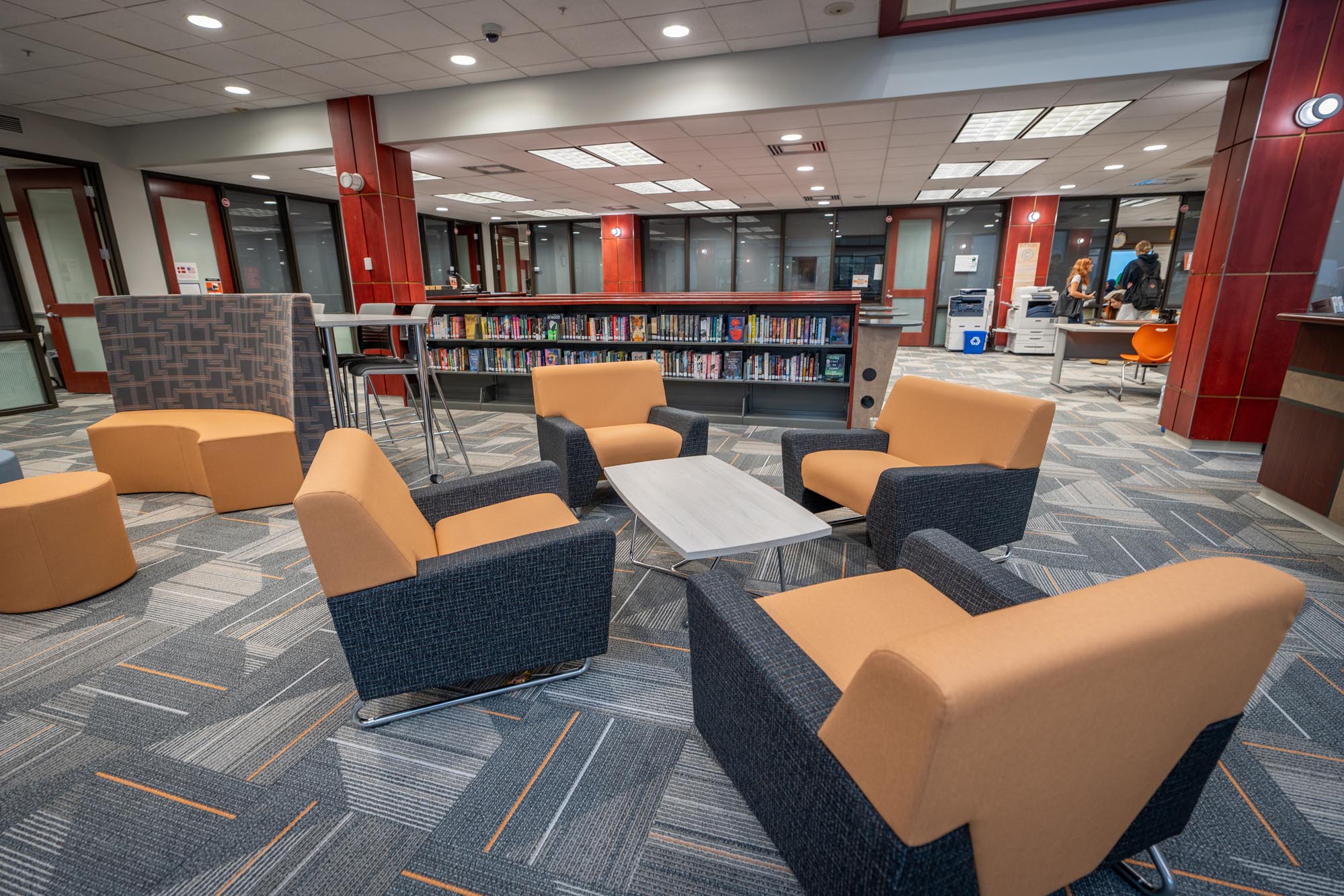
Interior Designer Nicole Monaco worked with the district to find creative ways to renovate their spaces. “The traditional library model is no longer used in today’s educational environment,” she said. “For Brady Middle School, we created collaborative spaces where students could do more than just sit and read books. Since the renovation, they can now have small group activities and presentations. The space was brightened with colors, windows, and additional lighting. There is now more excitement in there.”

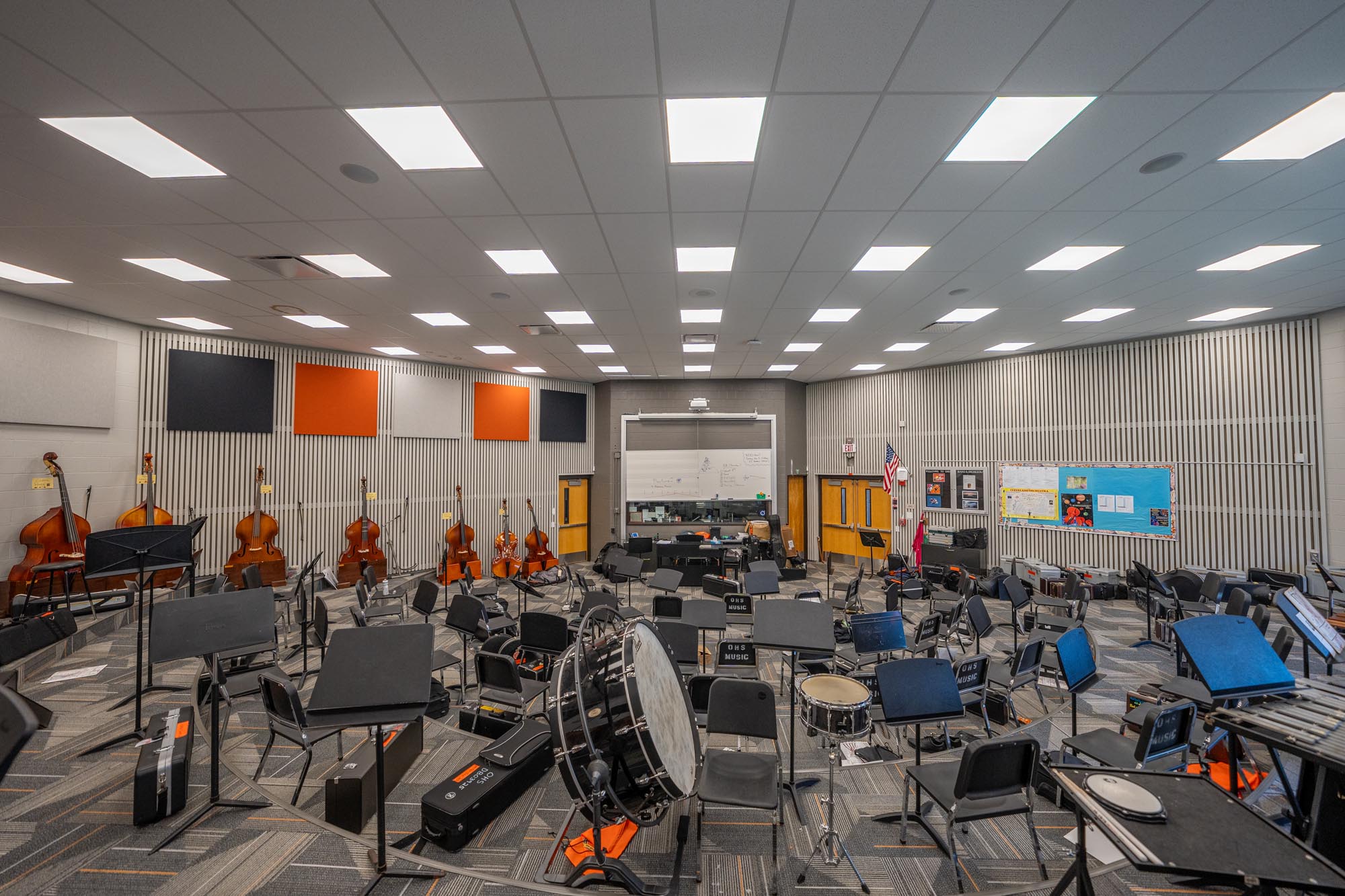
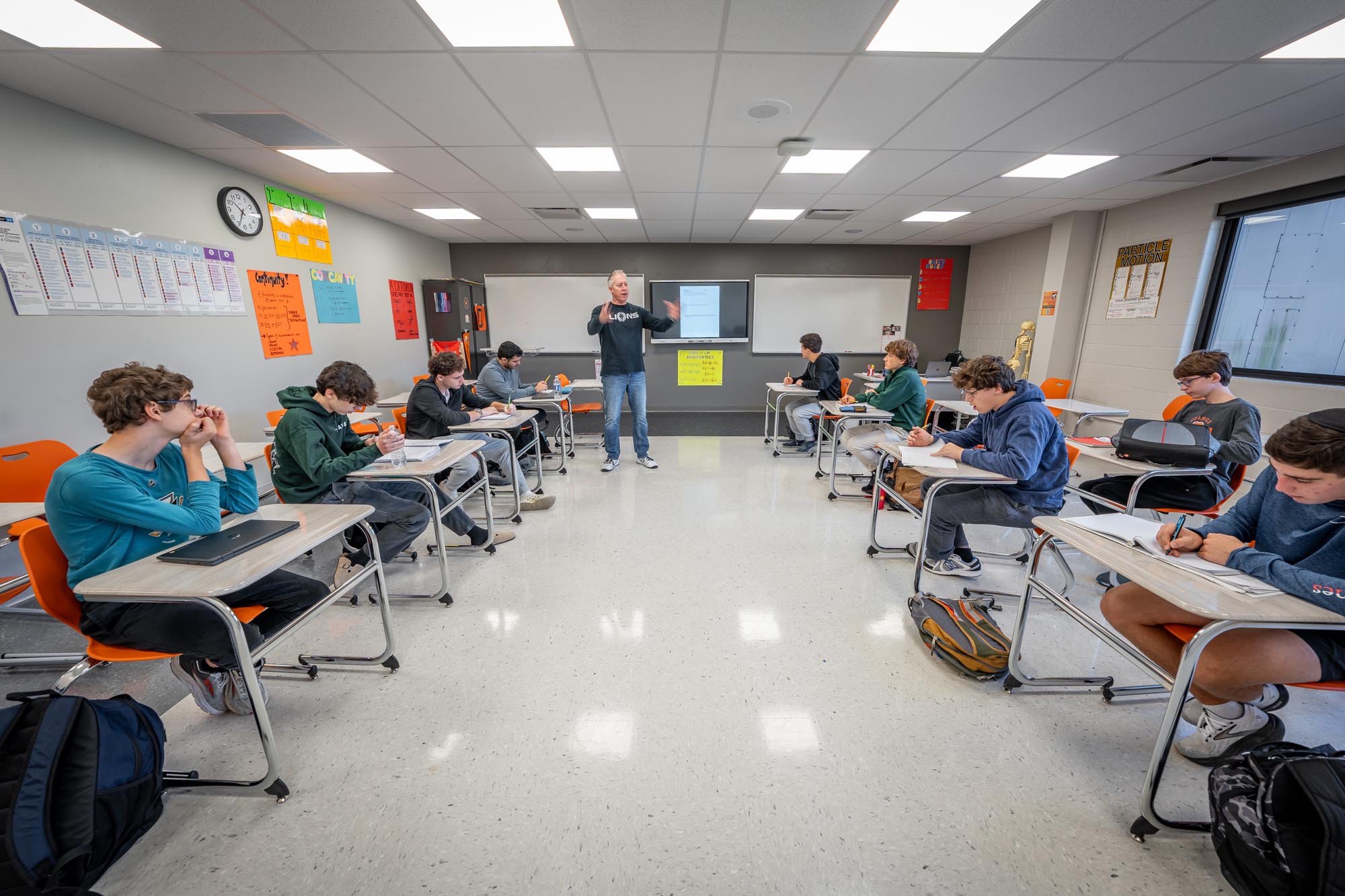
Some classrooms at Orange High School have new walls with acoustic treatments, acoustic ceiling tiles, and updated lighting. Nicole explained, “Lighter, flexible furniture allows students to be mobile and customize the space for collaboration and meeting in groups. We added hearing accessibility cabling and additional power outlets and updated all the technology. New flooring and paint can drastically transform a space.”

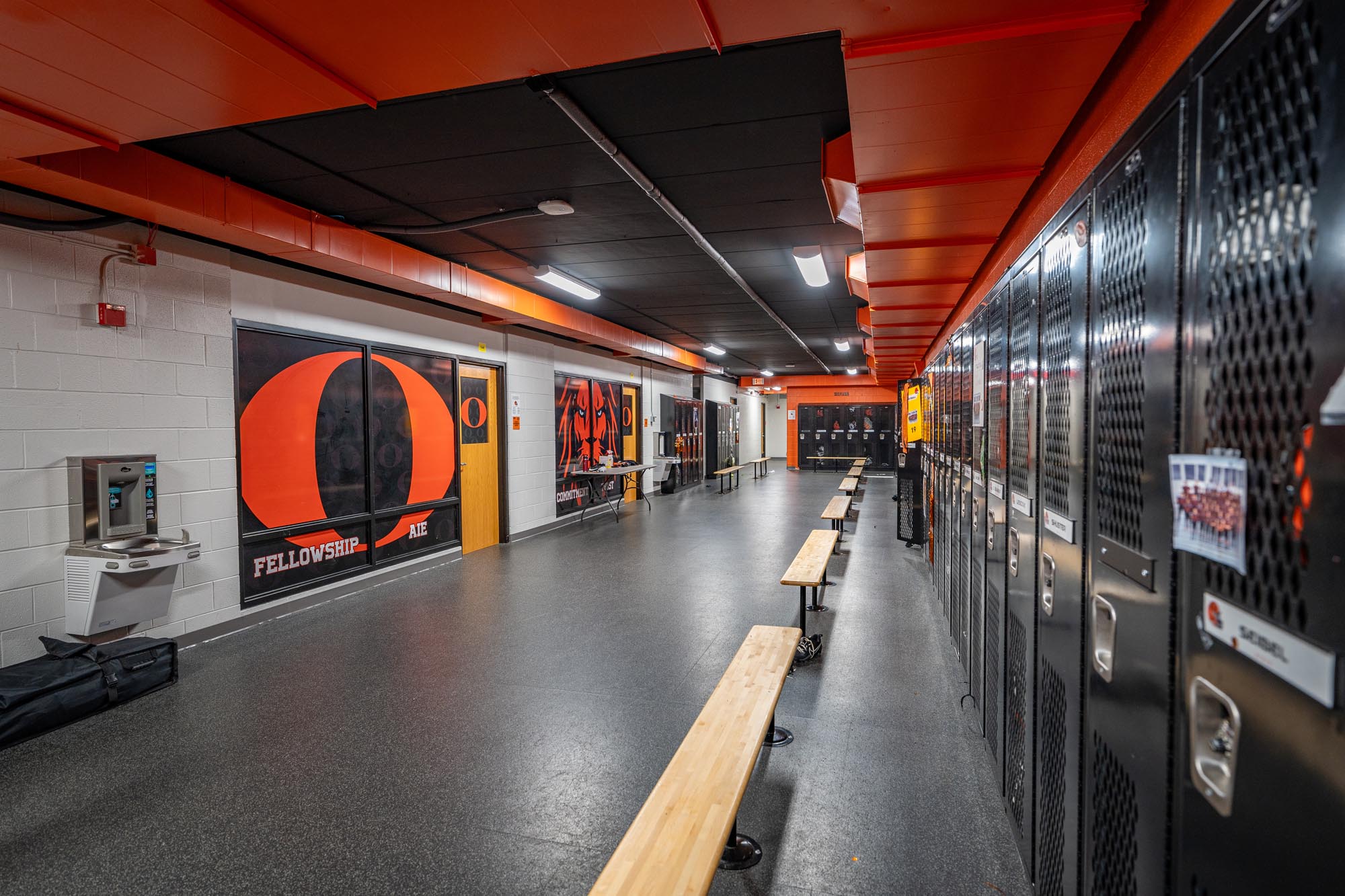
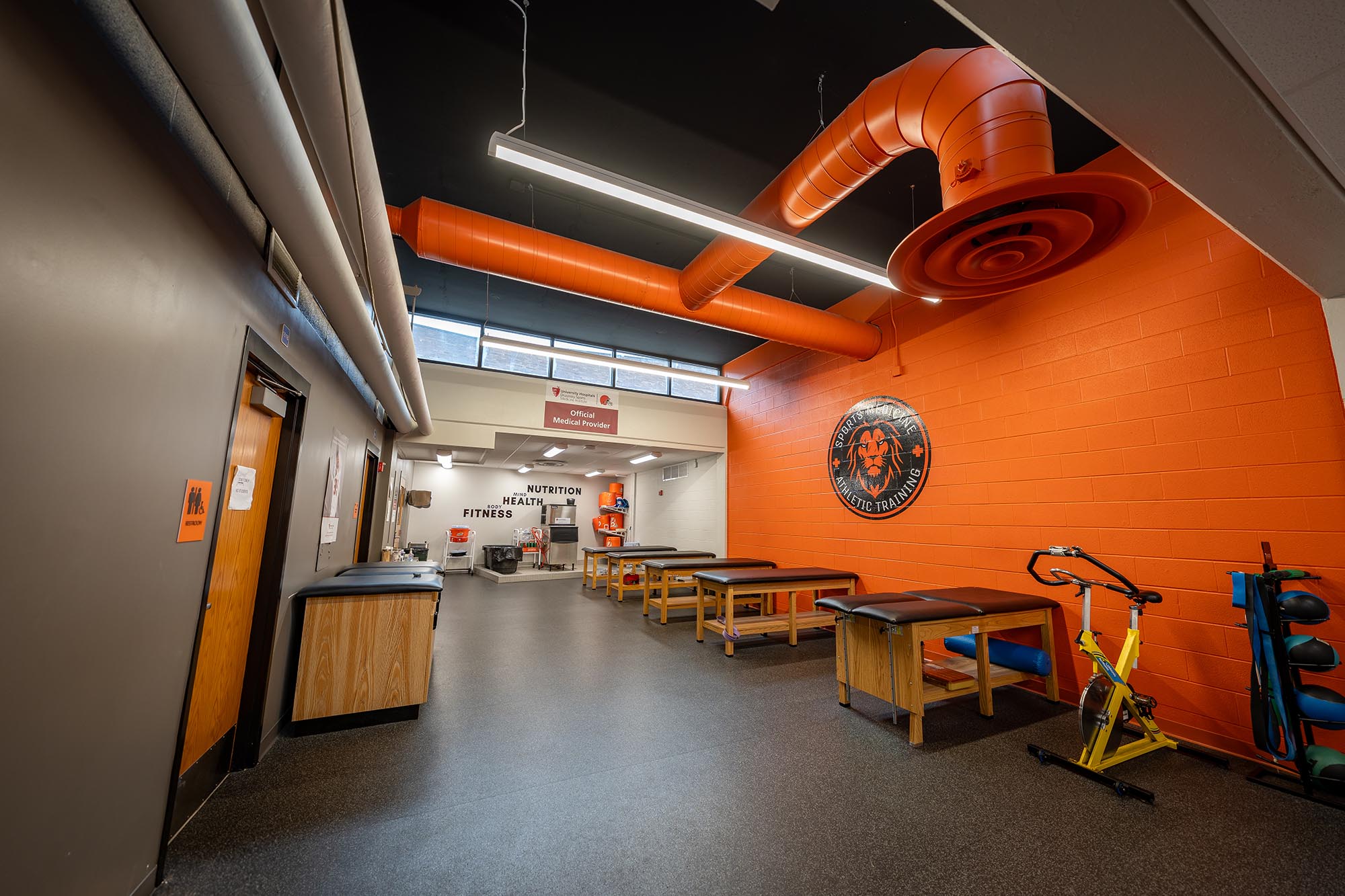
Dr. Campbell noted that one large, inefficient locker room was converted into a trainer’s area, weight room, agility room, and a highly functional modern locker room. He said, “There are multiple single-use bathrooms in those spaces for students who want privacy or for coaches and referees who need a place to change.” He described how the original girls’ locker room was converted into a swing space used throughout the year for various sports and is no longer gender-designated.

A single space at Orange High School now accommodates cross country, baseball, or volleyball, depending upon the season of the year.

"We designed a lively space where kids actually want to hang out by adding more light, bright colors, and comfortable furniture."
Nicole Monaco
Interior Designer

Orange High School Renovations

The Creative Thinking of Interior Design

A Capital Improvement Plan can help a school district navigate facility needs with available resources.

Dr. Campbell noted the importance of mindful, cooperative readiness, “A CIP helps you manage your improvements and repairs in the short term, but also provides long-term planning that prepares you for what lies on the horizon to give your kids and their families the best experience that you can.”

He continued, “There is a sense of pride that comes with making changes that the taxpayers support, knowing that we are keeping things as up-to-date as we can for the benefit of their kids.”

Partnering with TDA, the Orange City School District implemented its long-term Capital Improvement Plan. It modernized its educational space through targeted, creative renovations funded by the financial options available to school districts in Ohio.

Communicating facility priorities at school board meetings and hosting public tours build community trust by promoting transparency.

Professional assistance is available to create a CIP synchronizing district goals with funding. Partnering with a consultant can reveal more options, ensuring you do not have to navigate the process alone.

"The kids are why we're here. That's why we have our jobs. To provide the best we can for them."
Dr. Lynn Campbell
Superintendent
Marc Cebrian

Marc Cebrian

Marc has over thirty years of media production experience with a wide variety of storytelling projects that include commercials, documentaries, and live events. He began his career in the feature film and television industry in Los Angeles, California. Naturally driven by a passion for the creative and analytical, he believes that people should be kind to one another, and strives to live by example.

Oberlin ES 2023 Healthy Buildings Winner Presentation

Oberlin ES 2023 Healthy Buildings Winner Presentation
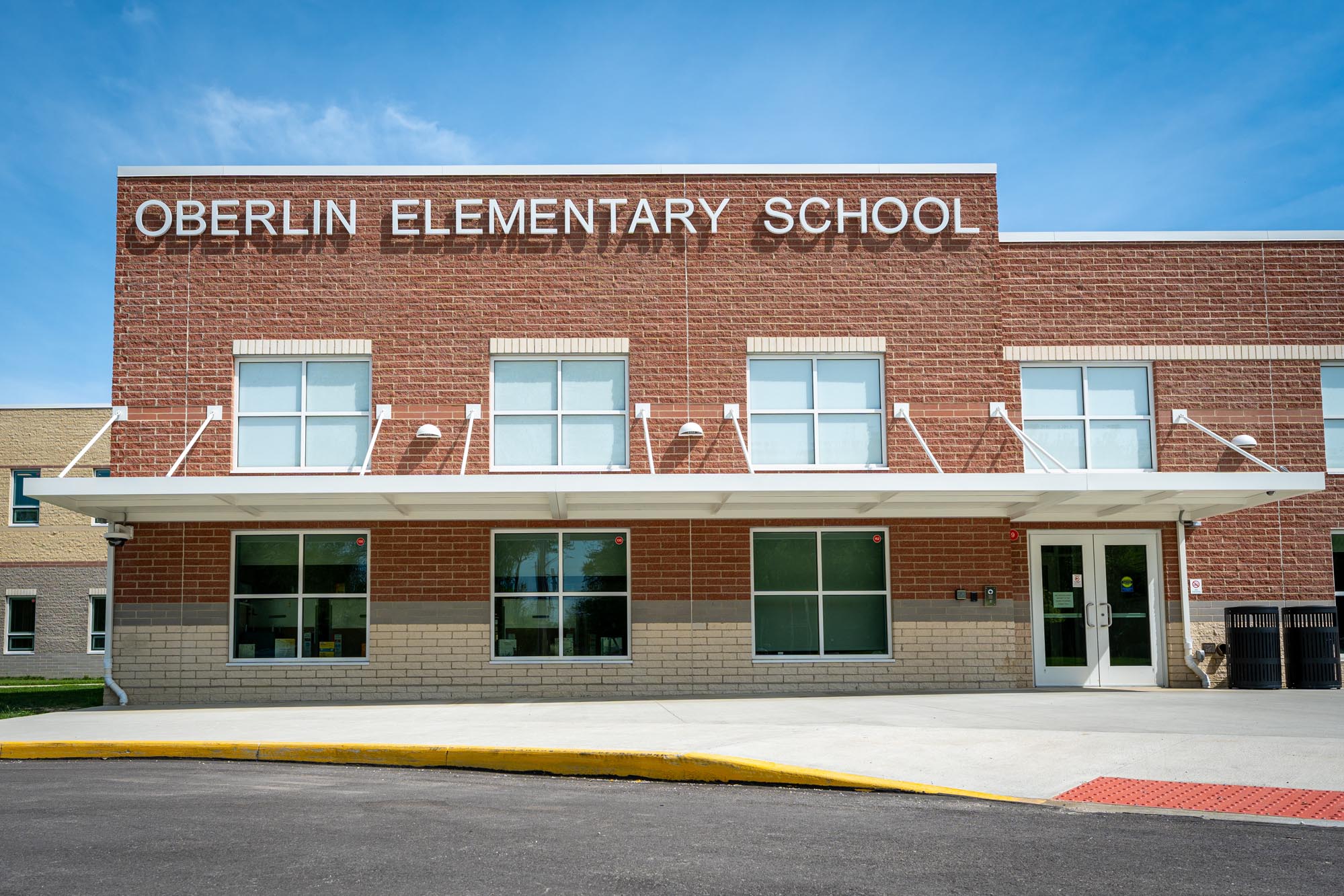
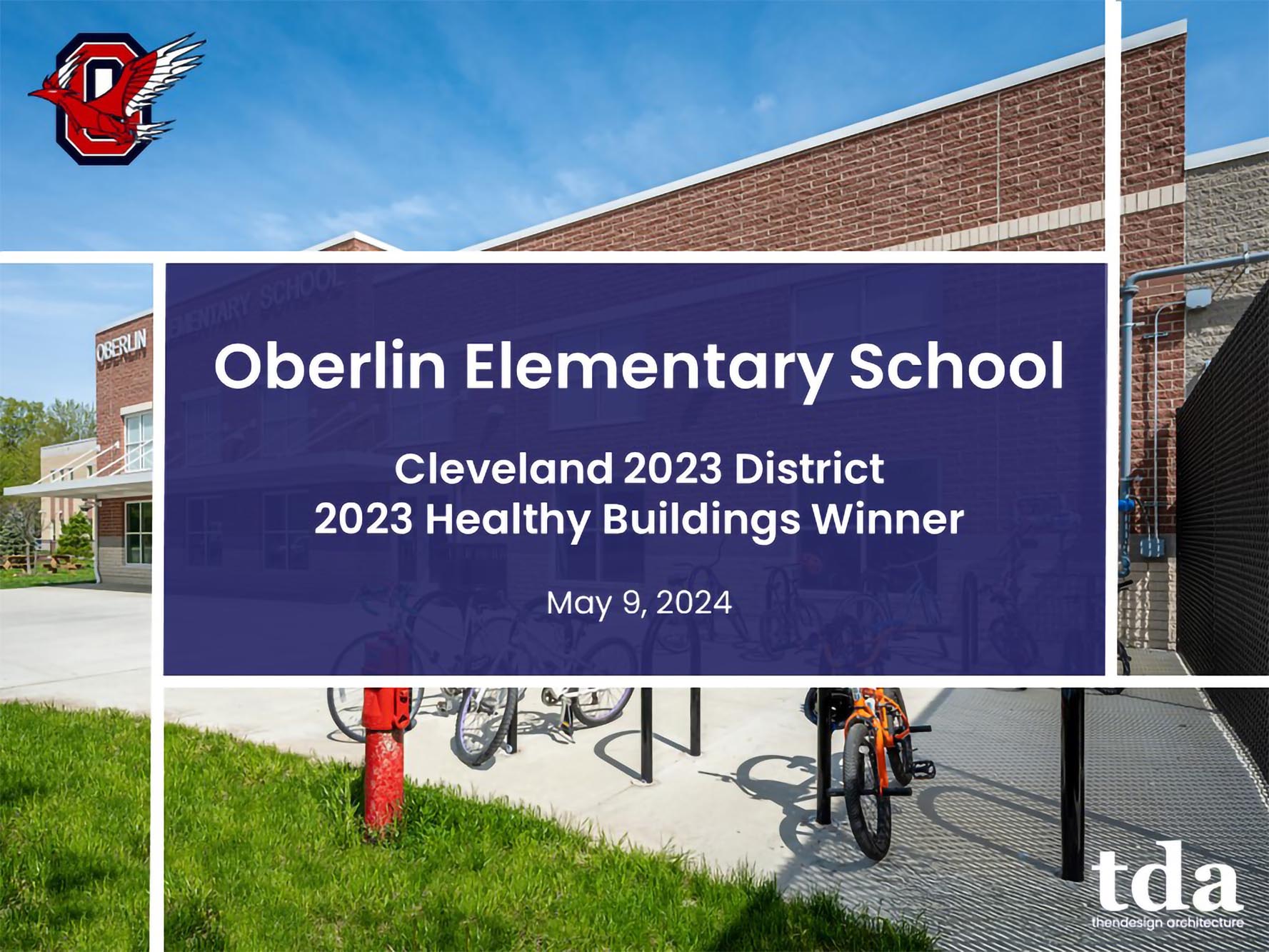
Oberlin Elementary School has been honored as the Cleveland 2030 District's 2023 Healthy Buildings Winner. This recognition emphasizes the thought leadership of sustainable energy in educational design. Superintendent Dr. David Hall and ThenDesign Architecture Project Manager Brad Gellert shared their insights regarding the school's environmental achievements during the Healthy Buildings Winner Presentation.

Oberlin ES 2023 Healthy Buildings Winner Presentation

As a beacon of sustainable energy in educational design, Oberlin Elementary School has been honored as the Cleveland 2030 District’s 2023 Healthy Buildings Winner. This recognition emphasizes the unique and innovative sustainable energy practices of the project.

Oberlin City School District Superintendent Dr. David Hall and ThenDesign Architecture Project Manager Brad Gellert were invited to share their insights in a discussion about the school’s exceptional environmental achievements. The online presentation of the Building Education Series: Exemplary Renovation and New Construction Projects examined the philosophies and design practices that led to the school’s honorable recognition.

Dr. Hall explained the importance of environmental awareness as a driving force in the collaboration between the school district and the city, with sustainability initiatives being a priority for the local community. Brad Gellert gave an overview of the steps leading to the construction and completion of the project and highlighted the energy-saving features that illustrate the benefits of conscientious architecture.

"Sustainability in Oberlin is definitely a priority for the school and our community."
Dr. David Hall
Superintendent

Oberlin ES 2023 Healthy Buildings Winner Presentation

Exceptional Environmental Sustainability

Oberlin Elementary School is a collaborative project designed to continuously support the school district and surrounding community by incorporating environmental sustainability initiatives that can adapt to future needs. The project reflected the school’s International Baccalaureate curriculum and included several forward-thinking design elements.

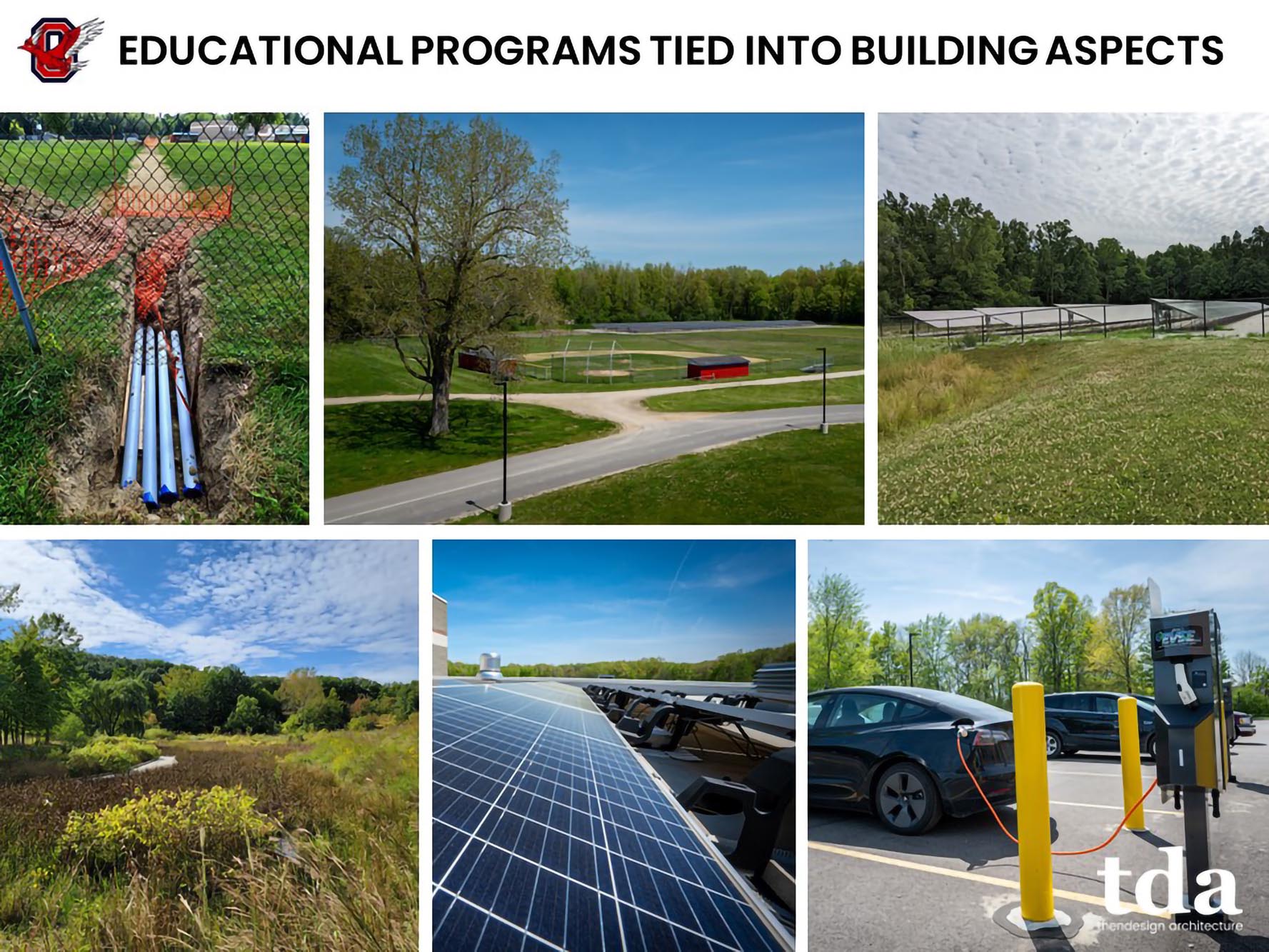
One of the school’s stand-out features is a real-time environmental dashboard that monitors energy consumption so students can understand better how the building’s energy use affects the environment. This dashboard was funded by a grant from the Ohio Environmental Education Fund in partnership with Oberlin College.

Other sustainable initiatives offering firsthand learning opportunities include electric vehicle charging stations funded by grants from the Environmental Protection Agency and the implementation of a solar array supported by Oberlin College’s Green EDGE Fund, which provides about 79% of the building’s electrical needs.

Sustainability and collaborative learning are the hallmarks of this new educational facility and display how elementary schools can embody conservation principles.

Oberlin Elementary School in Action

Conscientious School Design

The 17.8 million dollar facility is a testament to the power of community collaboration, bringing together residents, staff, the city government, the Ohio Facilities Construction Commission, Oberlin College, Greenspace Construction Services, and ThenDesign Architecture.

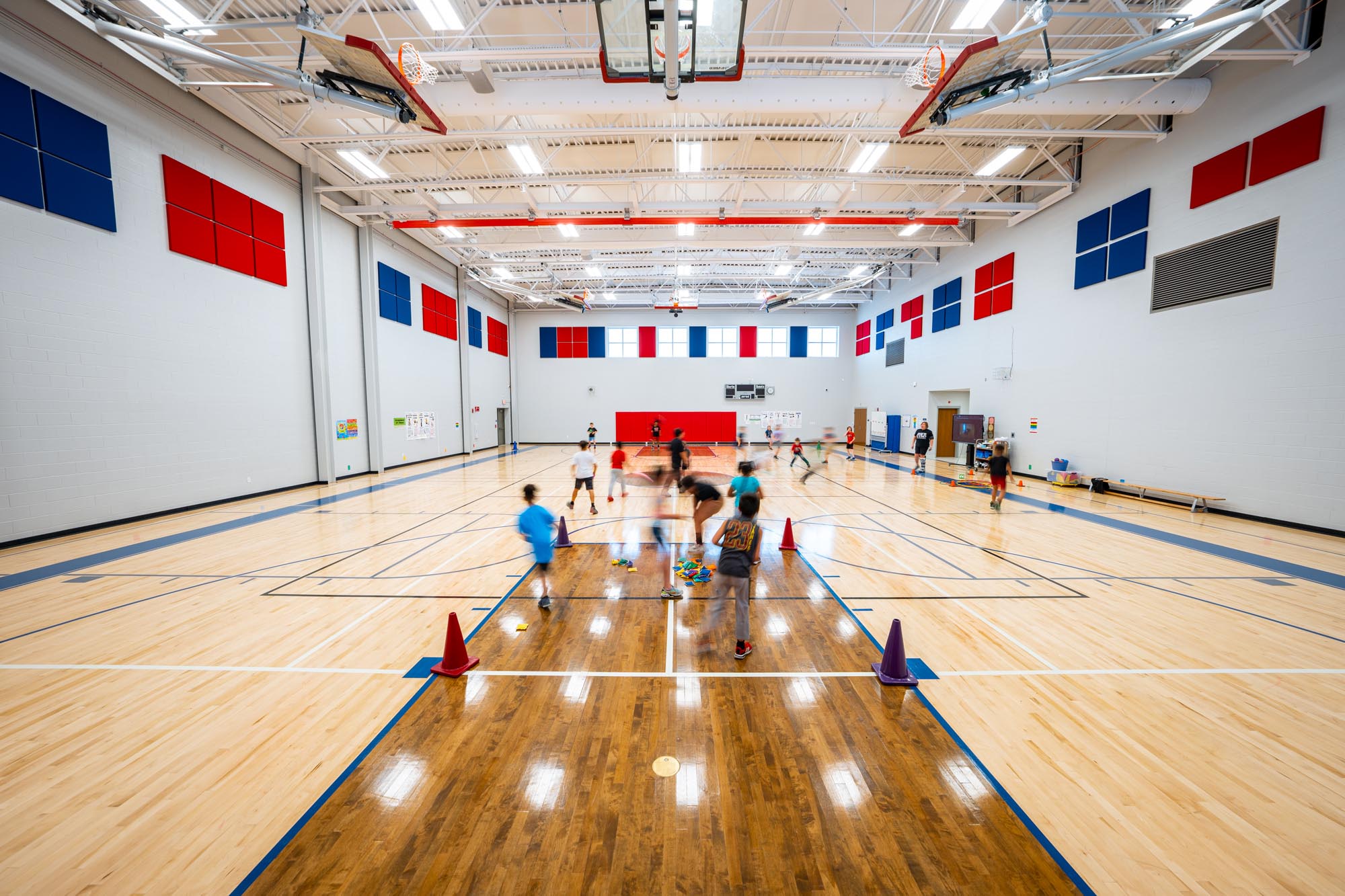
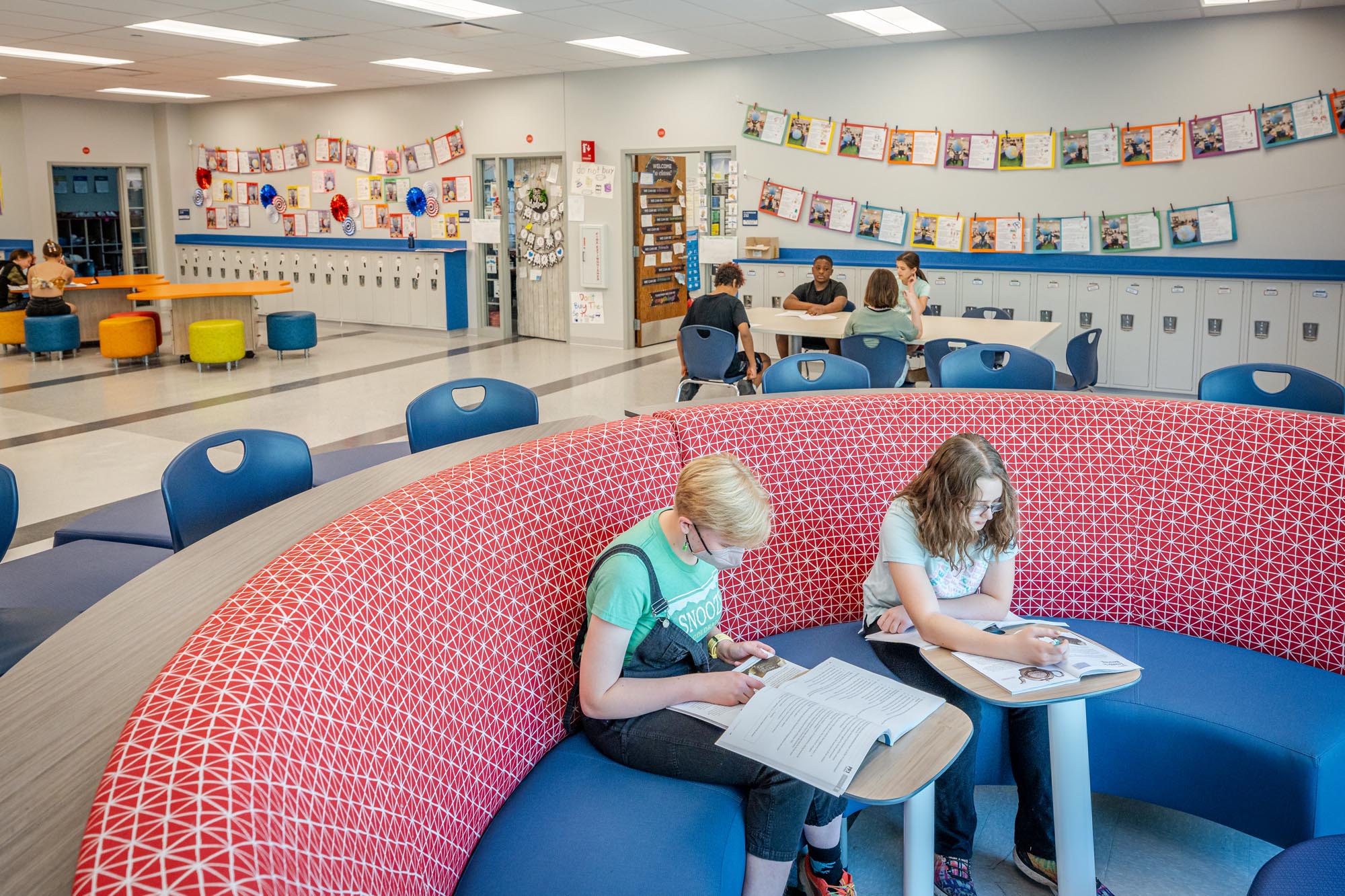
The school boasts a STEAM (Science, Technology, Engineering, Arts, and Mathematics) Lab, an extended gymnasium space, open and flexible classrooms, advanced environmental controls, and an emotional sensory room, which sets it apart from traditional school designs.

Other low-cost sustainability measures included enhanced insulation in the building’s envelope, orienting the building so its longest side faces north, and adding larger windows to that façade. This minimizes heat gain and the need for increased cooling.

"Bringing daylight into the spaces connects to nature, making a much more pleasant environment for students."
Brad Gellert
Project Manager

Oberlin Elementary School Presentation Slides

Oberlin Elementary School's Innovative Features

Other Oberlin Elementary School environmental features include:

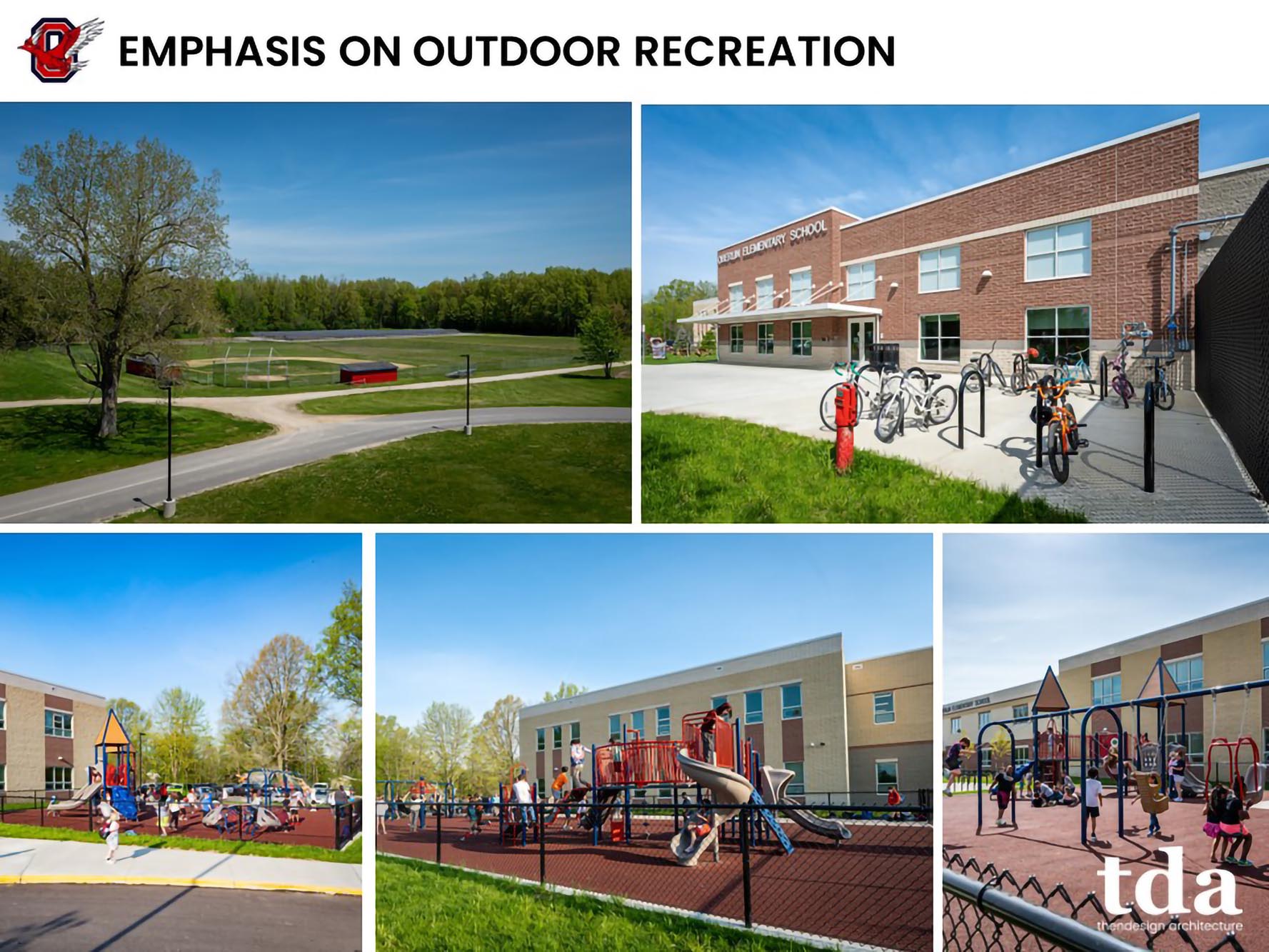
  • The new school’s location supports community density and development by utilizing an existing site.
  • Electric vehicle charging stations benefit staff, visitors, and local residents by supporting the city’s sustainability goal of becoming a net zero community.
  • Two solar energy installations comprised of a rooftop 12,000 kWh array and 335,000 kWh ground-mounted system provide approximately 79% of the school’s annual electricity needs.
  • To the greatest extent possible, recycled materials were utilized in building construction, and those materials were extracted and manufactured within 100 miles of the project site.
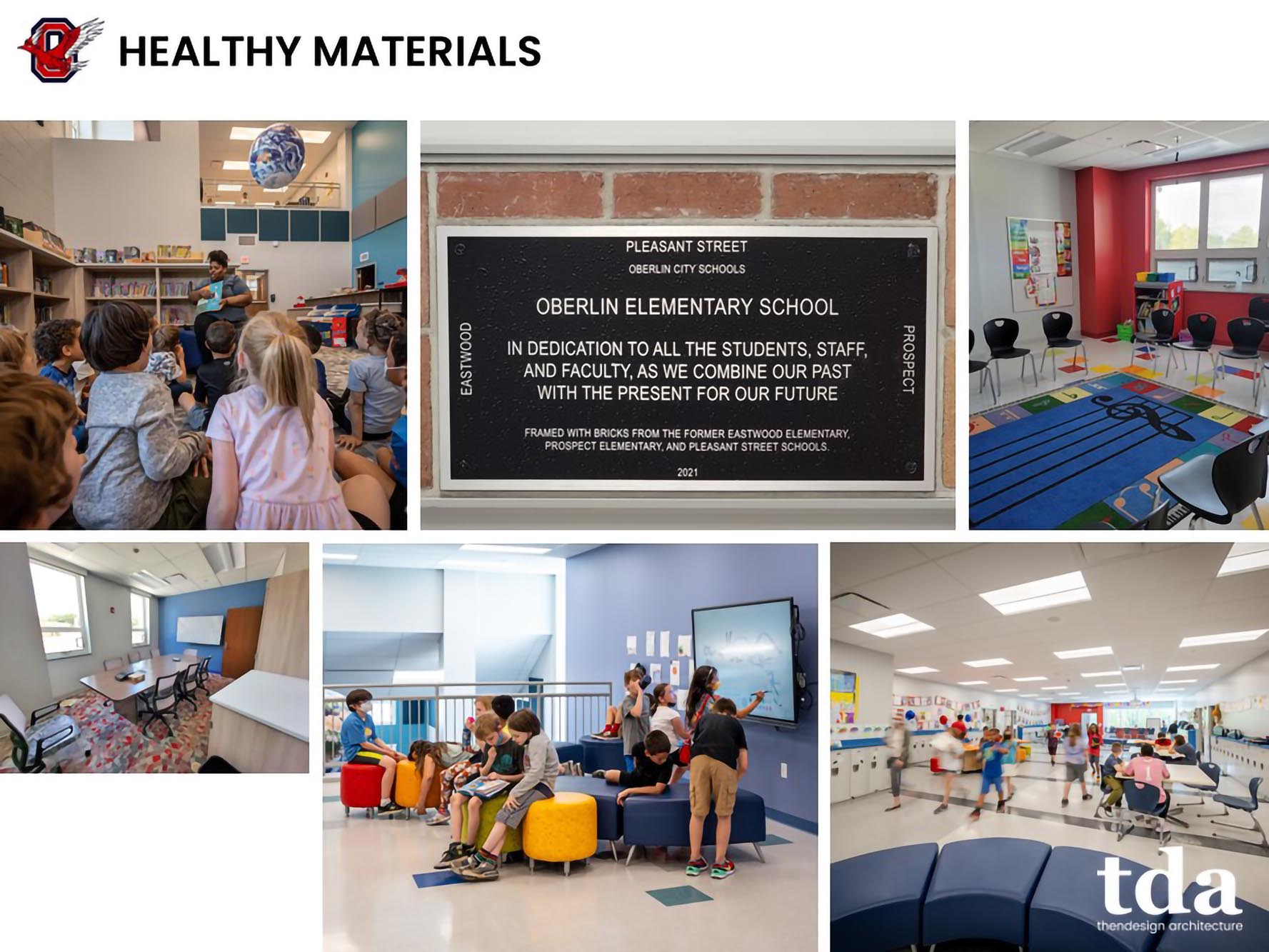
  • The indoor air quality of this building has been improved through the use of low-emitting materials that contain no or low amounts of volatile organic compounds (VOCs).

The commitment to sustainability and curricular integration of these elements makes Oberlin Elementary School a model for innovative school design.

“To create positive change in the world, you must work collaboratively with others,” said Brad Gellert. He added, “Spending years assisting the district with this project is personal. We are proud to be part of that collaboration and know they will enjoy the building for many years to come.”
If you would like to watch the entire Cleveland 2030 District presentation, click here.