The Cleveland Church of Christ Weathers the Storm
An alarm was triggered in the middle of the night at the Cleveland Church of Christ in January 2025. The fire department was dispatched, but after inspecting the building, it was assessed that there was no fire danger. The incident was thought to be just a sensor malfunction.
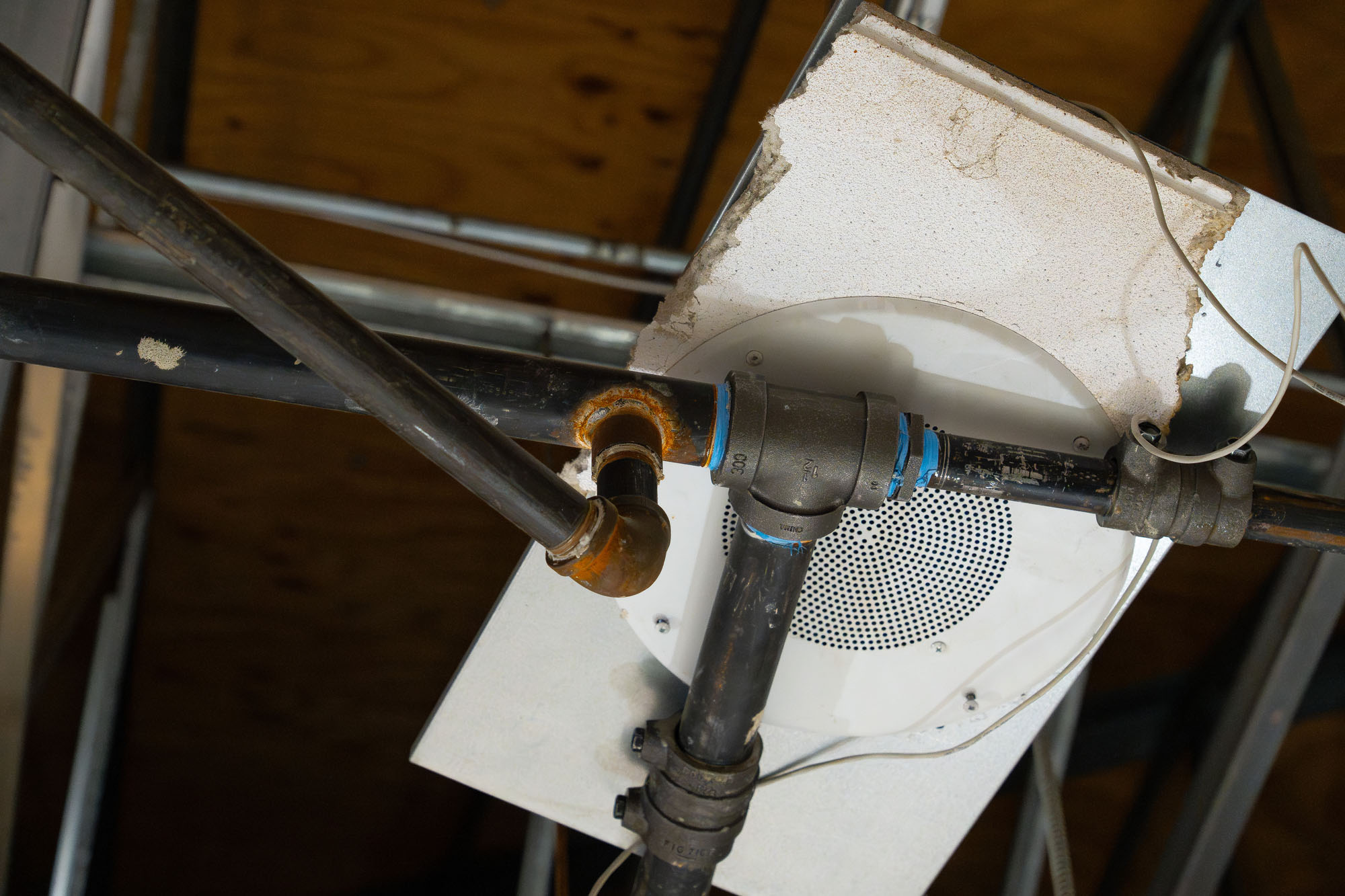
The next morning, the staff discovered that most of the back half of the first floor was flooded after a water pipe froze and burst. When the utility room door was opened, the water poured down the hallways like a river, cascading down the steps into the church sanctuary. By the time the ruptured sprinkler line was shut off, office supplies were floating everywhere. Carpet, walls, furniture, and equipment were ruined overnight.
“The sudden water damage was shocking,” said Senior Pastor and CEO Bishop Lincoln C. Haughton, III. “The water just gushed and gushed and gushed all through the offices and sanctuary. Who could ever have thought that one busted pipe could do so much damage?”
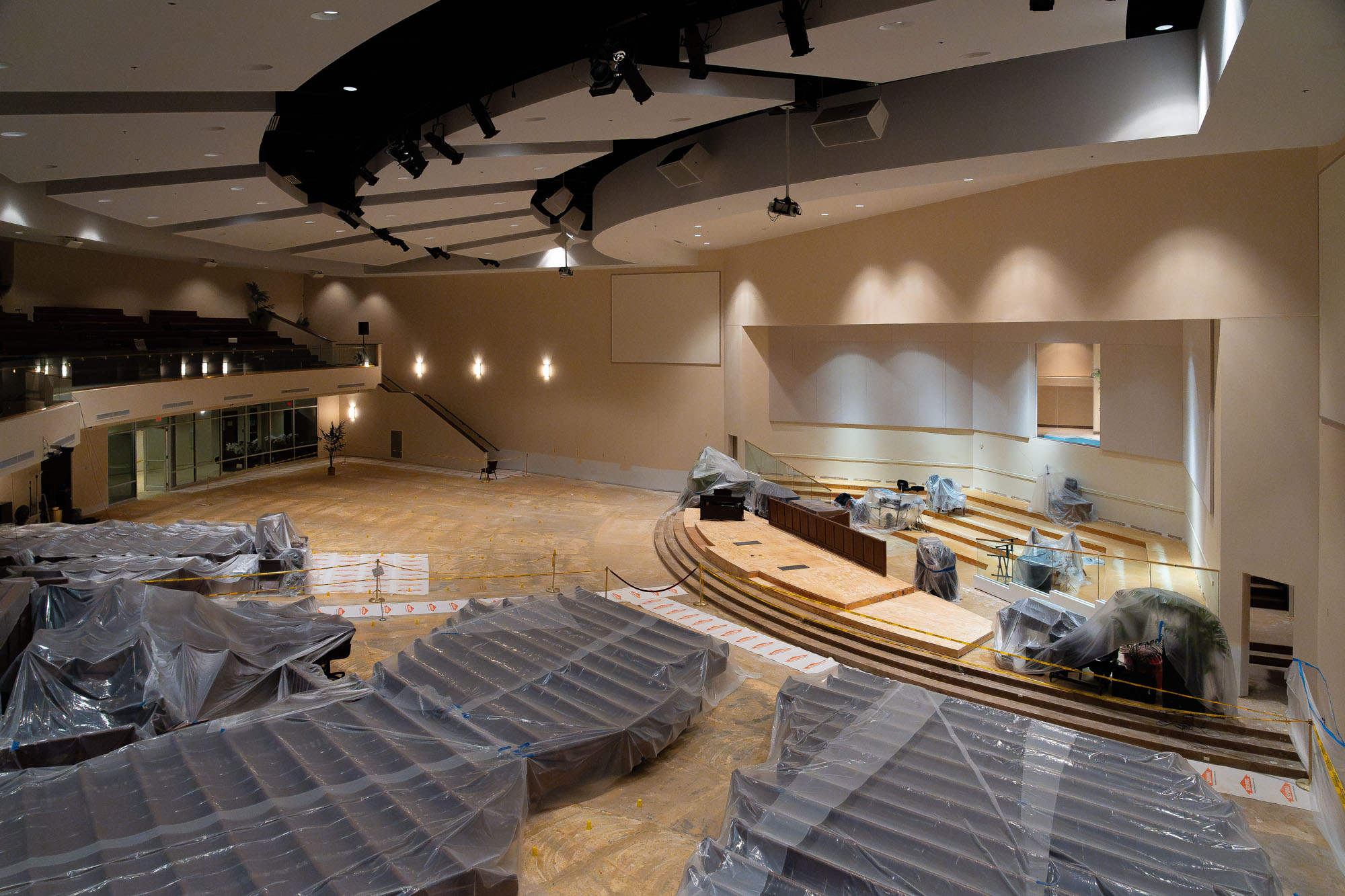
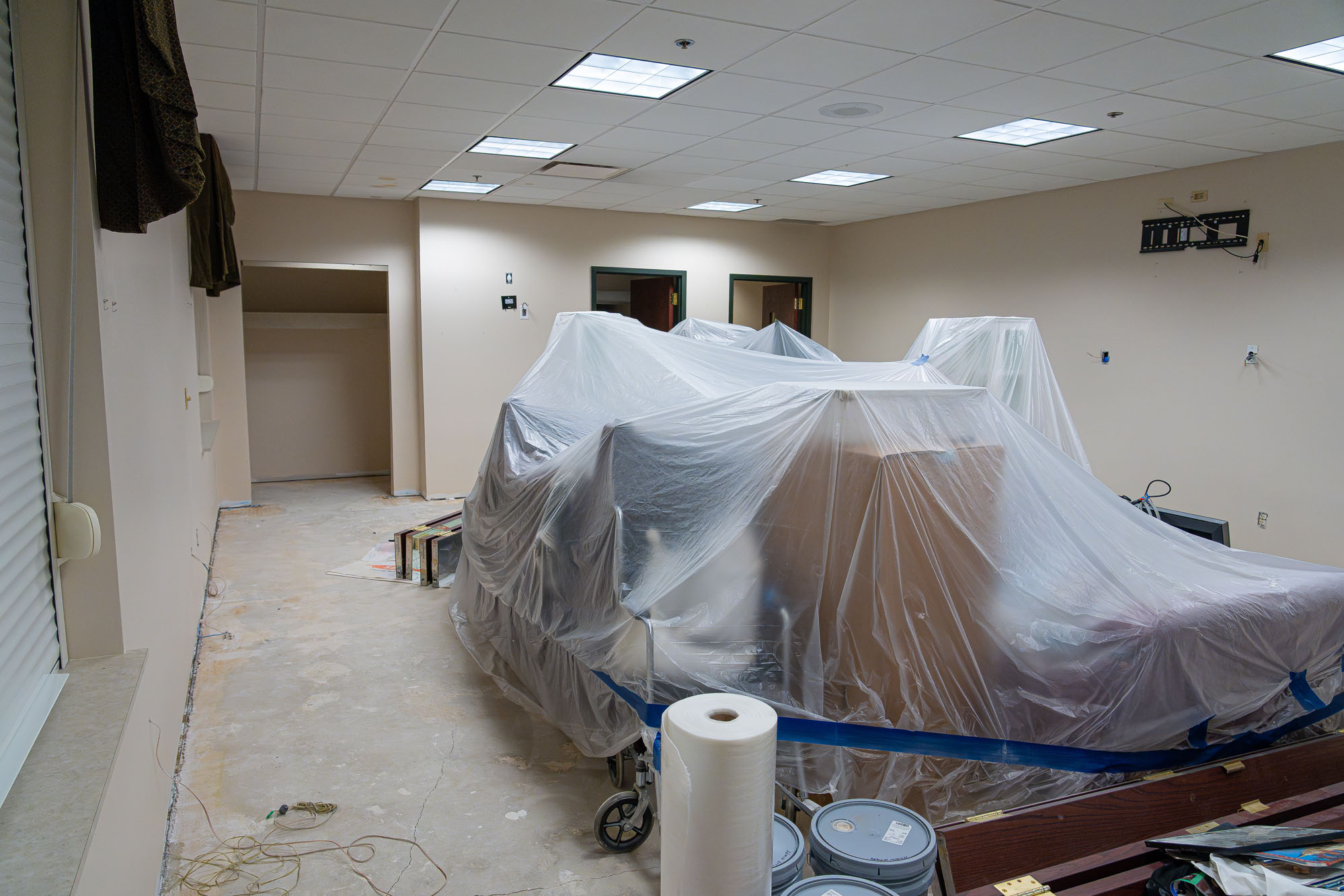
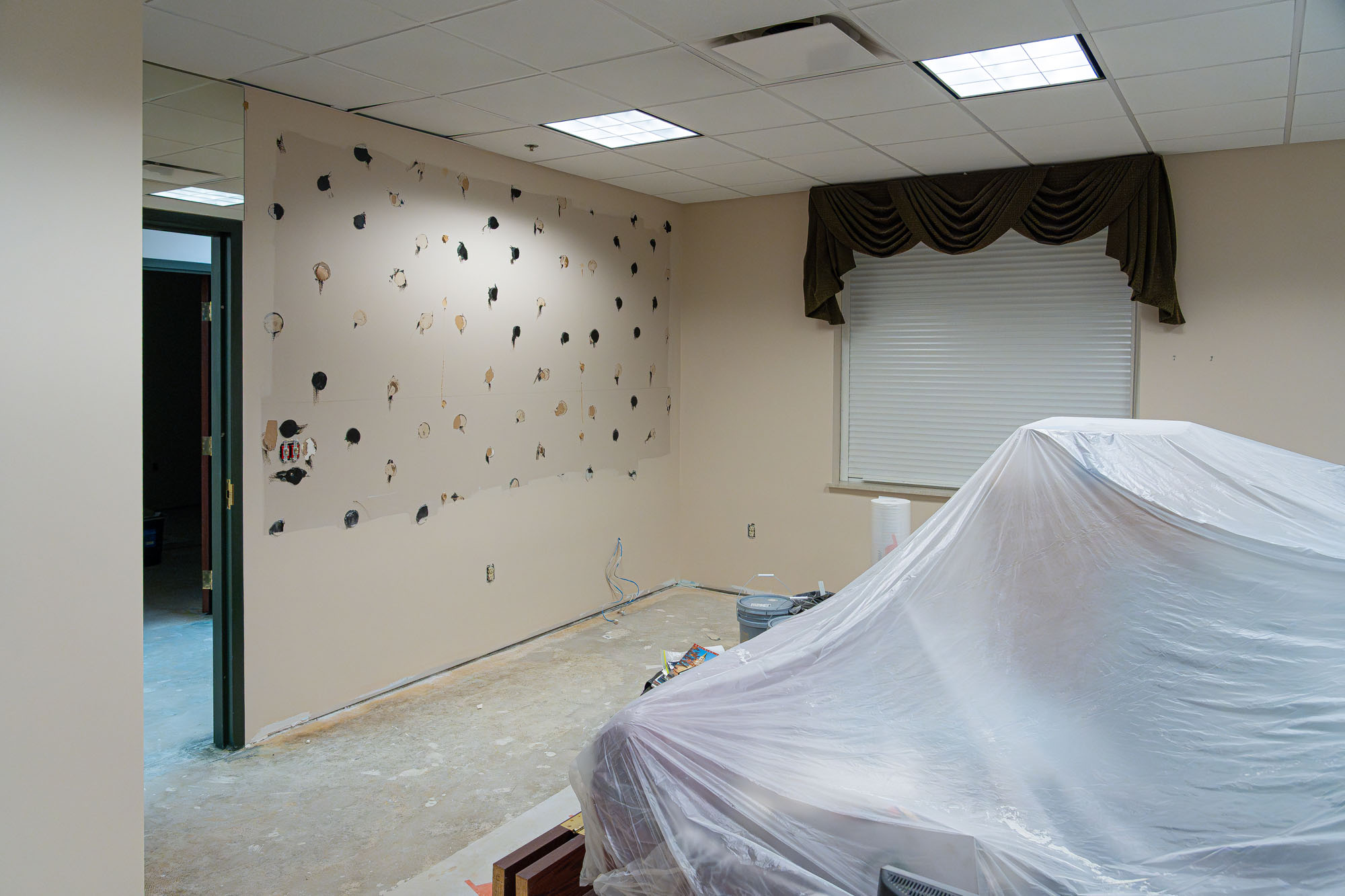
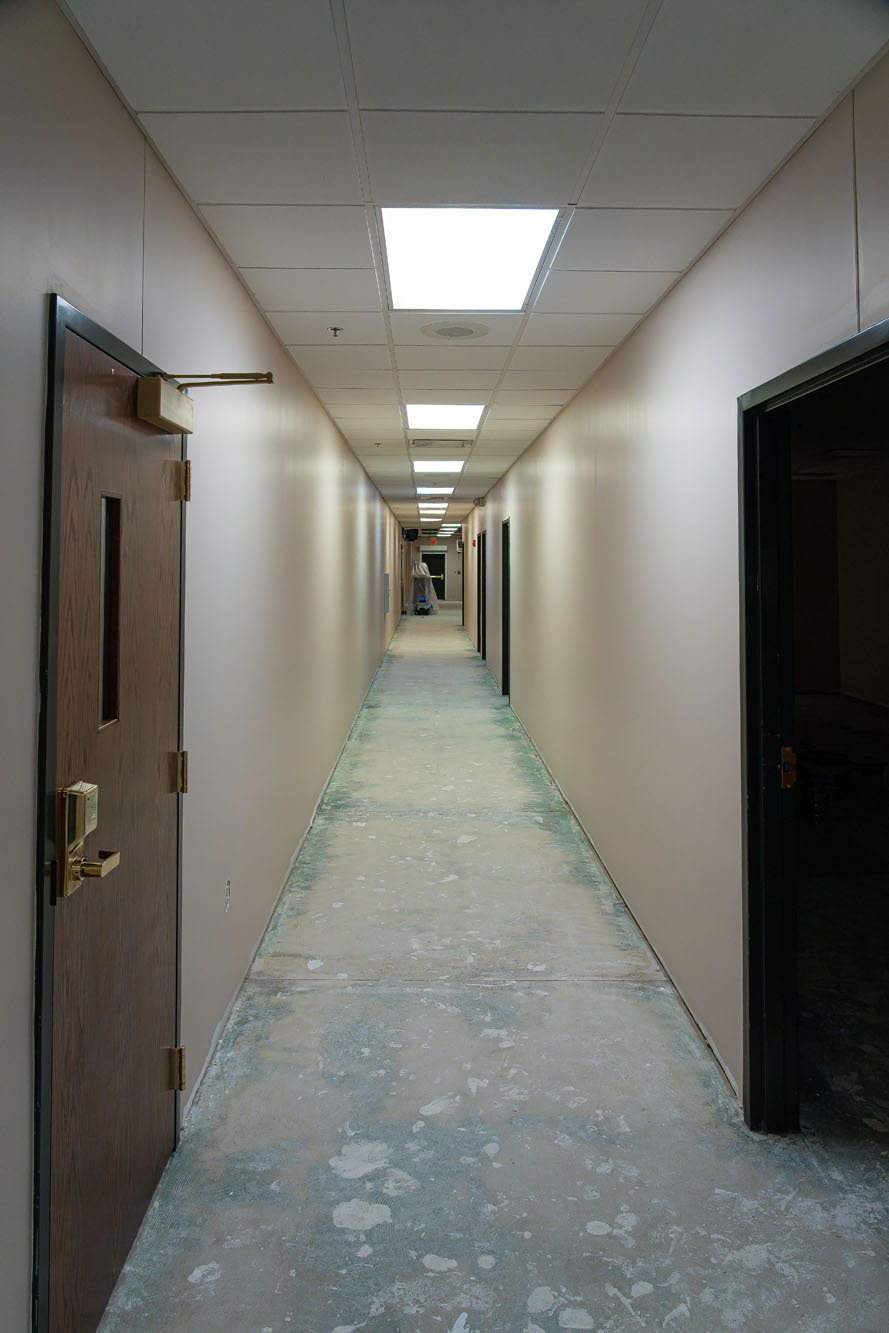
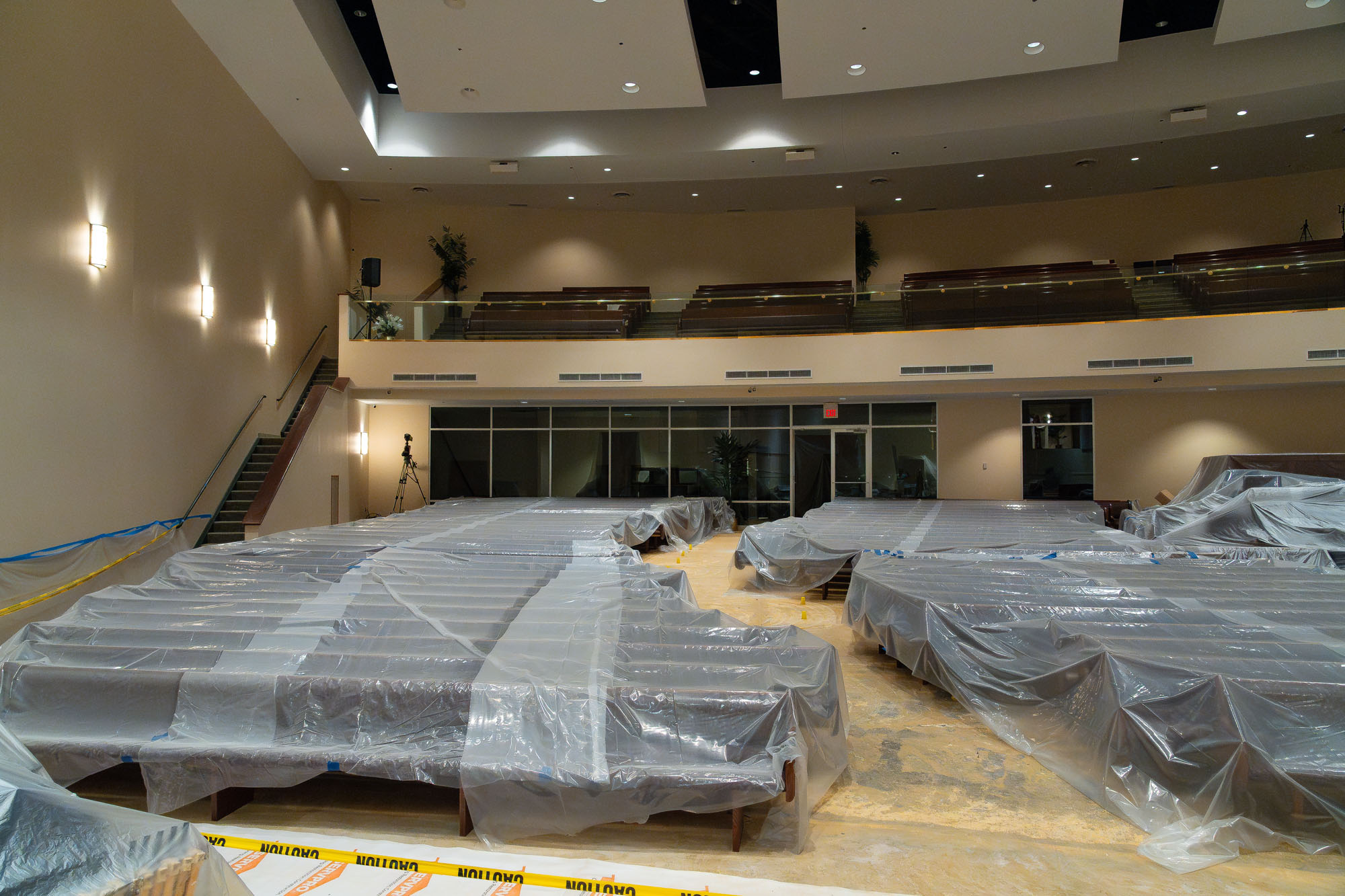
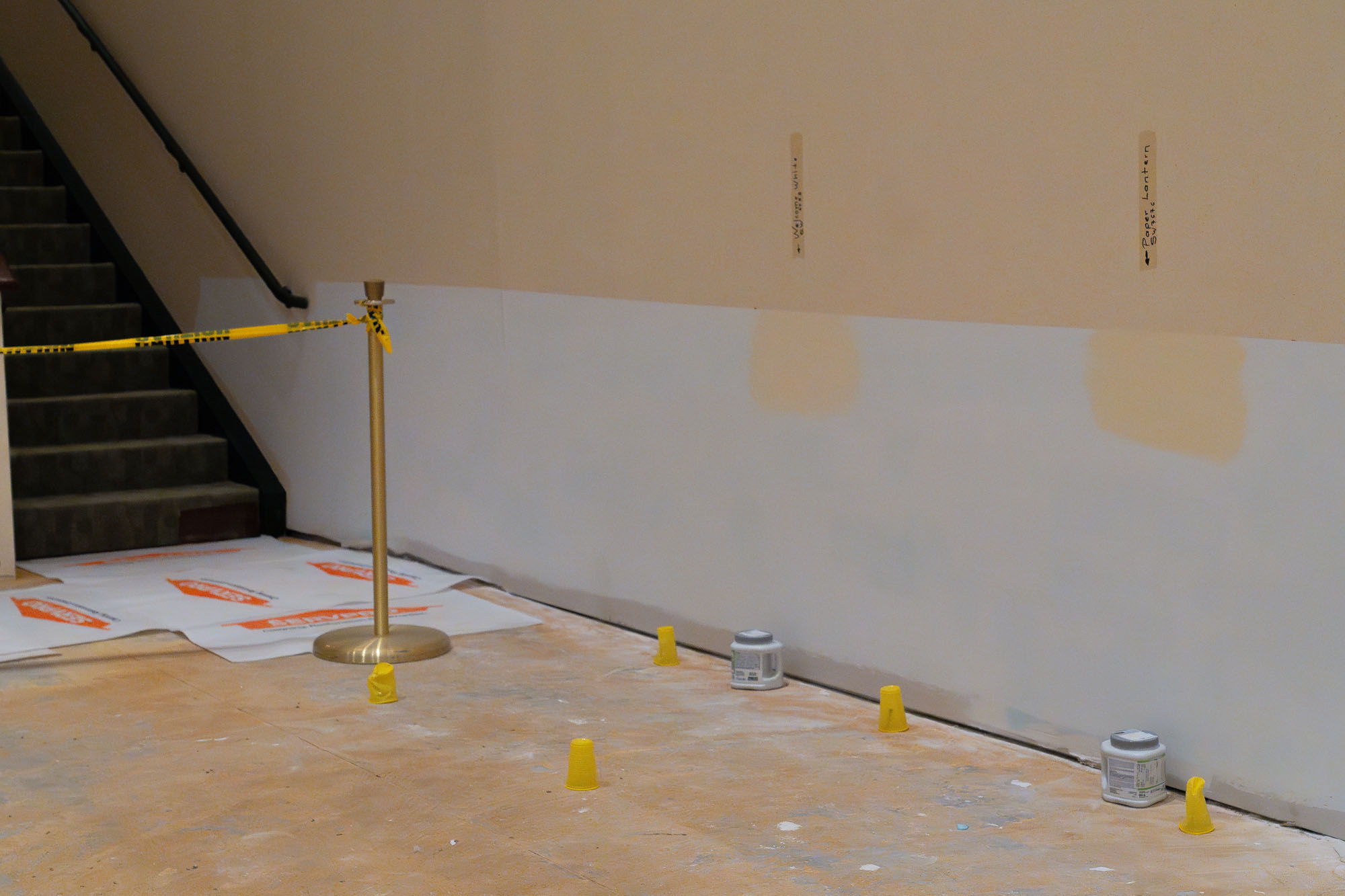
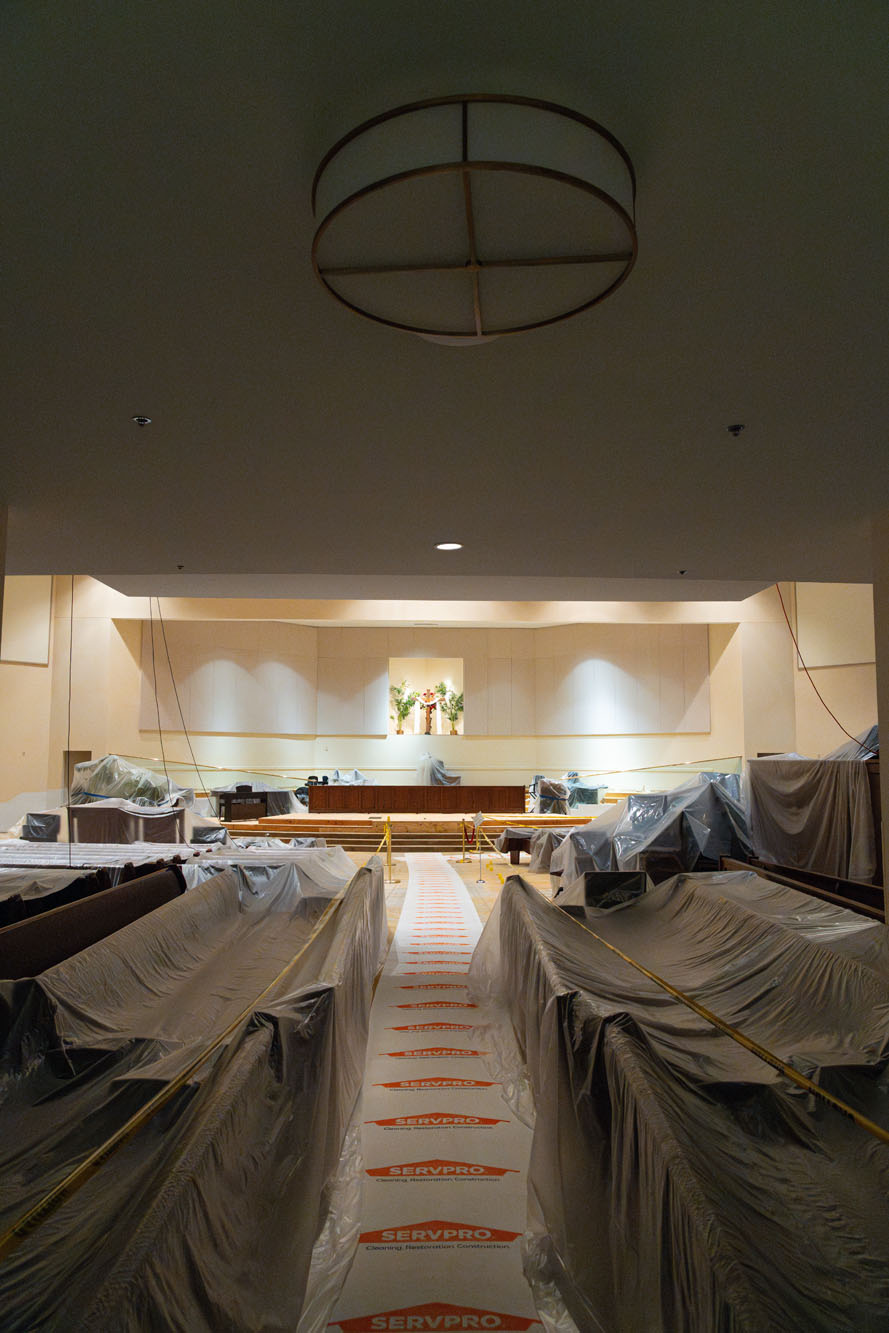
The toll on the church building was more apparent after it dried out. Repairs and renovations would be extensive—all the flooring and the lower half of the drywall needed to be completely stripped out. Ruined furniture and desks had to be discarded. Most significantly, the primary location for weekly worship services on the first floor was unusable.
With ample insurance to cover the repairs, a remediation contractor was assigned and began the nine-month process of renovating the space. The storm the Cleveland Church of Christ faced did not end with the flooding.
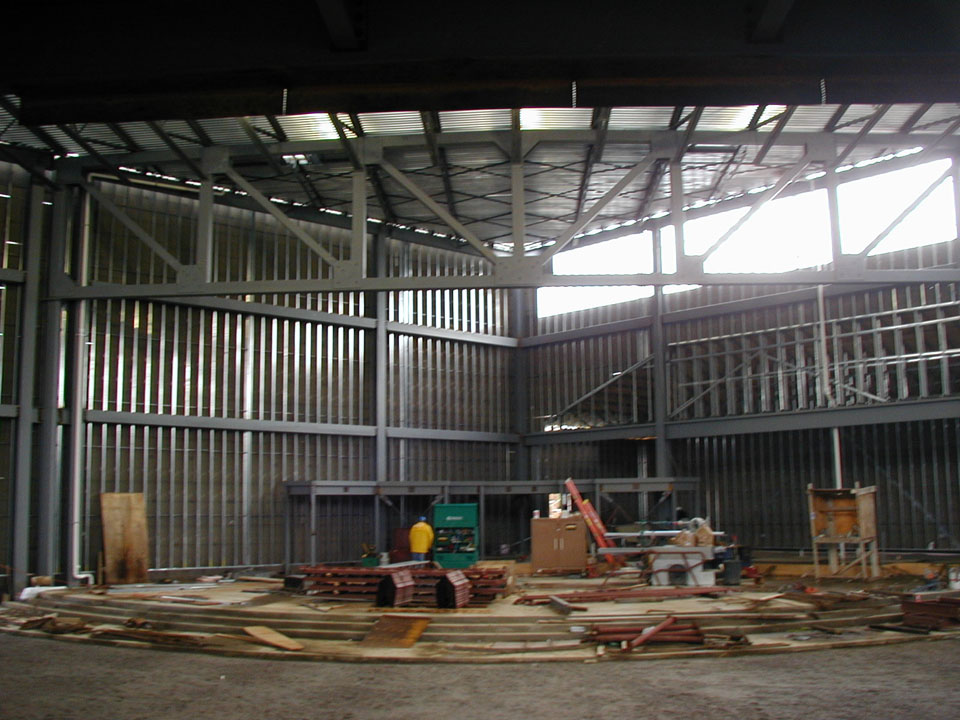
Bishop Haughton recalled experiencing the building stripped back down to its construction components. “When I saw the bare walls, concrete floors, and steel and pipes, it looked like it did when we first built the church,” he said. “When questions came up about new floors, paint, and carpet, I immediately thought about ThenDesign Architecture.”
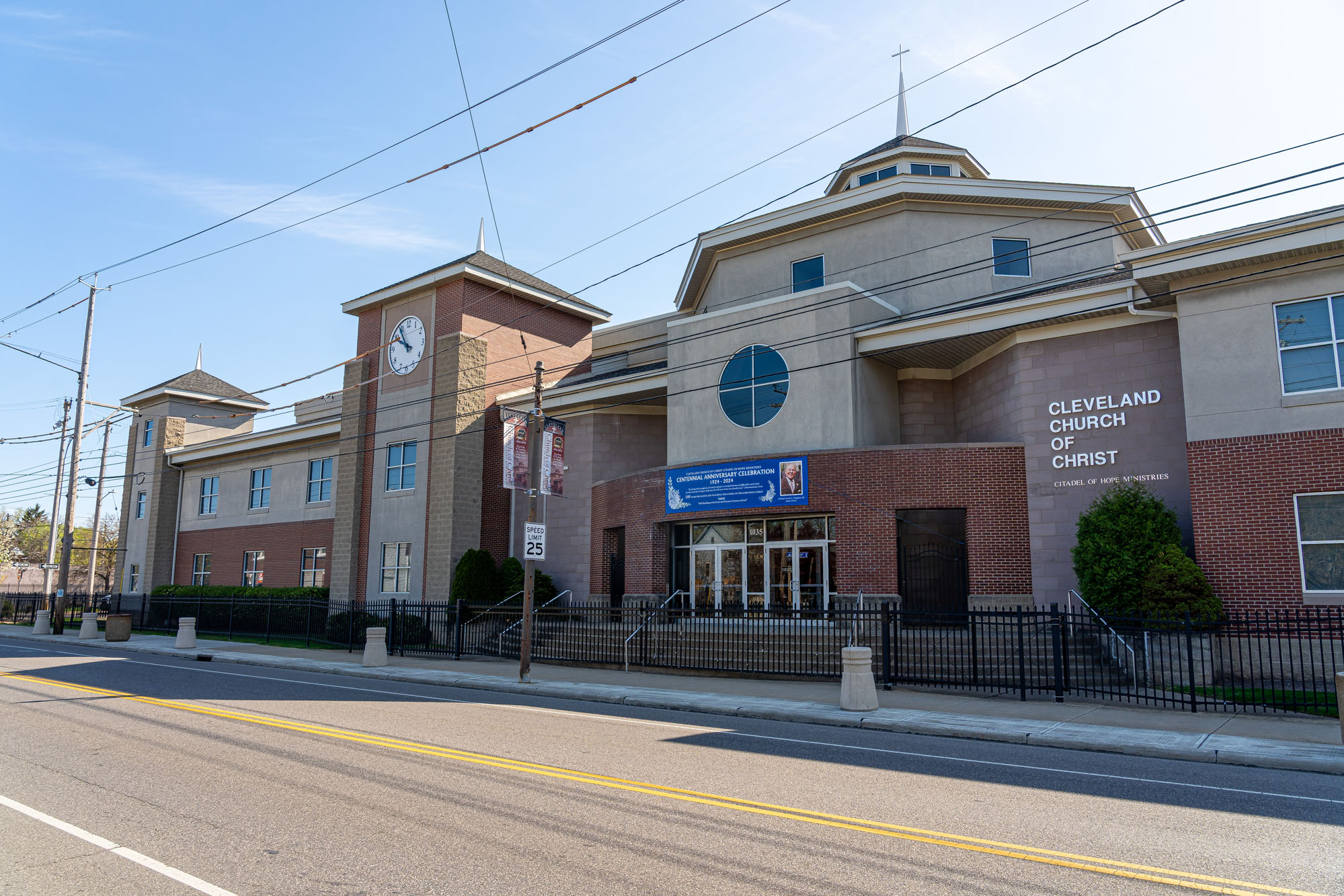
The Cleveland Church of Christ building was originally designed by ThenDesign Architecture and opened in November 2002. At the time, then TDA President Robert Fiala, Project Manager Chris Smith, and Interior Designer Jeanne Klecker were involved in the project.
Nobody could have guessed how significant that rewarding, personable experience would prove to be twenty-three years later.
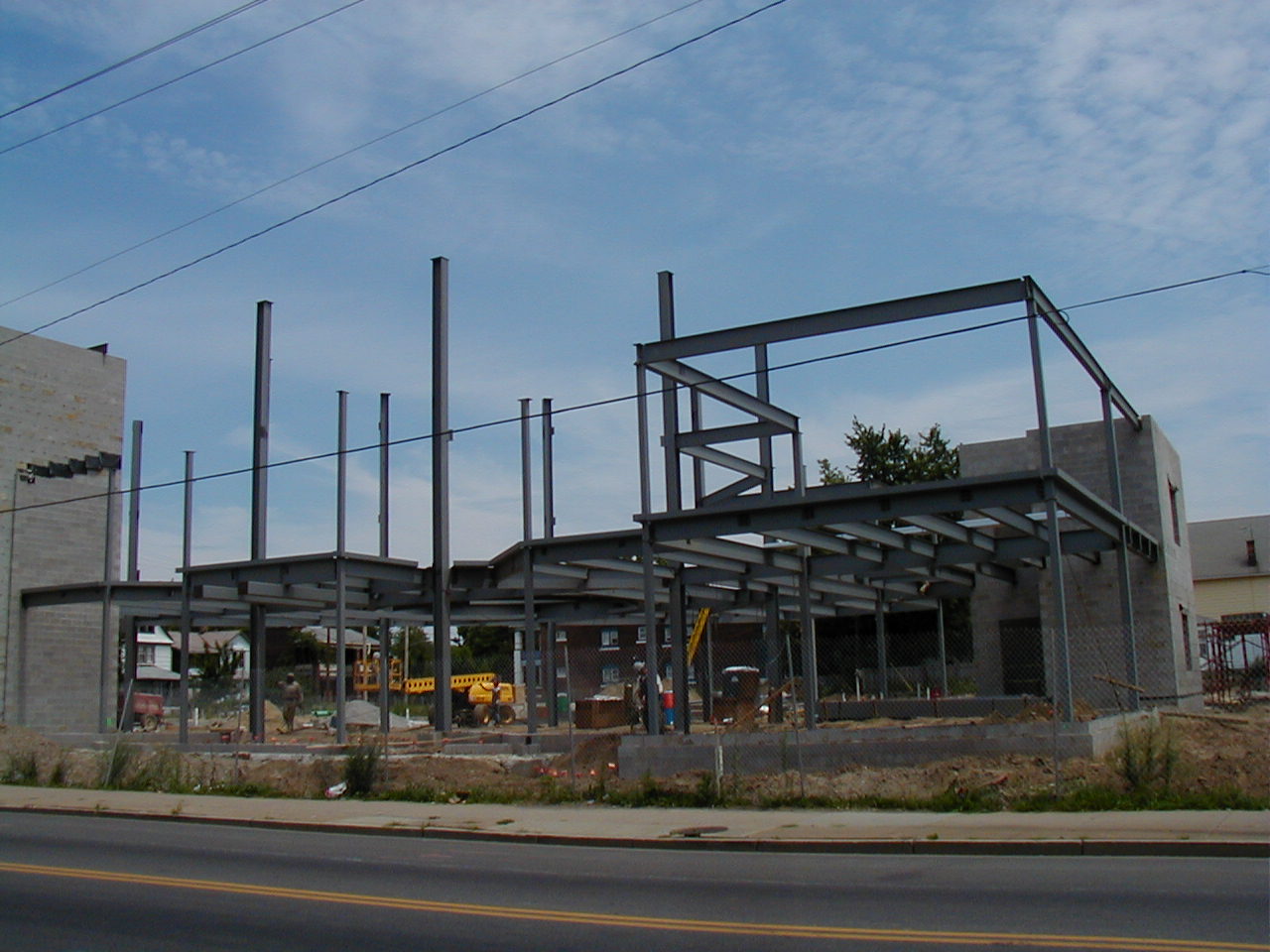
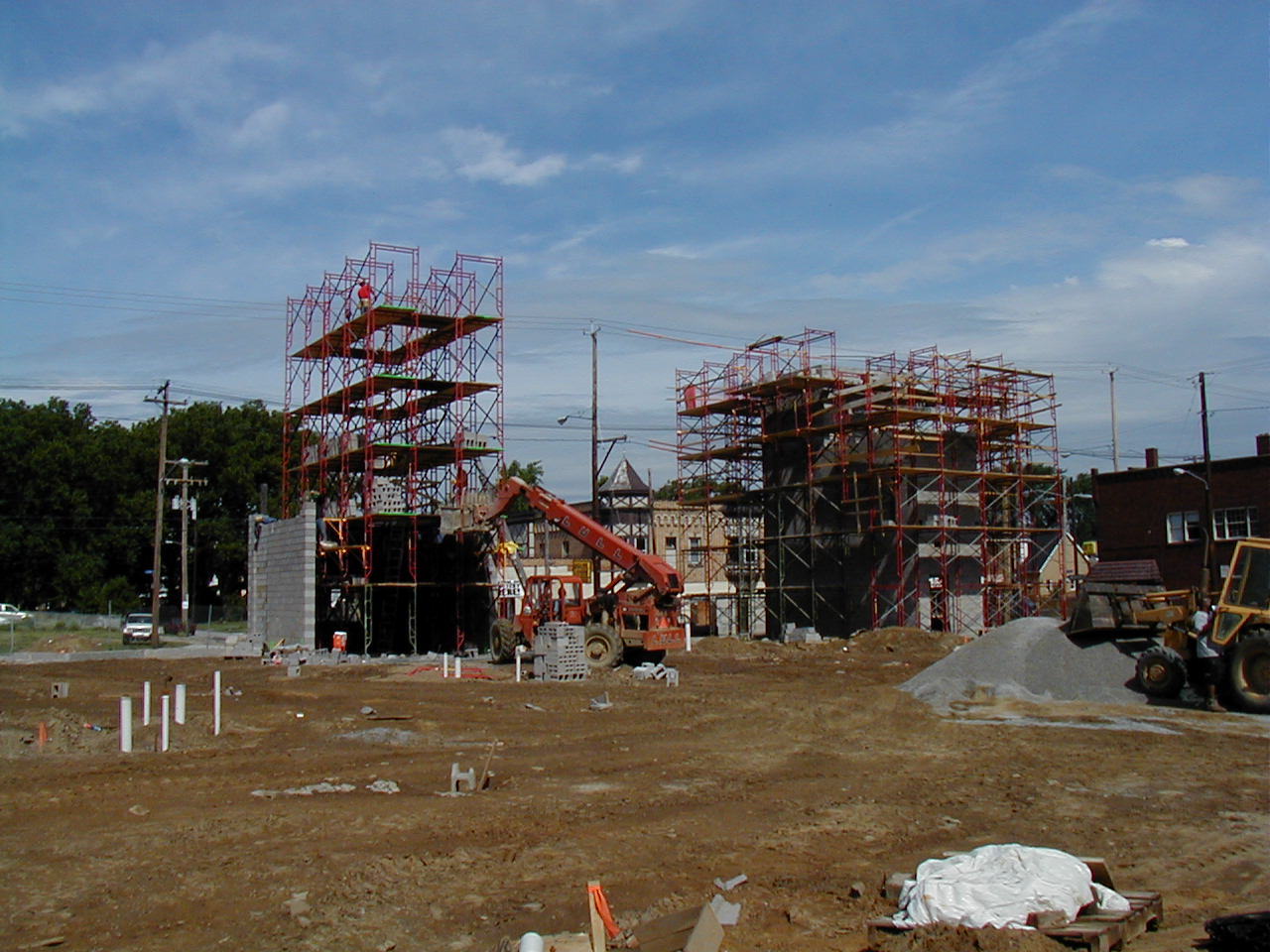
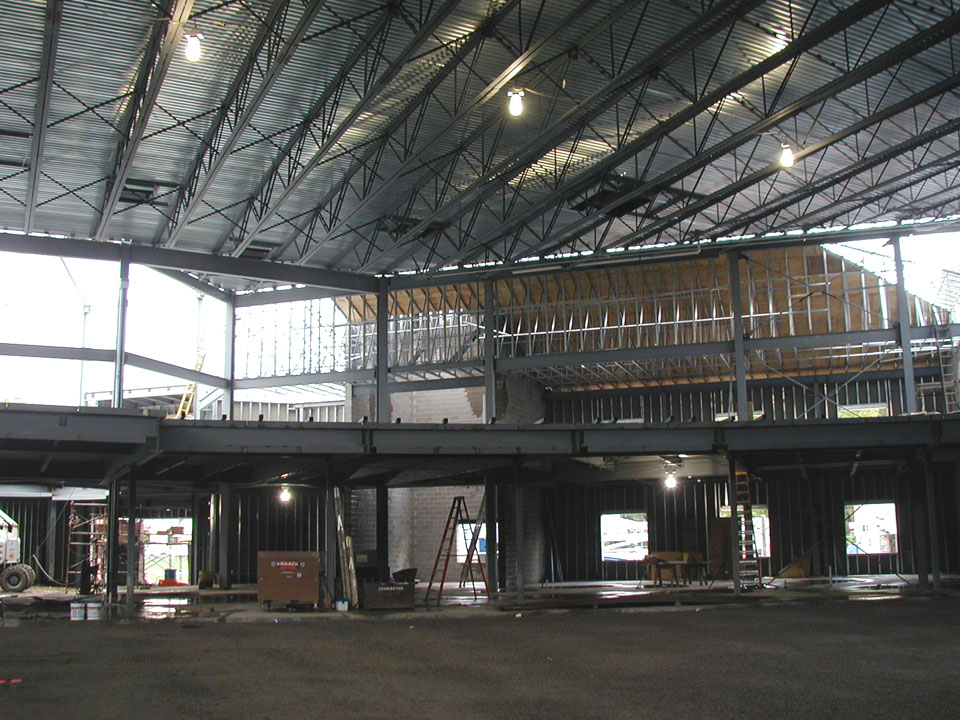
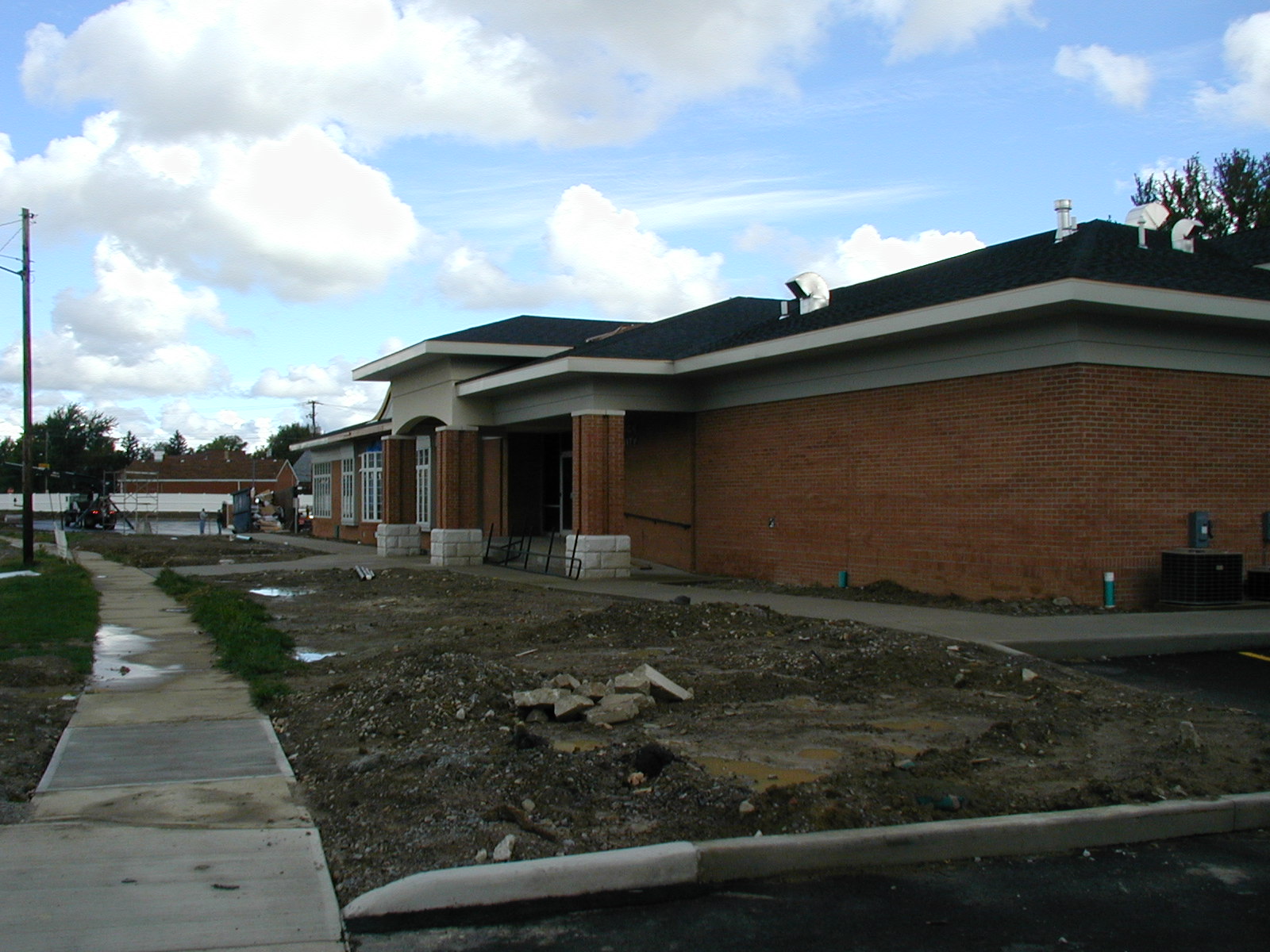
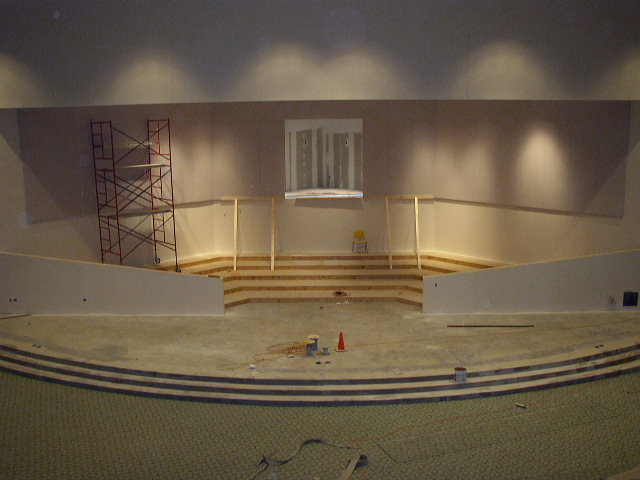
Cleveland Church of Christ Original Construction in 2001-2002
Way Back Then
In the late 90s, the Cleveland Church of Christ realized they needed a new building to support their expanding ministries. A plot of land was purchased across the street from the location on East 105th Street that had served the local community since 1968. In 1998, ThenDesign Architecture was awarded the $6 million project, with Chris Smith serving as the architect, and Jeanne Klecker was later brought on board to handle interiors.
“When we first met with Chris and Mr. Fiala, we just had that click,” recalled Deacon James R. Haughton, Jr., Pastor of Music and Fine Arts & COO. “It was the same when we met Jeanne. They heard what we wanted to do and really listened to us. They took our ideas and developed them from the architect’s side of things. During the process, we developed a close relationship with them because our personalities fit so well.” He added, “They’re very nice people, and we liked them from the start.”
“We knew Elder Haughton because he was a regional superintendent for CMSD at the time,” said current TDA President and CEO Chris Smith, AIA, NCARB, LEED AP BD+C. “It’s always important to understand a client’s needs, but this felt unique. We were not only struck by the close tie to the immediate community, but their outreach and pastoral services that reached much further.”
After spending an Easter Sunday at their church, it became more personal for Chris, “Very soon after the kickoff, we felt an obligation to deliver for them because we simply didn’t want to let our friends down. As the project progressed, our relationship grew even more.”
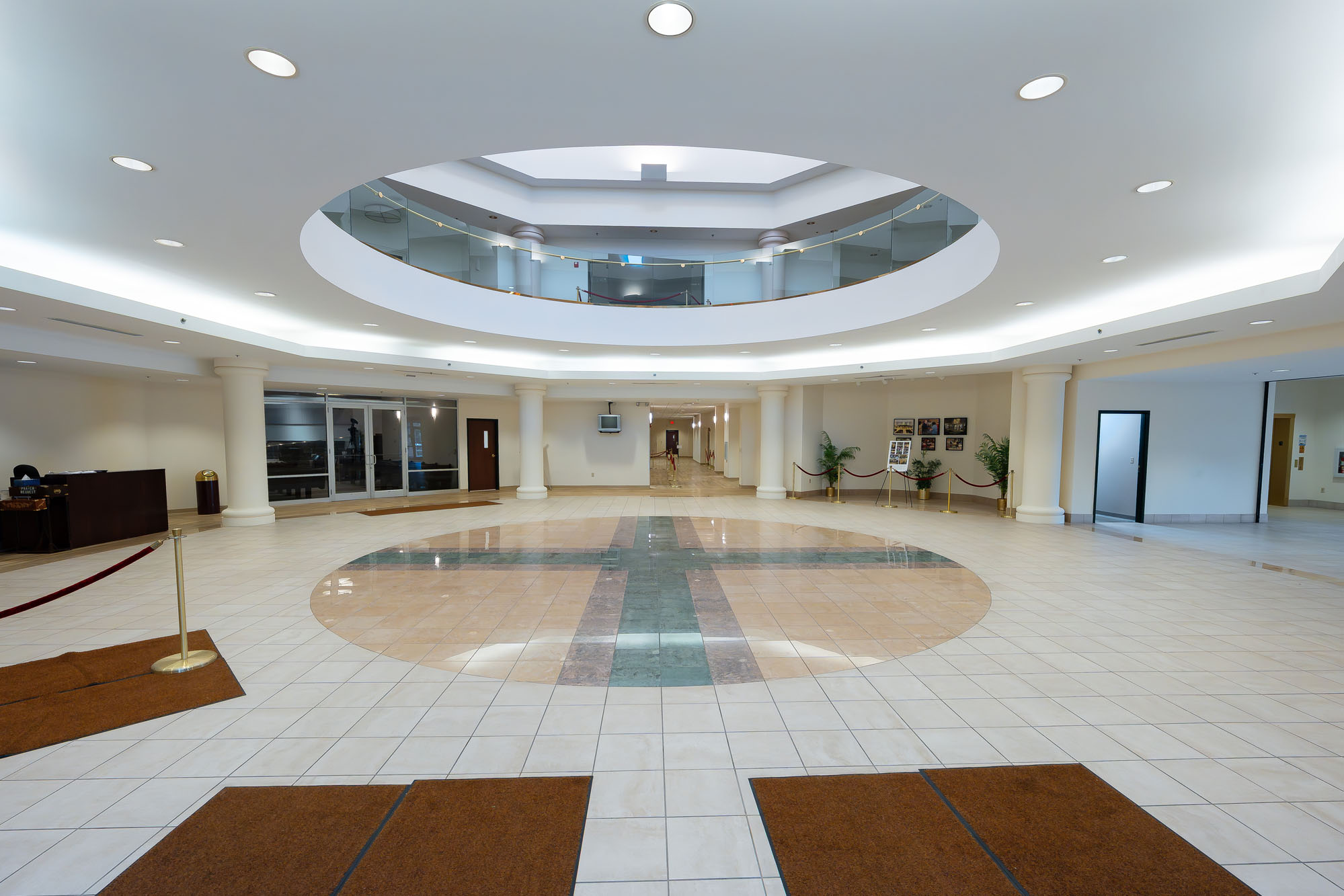
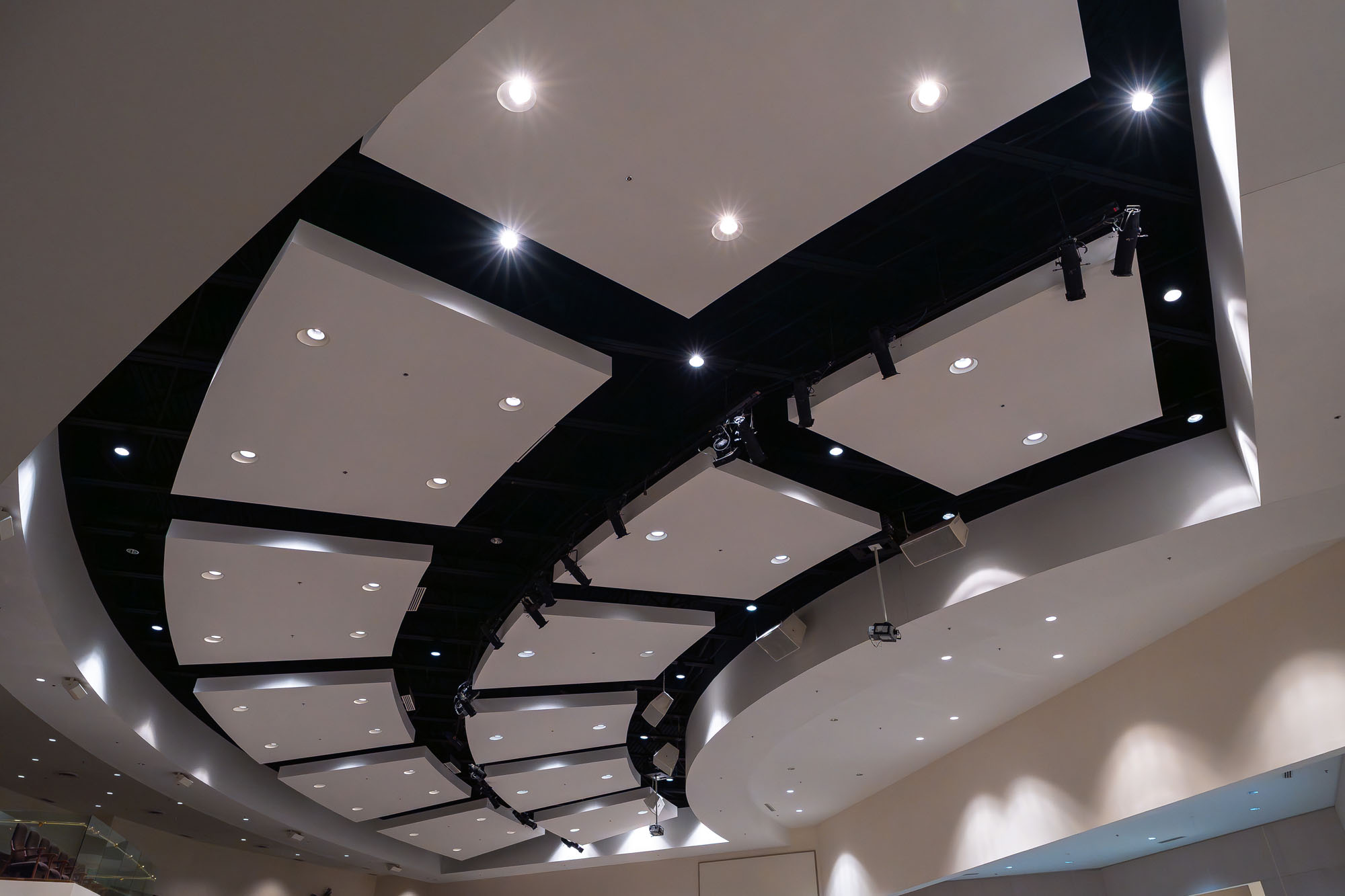
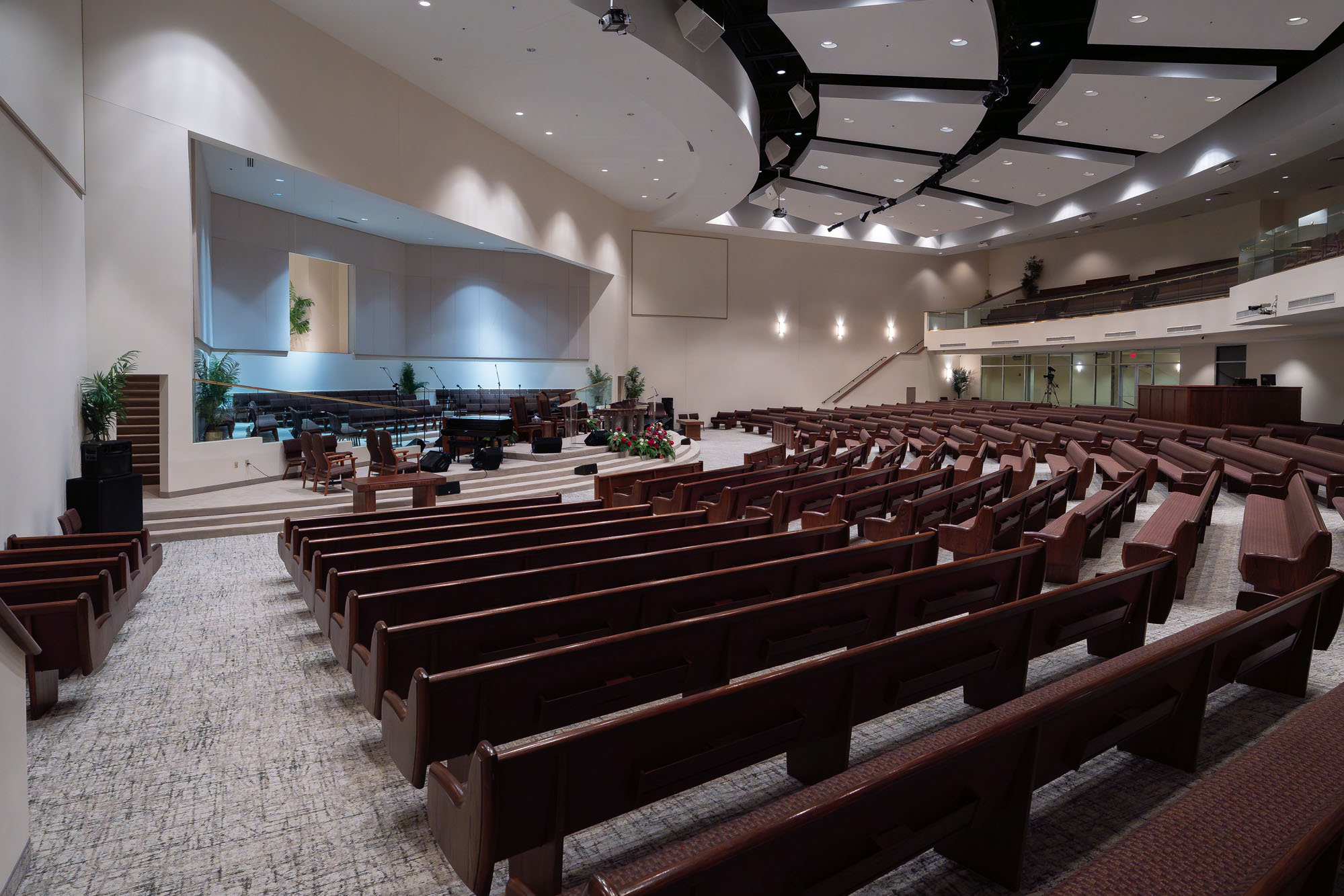
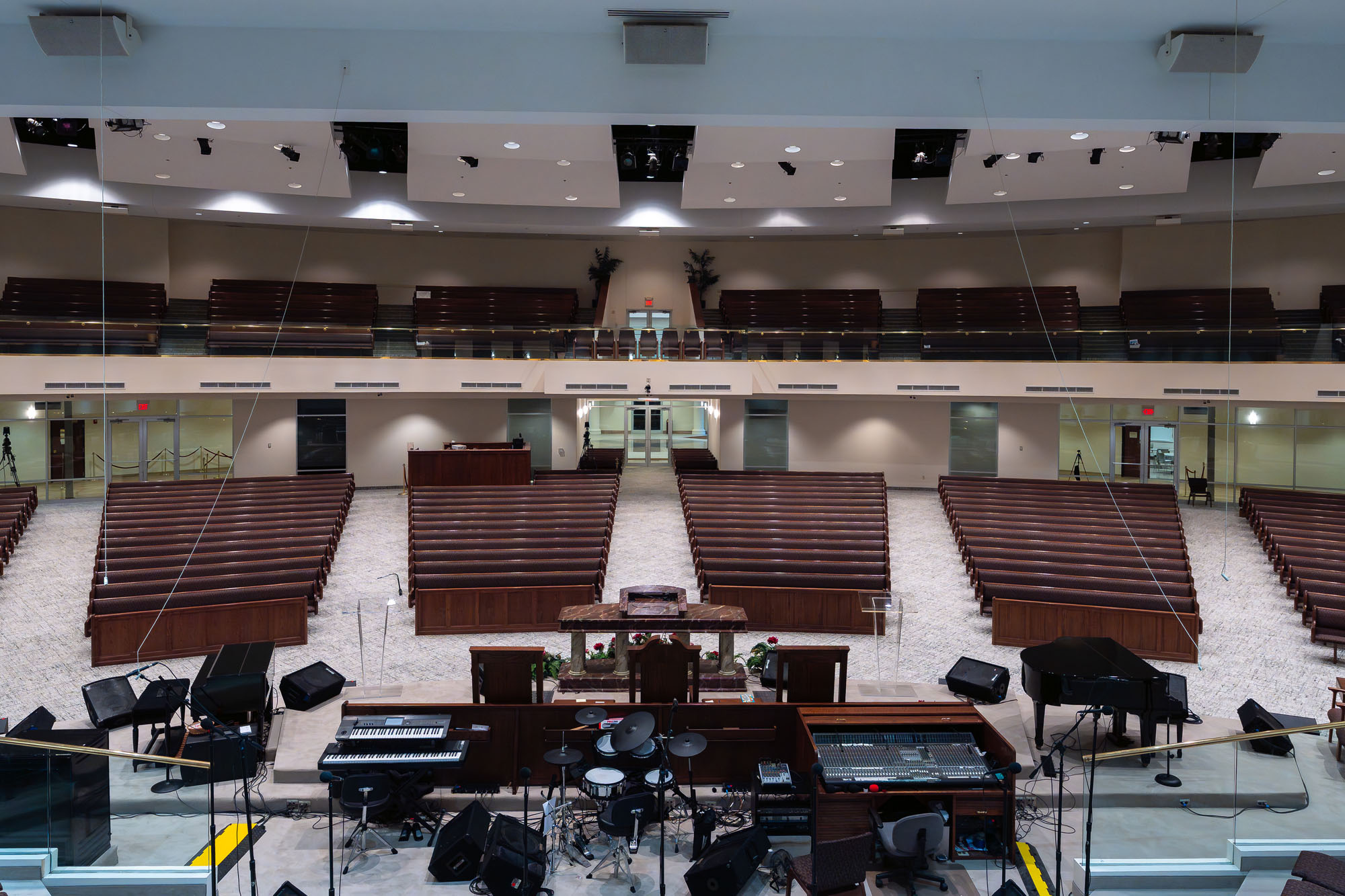
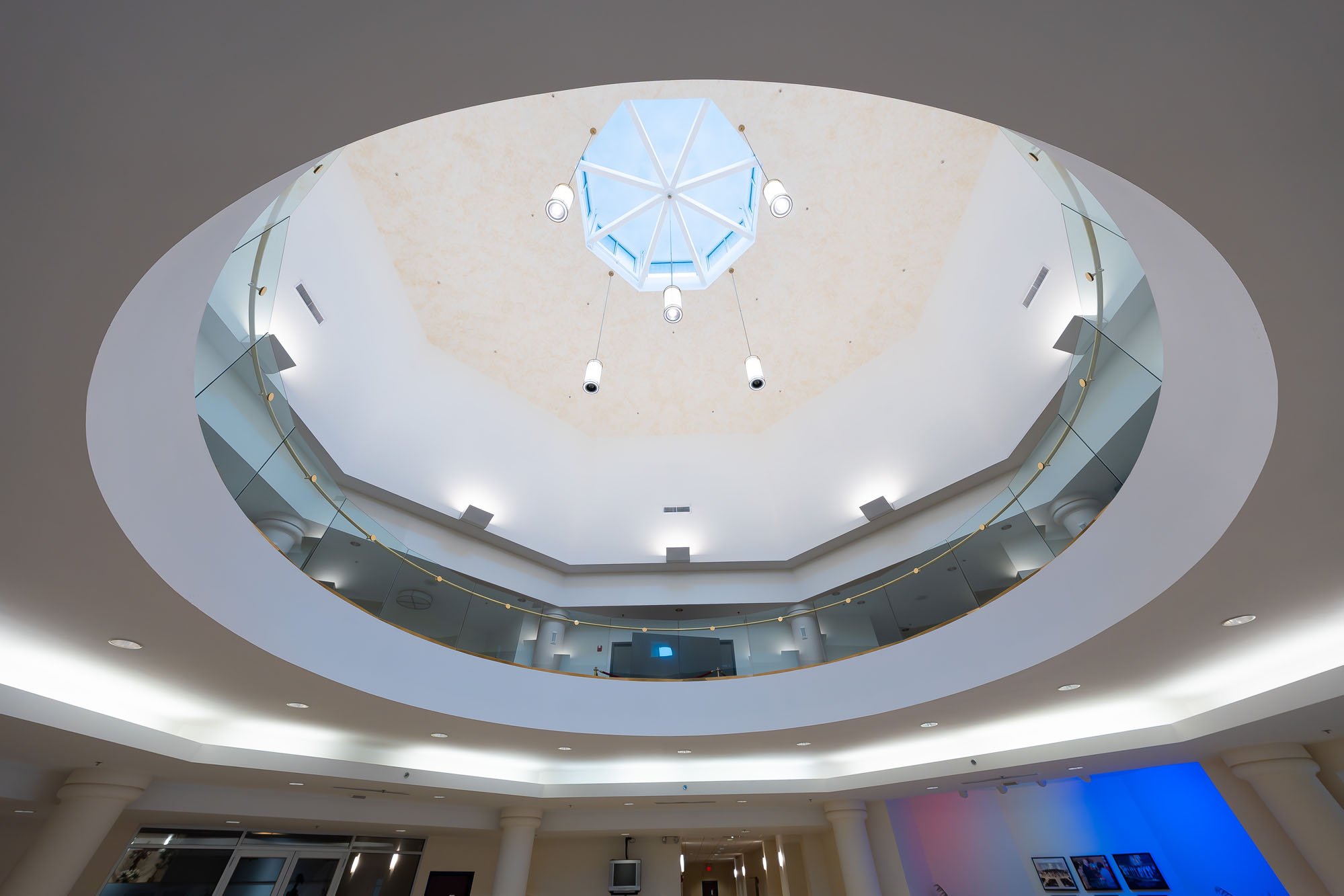
Throughout the design process, discussions were had about avoiding placing columns in the sanctuary so that the pulpit, stage, and baptismal pool were visible from every seat on the first floor. The decision to add the optional second-floor mezzanine proved to be essential decades later. From an architectural and interior finishes perspective, the entrance, the two-story atrium with dome rotunda, sanctuary, and supporting spaces reflected a reverence for the church. As a house of worship, being functional and visually pleasing were equally important. The team created a texture, color, and lighting palette that fostered an inviting, warm atmosphere that was also appropriate for hosting social gatherings.
Bishop Haughton said, “They were with us through the design process, through the building process, and through the dedication services. They shepherded us all the way through to the end. The design that was delivered was all letter-perfect.”
The new Cleveland Church of Christ building opened in November 2002. That is usually where the story ends, but a blisteringly cold Ohio winter changed that.
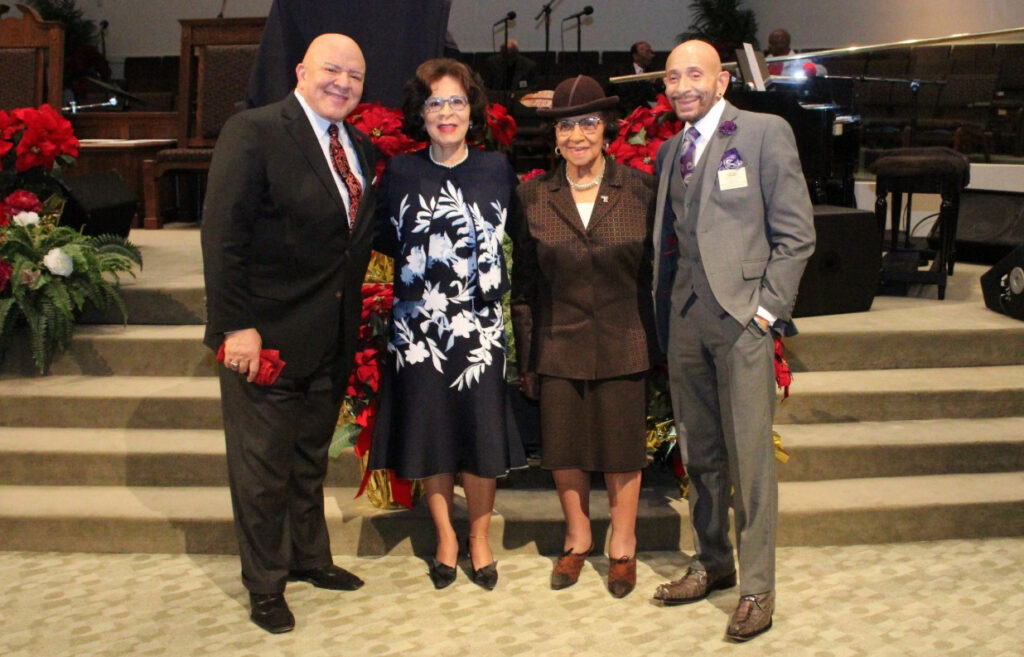
Bishop Haughton and His Family
A Place Prepared For You
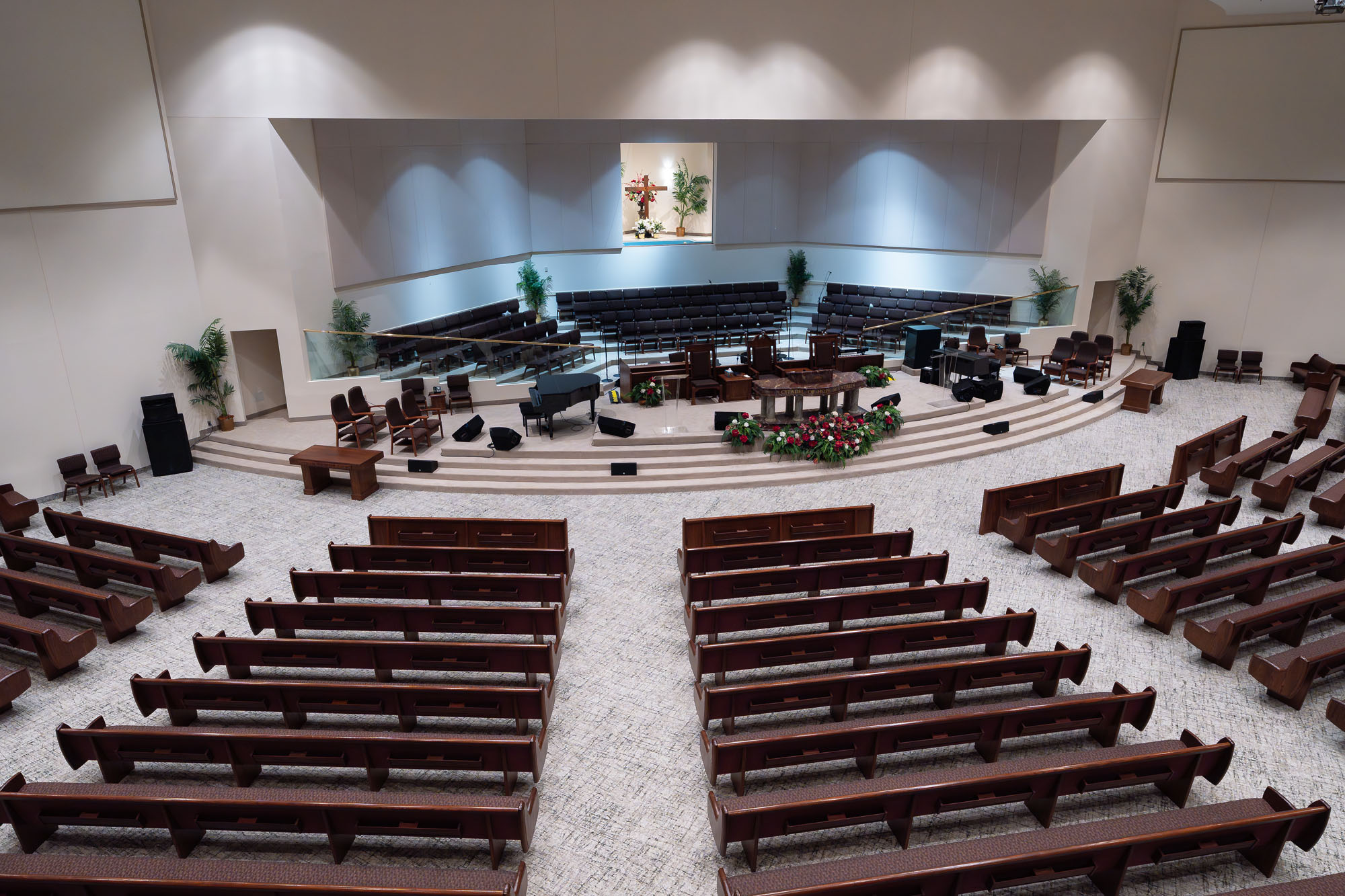
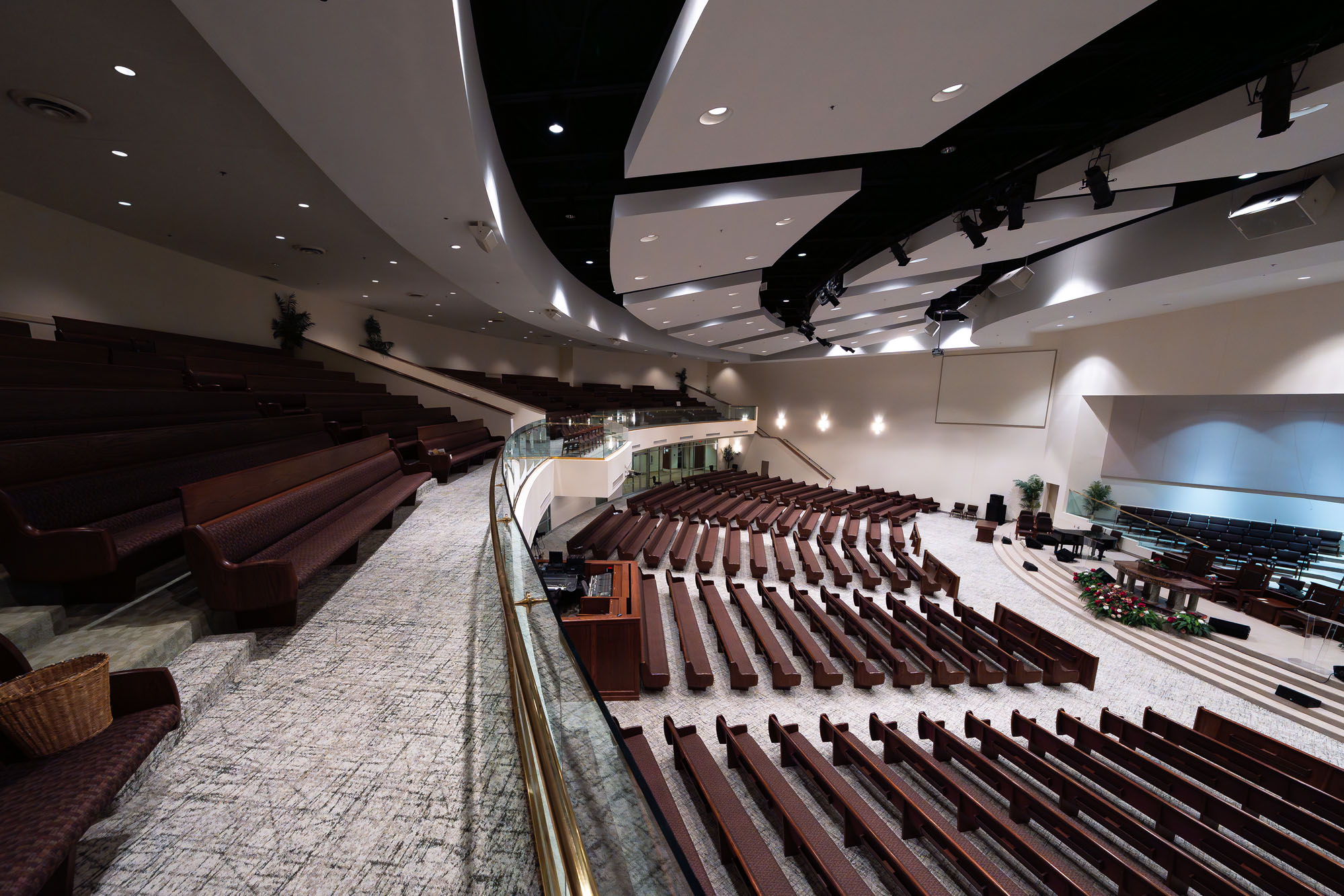
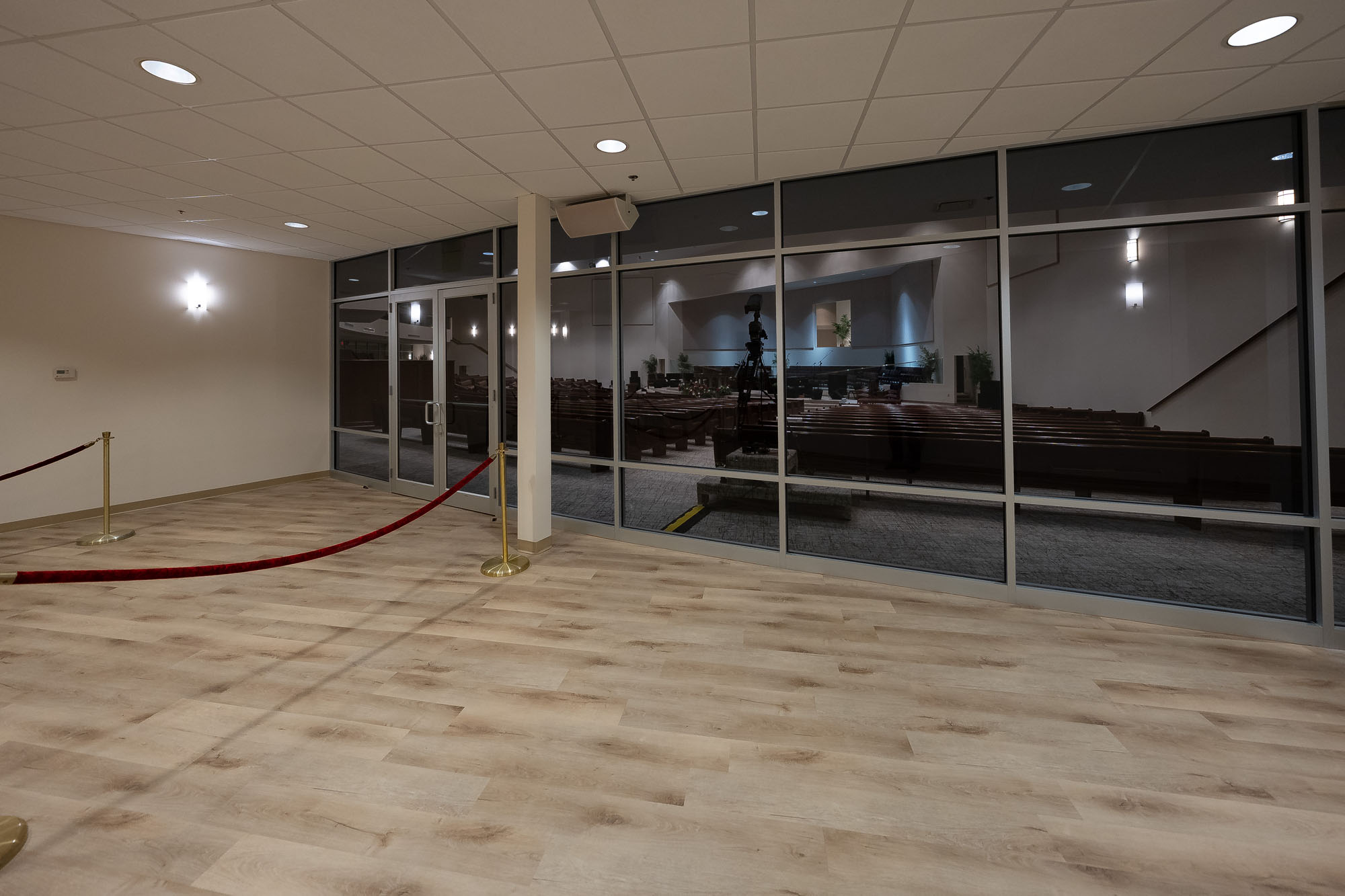
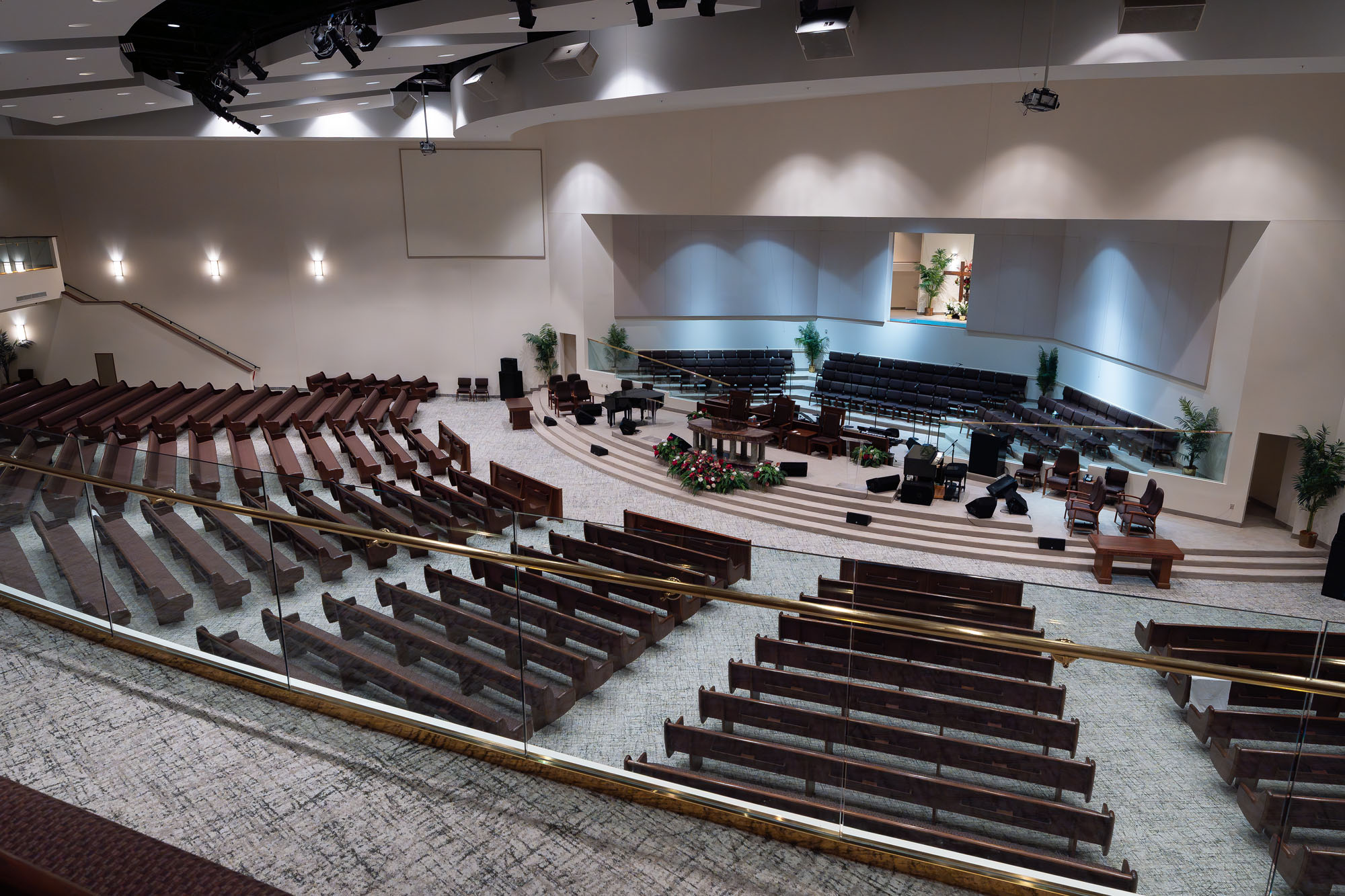
During the renovation and repairs to the sanctuary in 2025, the congregation and band temporarily relocated to the second-floor mezzanine for services, with ministers still able to preach from the pulpit on the elevated stage below. This allowed services to continue without difficulty.
If the decision during the original construction had been made not to include a mezzanine, the Cleveland Church of Christ’s story would be very different today.
“When the church was first built, there was a question about having a mezzanine or not,” Bishop Haughton recalled. “We didn’t know, but God knew one day we would need it. If not for the mezzanine, we might not have had a place somewhere else to worship. But because we did choose to have a mezzanine, we were able to move the congregants upstairs while the repair work was still being done. This let us know that the Lord sees into the future and knows of what you have need of before you need it.”
A Friend in Need
After occupying the building for over twenty years, a ruptured water pipe created a harrowing situation for the Cleveland Church of Christ ministry and congregation. A storm of distress and activity began. Instead of it simply being a disaster of time and chance, Bishop Haughton saw it as a blessing in disguise because the damage was fully covered by insurance.
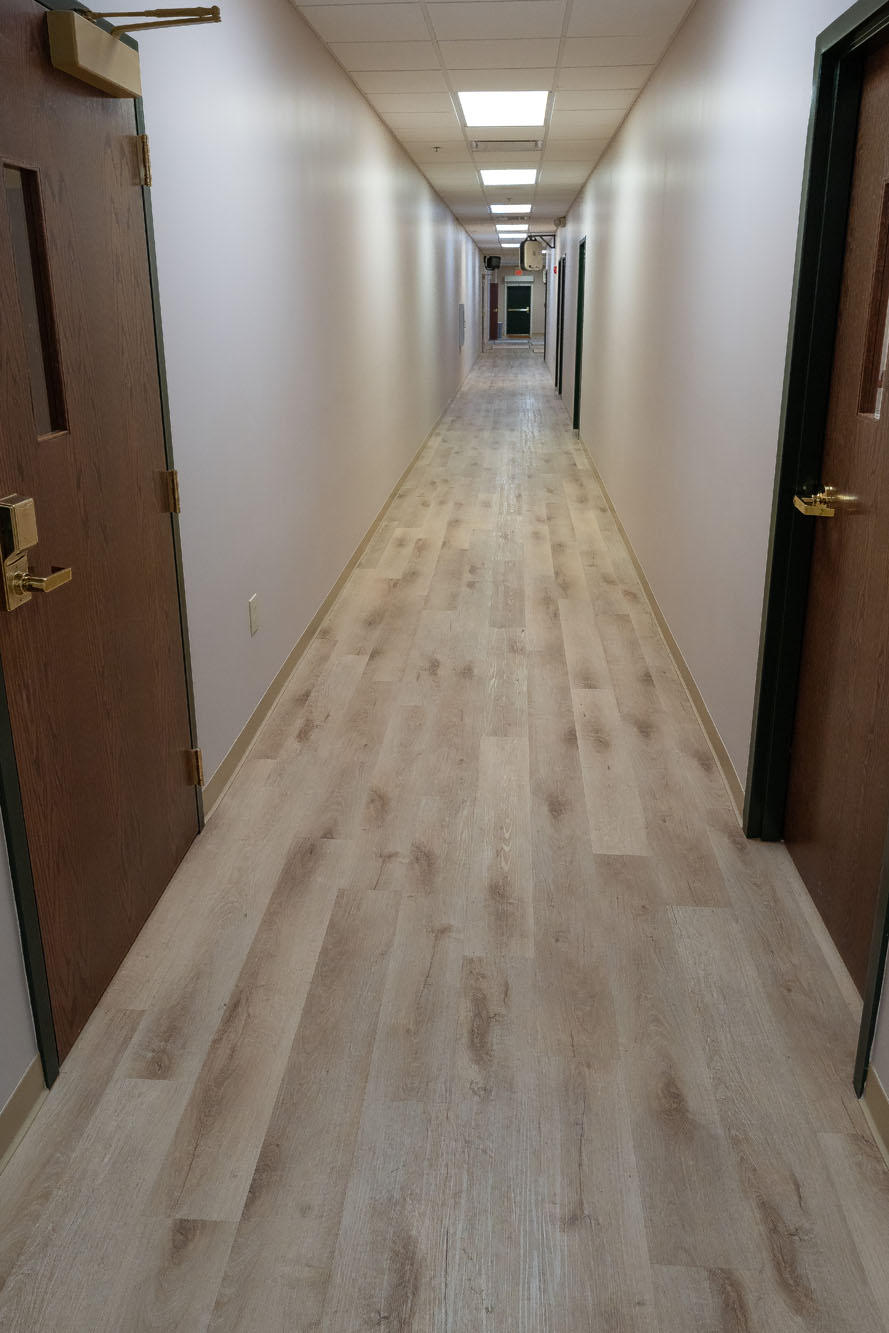
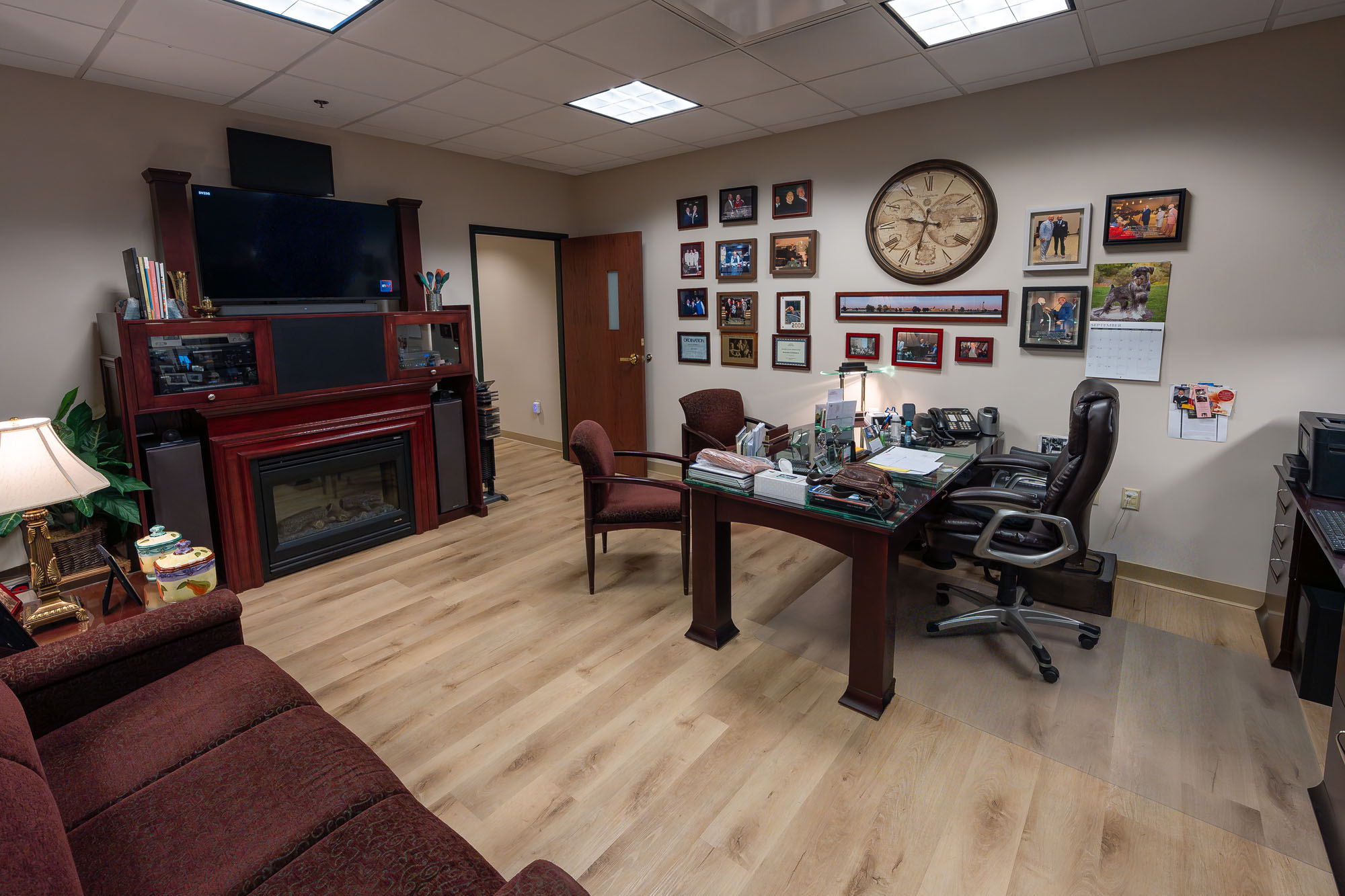
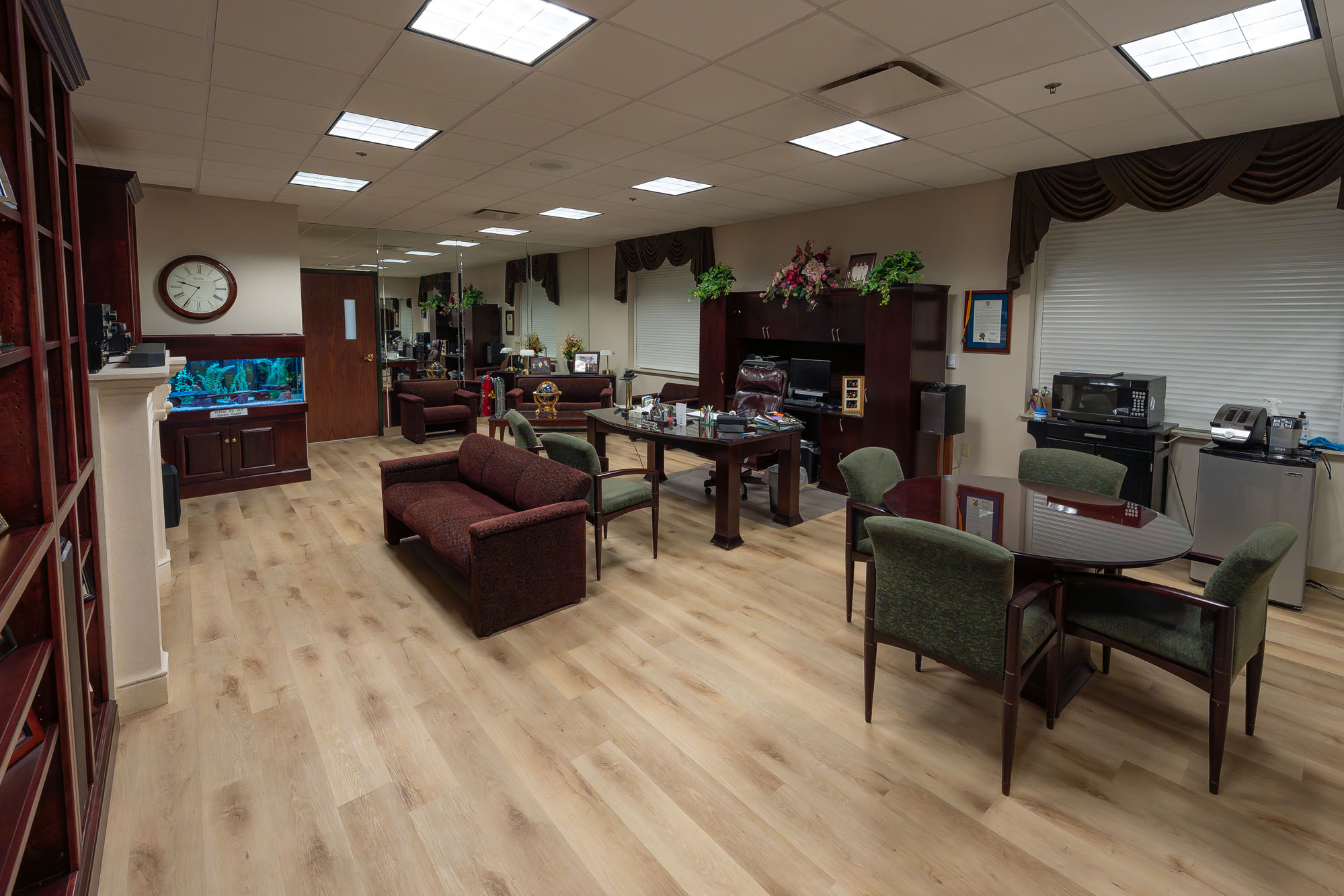
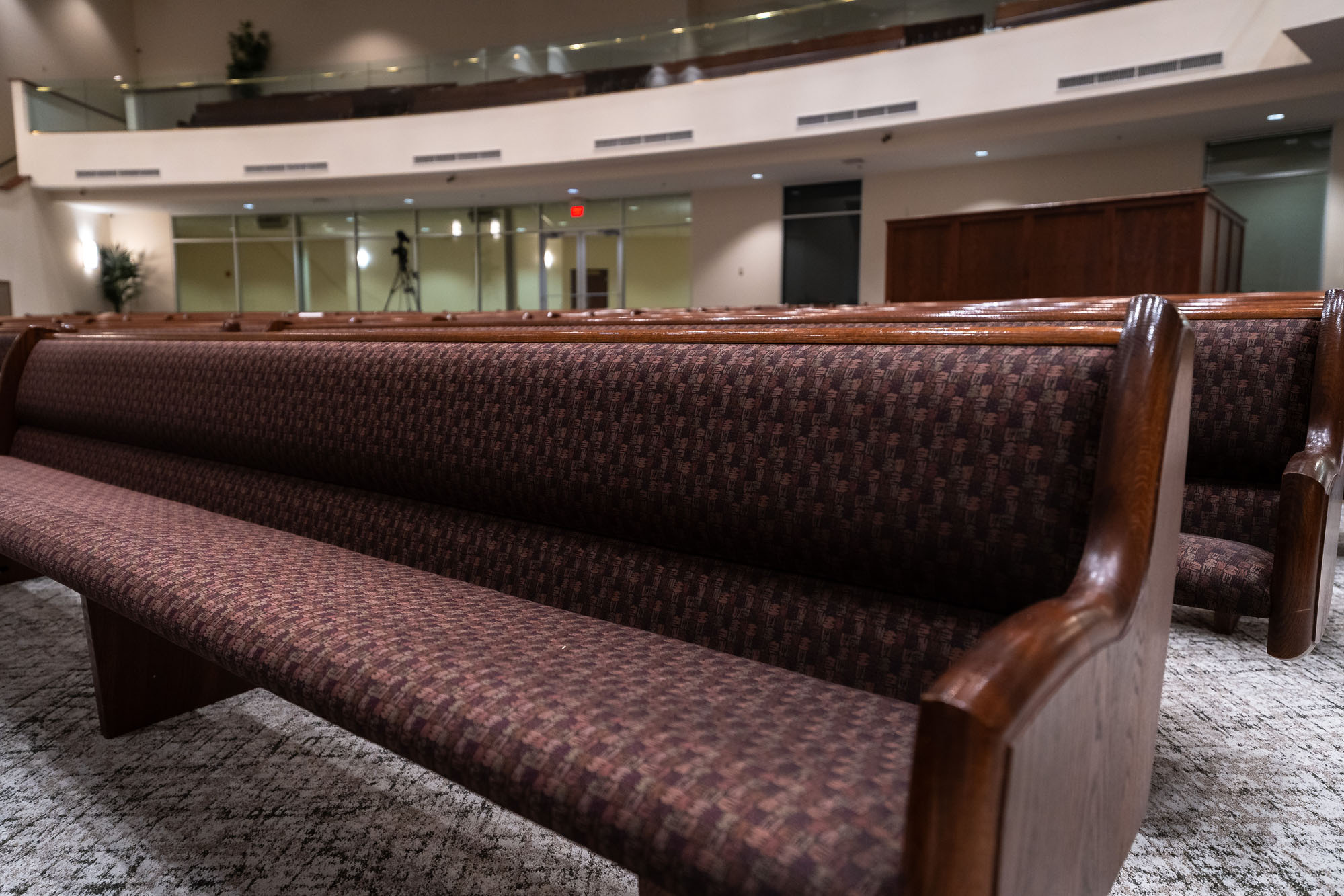
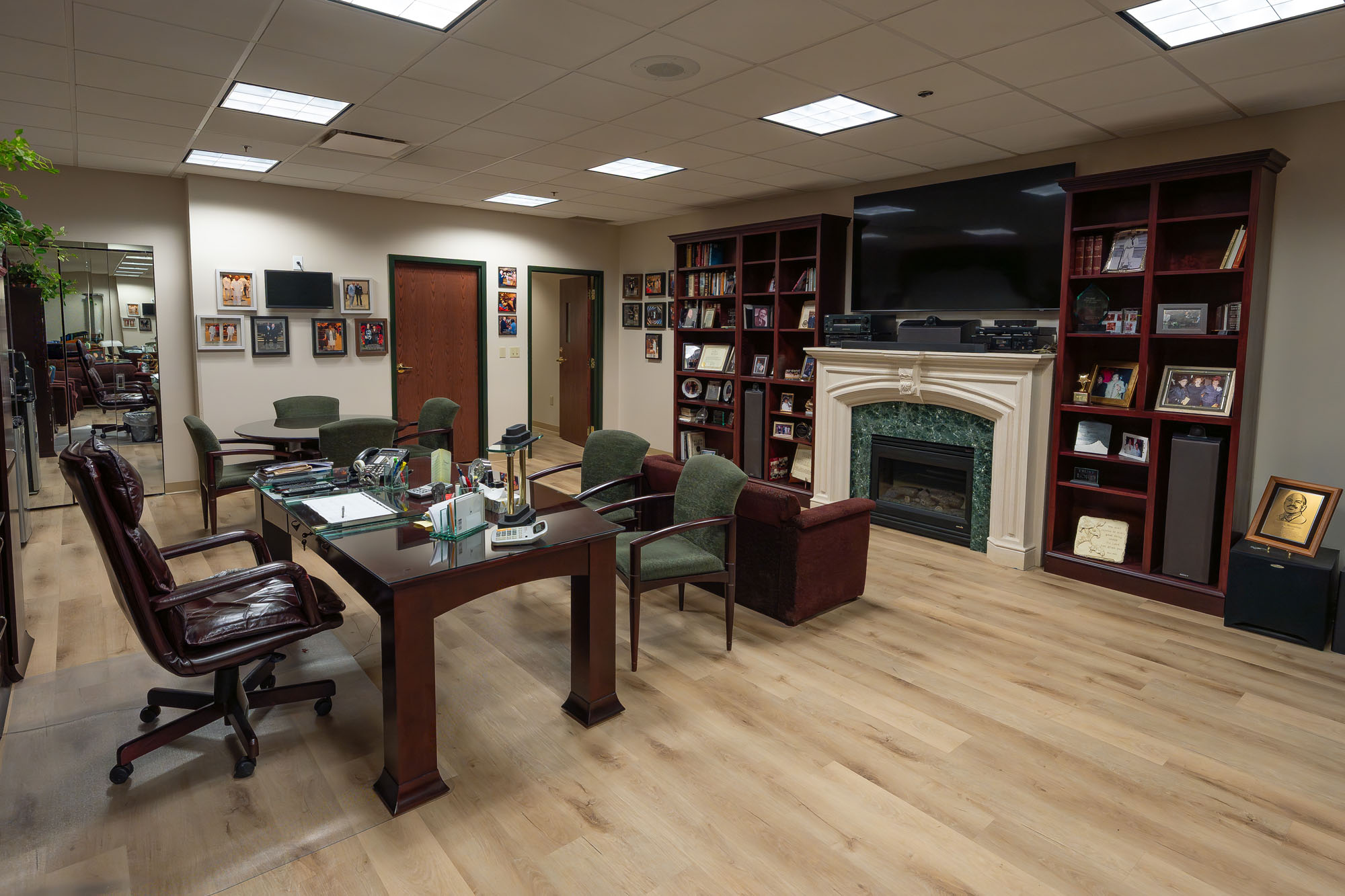
The carpeting in the offices was replaced with vinyl planking, but one of the bigger concerns for Bishop Haughton was finding a suitable replacement for the sanctuary carpet because the original was no longer manufactured. Many samples were presented, but there was a growing uncertainty that an acceptable option that suited the look, feel, and respect for the space was going to be found.
Then, Bishop Haughton had an idea.
“I told my brother that we should call Jeanne and Chris at ThenDesign Architecture. They helped us build the church. Maybe they can help us fix it,” he said.
While seeking advice from TDA, the dynamics of that first phone call were mutual on both sides: There was an immediate comfort. Jeanne said, “Even though we worked on that project together over twenty years ago, Bishop Haughton’s voice was immediately familiar.”
Bishop Haughton explained the situation and their design struggles to Interior Designer Jeanne Klecker, NCIDQ. He also expressed other concerns regarding some aspects of the construction progress. Jeanne said, “I had a really strong sense of needing to do the right thing and not just because they were a former client. I understand the struggles of things not going right on a project and how stressful that can be.”
After the initial phone call, Jeanne summarized the situation to Chris. He immediately agreed that TDA would do whatever was needed at no charge. “Even though Bishop Haughton wanted to be billed for our time, Chris was adamant that we would not accept his money,” Jeanne said.
“TDA has a long history of accepting worthwhile pro bono projects,” Chris said, “but this time we had friends in need. I can’t imagine responding differently.”
Cleveland Church of Christ Renovation in Progress
An Interior Challenge
Bishop Haughton came to the TDA offices to drop off carpeting samples for reference. Jeanne said seeing him was like reconnecting with an old friend. “Every conversation with him was positive, and I smiled each time I saw his name appear on my phone.”
“It felt like we were interacting with family in mind,” Bishop Haughton said. “It was like a good security blanket that you could reach for. They freely offered their expertise, freely offered their advice, and freely offered any type of support we wanted. They are always looking out for the people they work with.”
While the project progressed, Bishop Haughton and his team were also seeking Jeanne’s professional guidance to navigate through construction difficulties due to various schedule delays, supply issues, budgetary limitations, and communication challenges.
“It became a deeper commitment to me,” Jeanne said. “I felt a different sense of responsibility. This wasn’t a place of work or education. It’s a person’s place of worship, and I wanted to be highly respectful of that.”
While not official consultants on this phase of the project, Jeanne and Chris provided their professional experience to help Bishop Haughton decipher cost estimates and other construction-related technicalities. Jeanne educated the Cleveland Church of Christ team on modern construction practices so that they could make their own informed decisions with the remediation contractor.
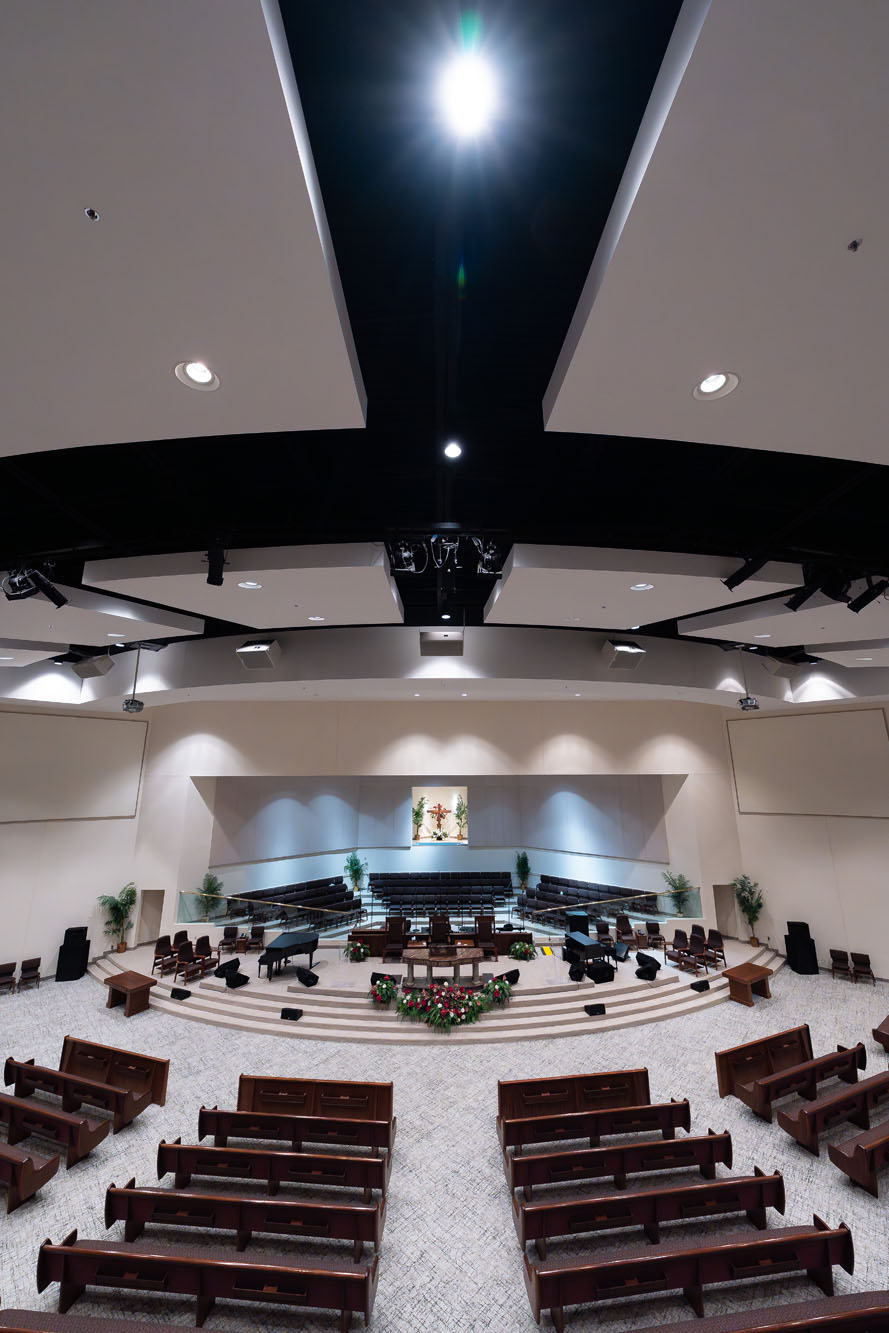
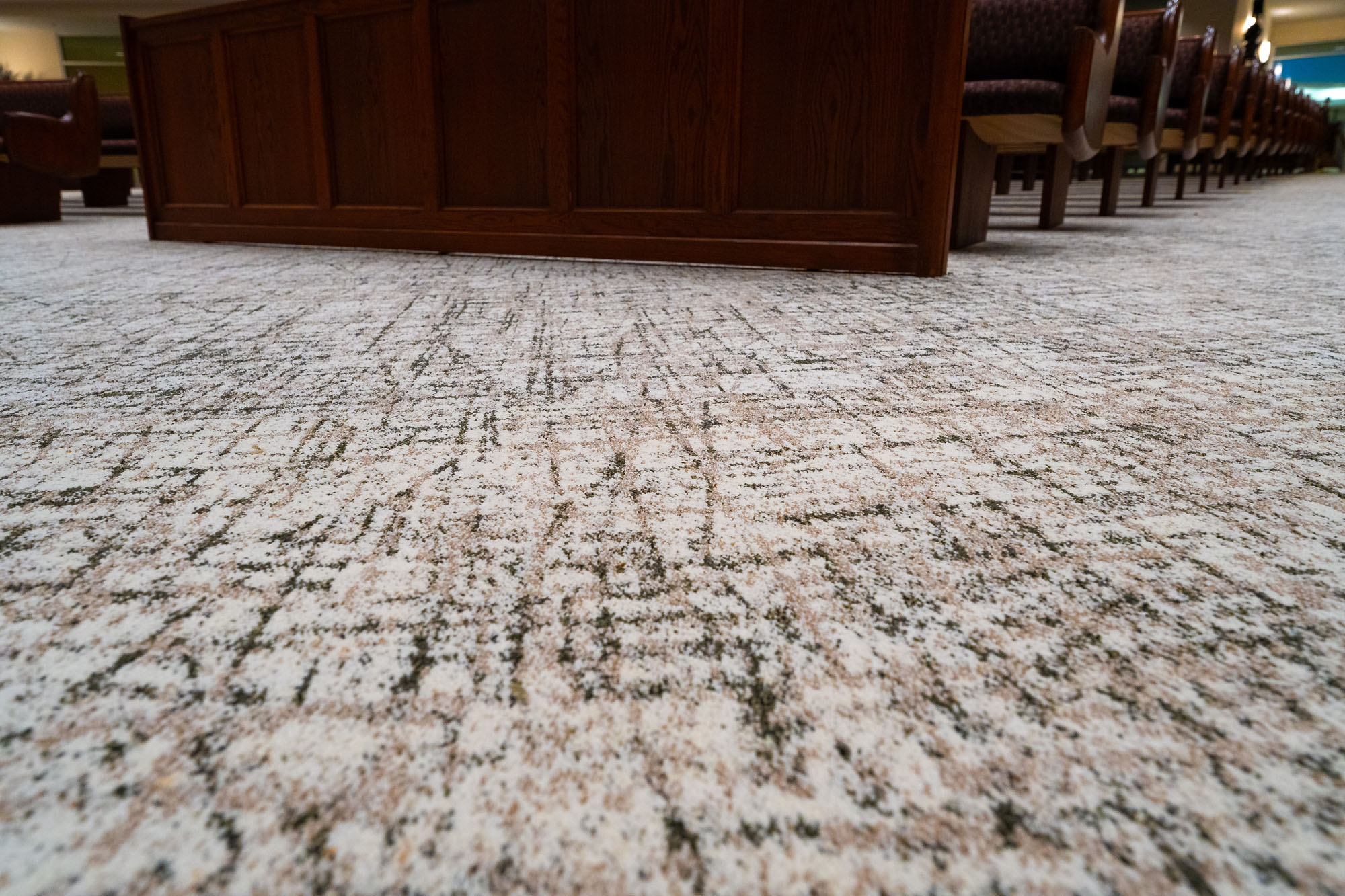
While acting as an advisor, Jeanne was still determined to find a compatible pattern and color way that blended naturally with the entire space, but also felt appropriate for a religious environment. Bishop Haughton wanted to have a carpet wall base instead of the original rubber so the room would feel more inviting and comfortable. He shared his color preferences so Jeanne could understand the feeling he was aiming for.
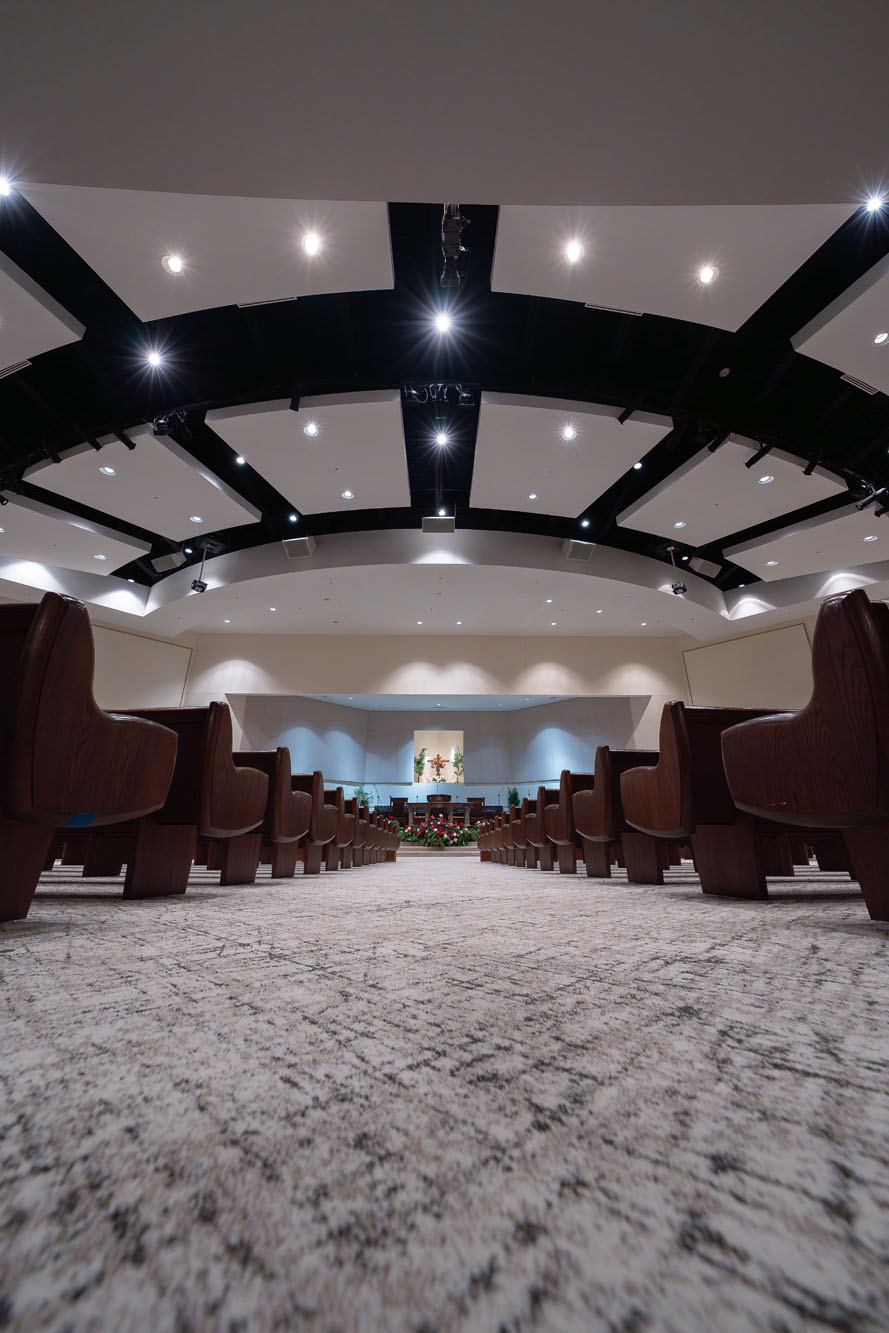
“I came across a really beautiful broadloom carpet that was well-priced,” Jeanne said, “and everyone loved it.”
“We found a sample we were all really happy with,” Bishop Haughton said. “It was like a sign we made the right decision because Jeanne was involved with picking out the original carpet, and it was fitting she helped us to choose the new one.”
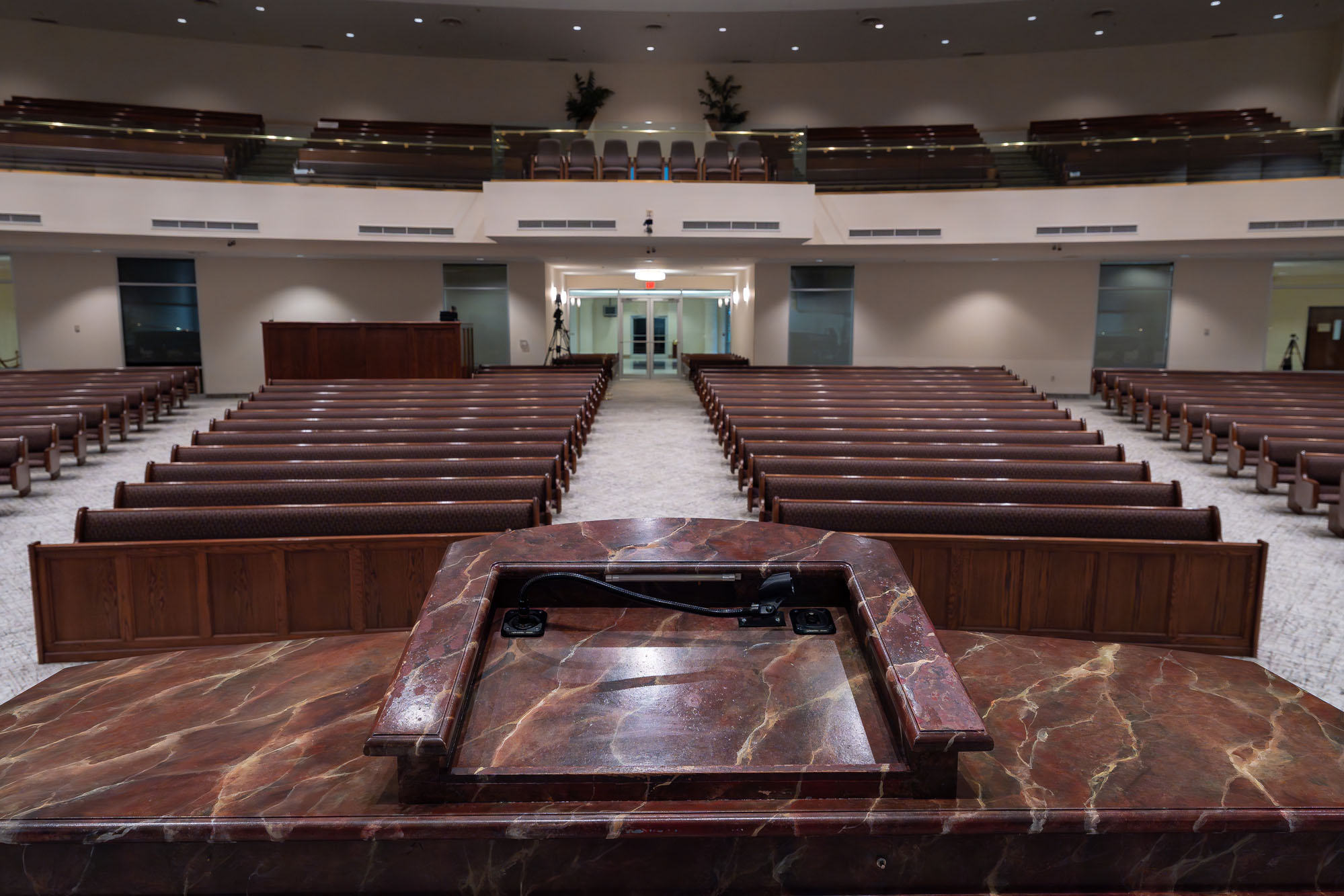
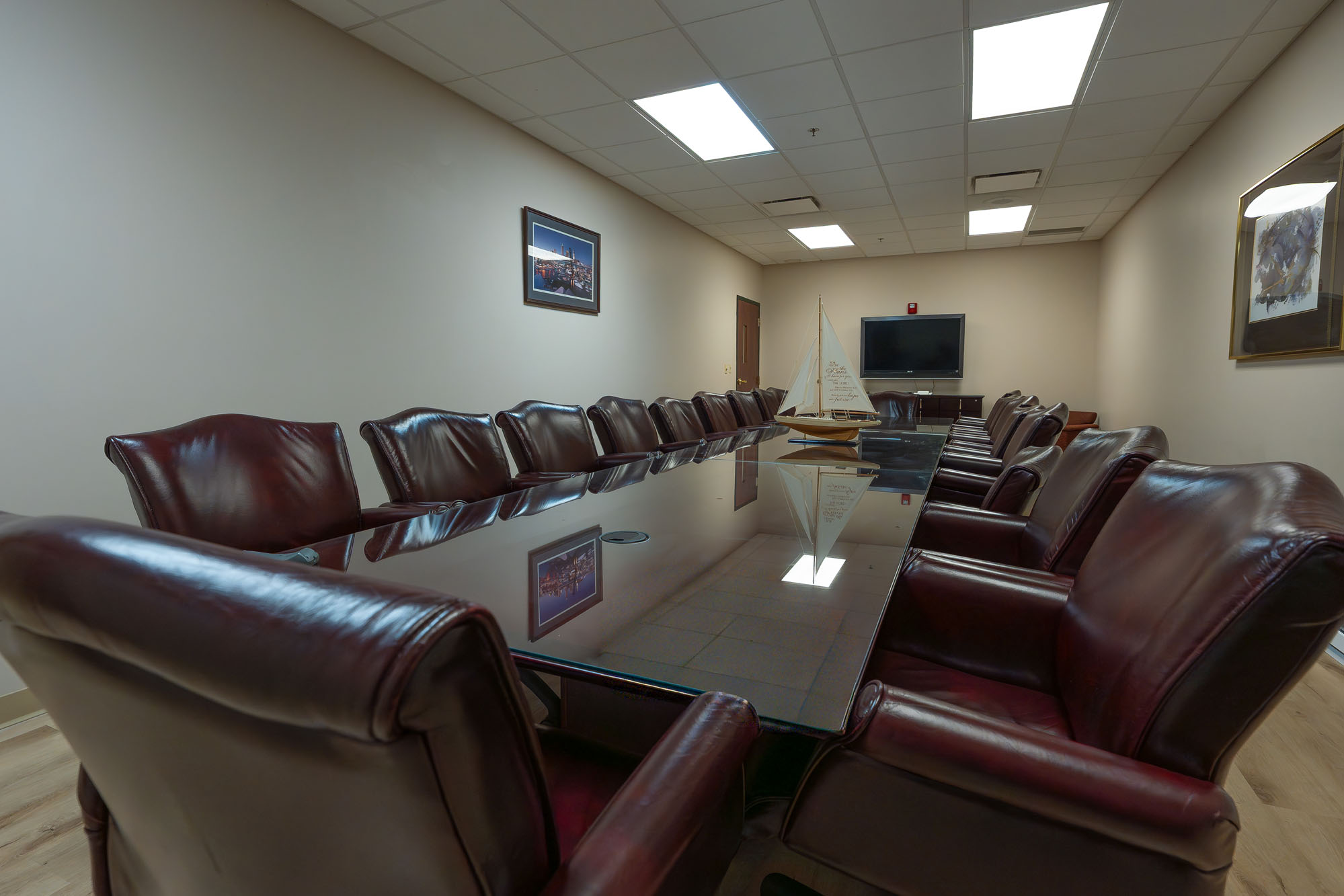
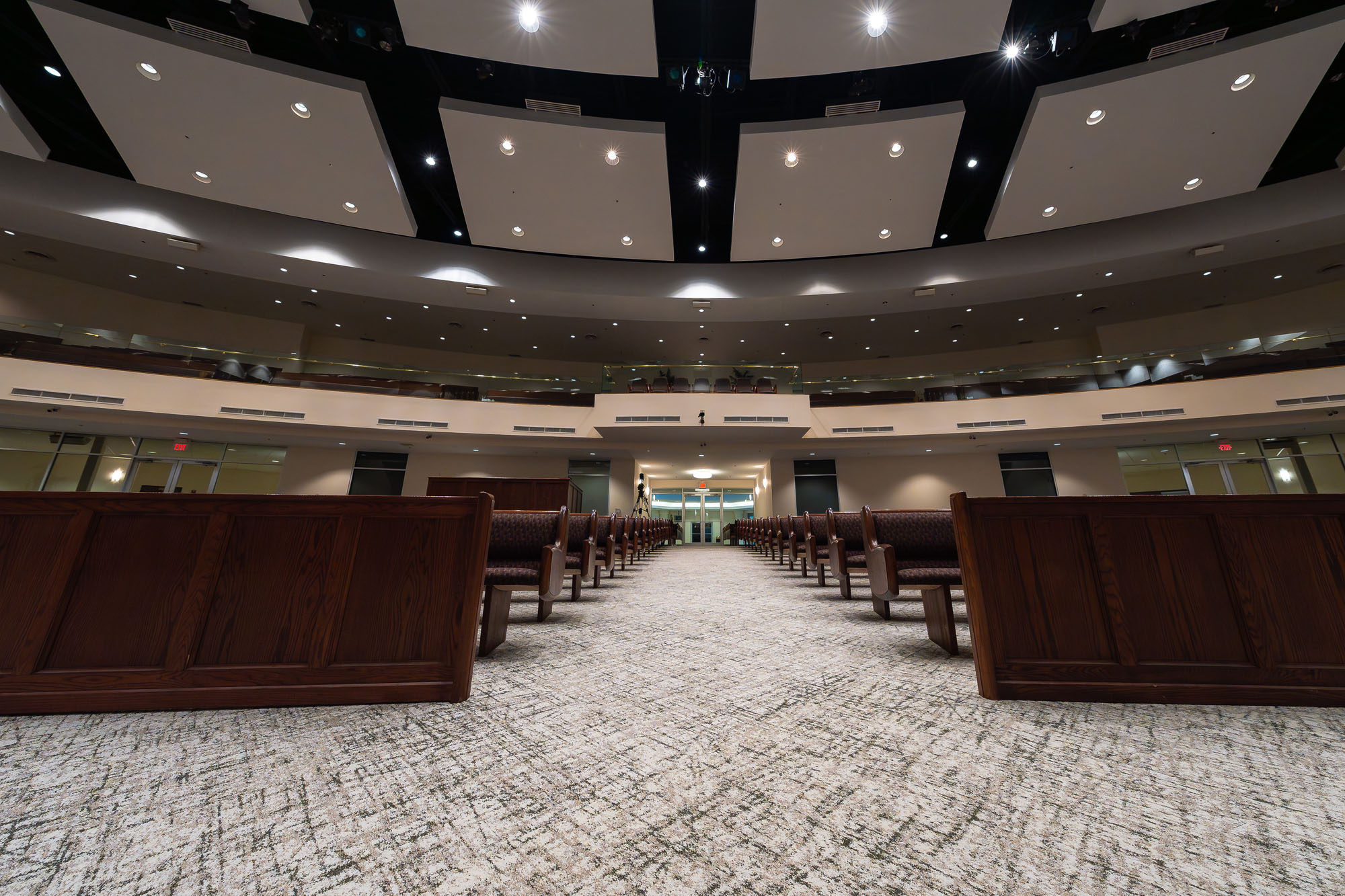
The Cleveland Church of Christ Renovated
A Revival
Bishop Haughton reflected on the church flooding due to a frozen water pipe from the perspective of the eventual outcome that was paid for by insurance. “The entire church, the entire sanctuary, all the offices, all the hallways on the main floor have been refreshed. It was very timely that the physical revival happened in our 101st year. It was clearly God’s will that we got a refresh. It was a trial for about nine months, but now it will look great for years.”
The fresh, new sanctuary was officially opened for services on September 21, 2025. Deacon Haughton remembers how their parishioners received the finished room: “The response was very positive. They loved the new carpet and how everything looked and was brighter now.” He smiled and nodded, “They loved what they saw.”
Referencing the original building design and the renovation, he said, “If we needed to do this all over again, we wouldn’t change anything.”
“The first Sunday when everything was finished was very joyous. Very joyous. Very joyous,” said Bishop Haughton. “The congregants were thrilled to see the sanctuary back together. They were just thankful for what the Lord had done. The sermon that day was on the topic of revival. I went through the blueprints that God has provided for revival. The building has had a much-needed revival, but we can also see that in the spiritual sense, so we can remember what God has done in this church.”
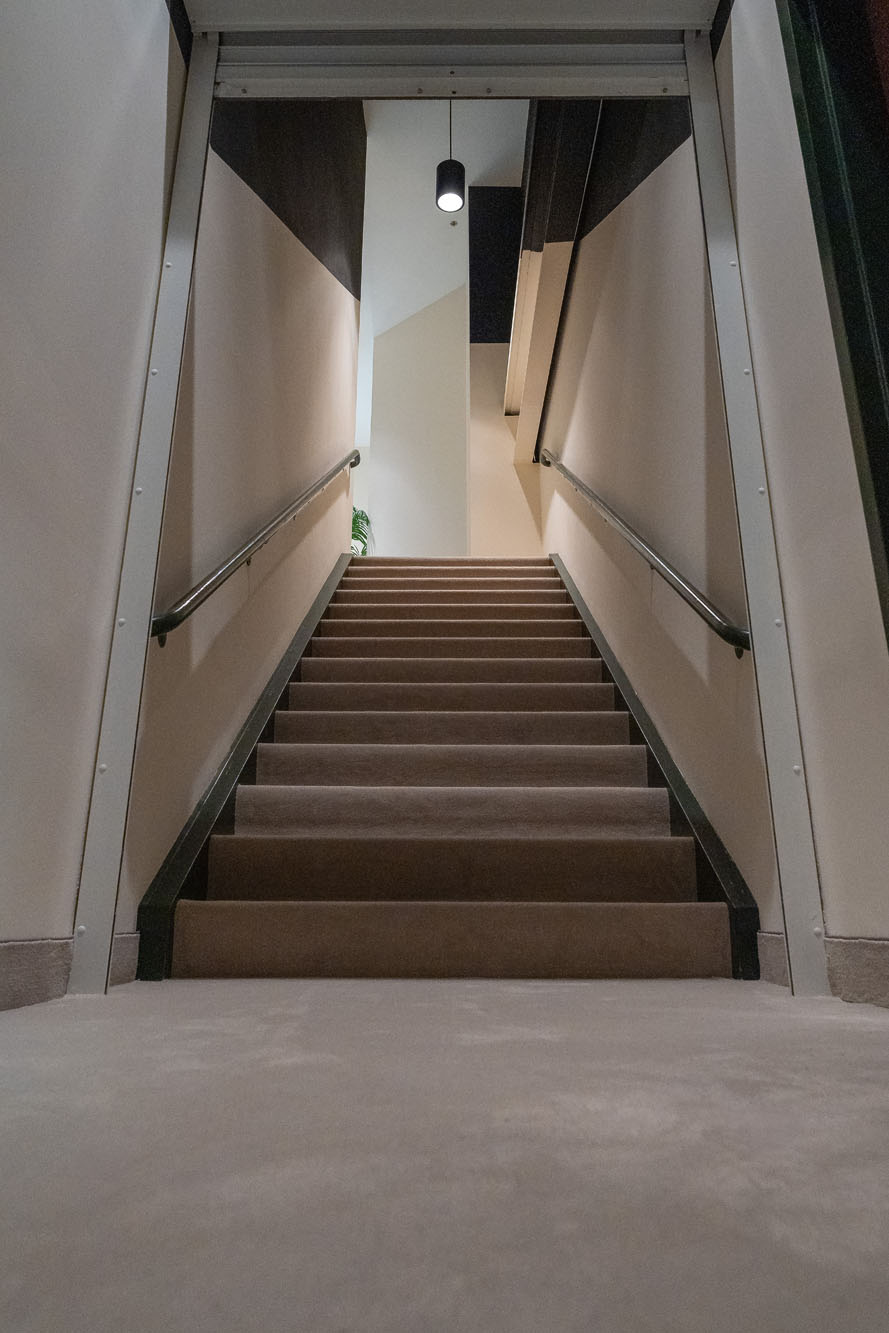
Cleveland Church of Christ's Interior Revival
Building Bridges. Keeping Bridges.
Bishop Haughton summarized his experience with TDA, “You should not forget the bridges you come over. You have to be thankful for them and make sure that you keep relationships and make sure you deal with people in the right way.”
Jeanne said, “By the end of this whole process, I felt my friendship with Bishop Haughton was a continuation of one that started so long ago.”
“TDA has built a legacy on forging relationships,” Chris said. “To look back and appreciate the relationship we still have with clients from long ago, like Bishop Haughton, is incredibly fulfilling. We were happy to help and glad that everyone is pleased.”
“Consistently, Bob and Chris see the value in doing the right thing regardless of whether or not we get future work from a client. But if we do, that’s kind of a bonus. Other firms may do pro bono for that primary reason, but with TDA, when you see a client struggling and in need of professional assistance with architectural or design issues, but they don’t really have the funds to cover it, stepping up and helping your neighbor or that community is the right thing to do.”
Jeanne concluded, “It’s a moral choice that may not benefit us financially, but we help build that relationship. They know that when they needed help, we were there for them. And we were happy to do it.”
The Storm Was Weathered
Marc Cebrian
Communications
Get our newsletter with insights, events and tips.
Recent Posts:
TDA Celebrates Our 15th NorthCoast 99 Awards Win
Chardon Local Schools Rohr Tennis Center Opens
Habitat for Humanity’s Home 100 Summer Update